
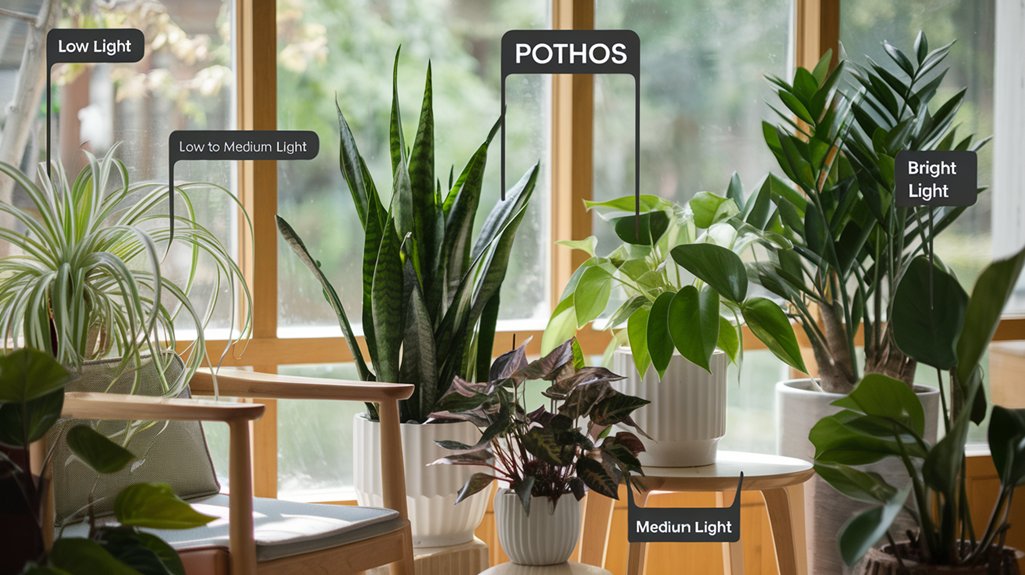
To keep popular air-cleansing houseplants healthy, cater to their specific light needs. Snake plants and Golden Pothos thrive in bright, indirect light but tolerate low light; however, do avoid direct sunlight to prevent leaf scorching. Peace Lilies prefer medium-to-low indirect light, ensuring their iconic blooms. Spider plants enjoy filtered bright light and adjust to lower light, albeit with slower growth. English Ivy needs moderate sunlight but adapts to less. Discover how to maintain ideal conditions for peak performance.
Understanding Light Needs for Indoor Plants
When you’re caring for houseplants, understanding their light needs is crucial to guarantee they thrive.
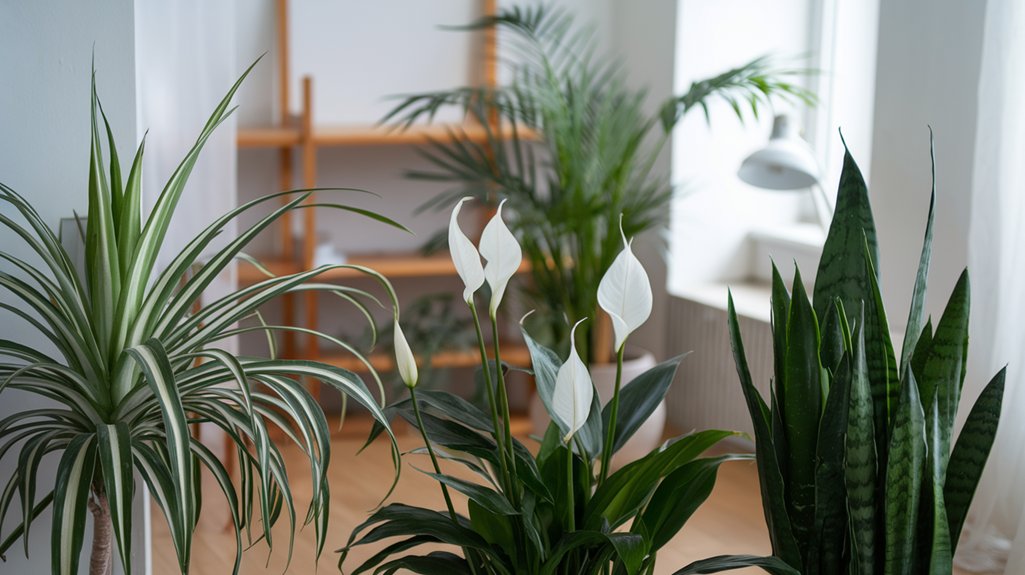
Indoor plants like the Peace Lily and Snake Plant are celebrated for being air-purifying. The Peace Lily prefers low to medium light, making it suitable for varied indoor settings.
Conversely, the Snake Plant, known for its adaptability, thrives in bright indirect light, although it can tolerate low light conditions. This makes it an excellent choice for beginners.
English Ivy requires moderate sunlight but can adjust to less light, offering flexibility in placement.
Meanwhile, Rubber Plants flourish under bright indirect sunlight, yet they can manage with lower light levels, albeit with reduced growth and vibrancy.
Evaluating each plant’s light requirements guarantees peak health and performance indoors.
Ideal Light Conditions for Spider Plants
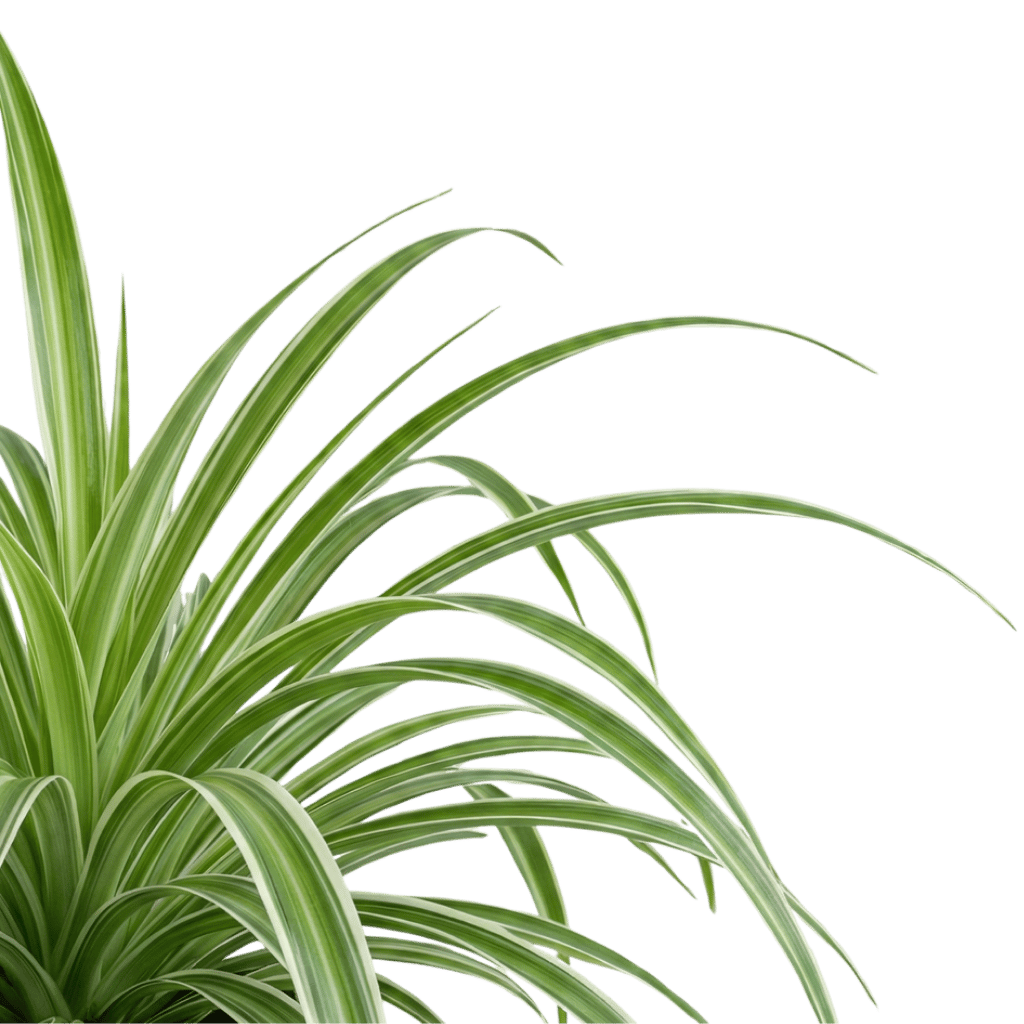
After evaluating the diverse light requirements of popular indoor plants, it’s important to contemplate the specific needs of spider plants. They thrive in bright light with indirect sunlight, making them perfect for windows offering filtered light.
While spider plants are adaptable and versatile choices for various indoor spaces, ensuring ideal light conditions is essential for their health. Avoid placing them in areas with harsh afternoon sun, as direct light can scorch their leaves.
Though they tolerate low-light conditions, expect slow growth and reduced production of pups in such environments. To encourage the development of these offshoots, a consistent exposure to bright light is beneficial.
Optimal Lighting for Snake Plants
How can you guarantee snake plants thrive in your home? Start by providing the right lighting conditions.
Snake plants are adaptable and can survive in low light, but they flourish in bright, indirect light. This enhances their growth rate and overall health. Direct sunlight isn’t ideal, as it can scorch their leaves. Instead, place them in locations with filtered light to avoid damage.
If your space has artificial lighting, don’t worry—snake plants can adapt well to fluorescent lighting, making them perfect for offices. However, watch for leggy leaves. This indicates insufficient light, and you should move them to a brighter spot.
Confirming ideal lighting guarantees your snake plants remain robust and vibrant, improving their air-cleansing capabilities.
Peace Lily Light Preferences
Although Peace Lilies are adaptable, they thrive best in indirect, medium-to-low light conditions, which makes them perfect for shaded areas of your home or office. These conditions allow them to flourish without risking scorch from direct sunlight. However, while these lilies can handle low light, placing them in brighter, filtered light can enhance their growth and flowering potential. Remember, Peace Lilies need monitoring to maintain their ideal light conditions. Insufficient light might result in fewer flowers and slower growth. In contrast, optimal conditions lead to vibrant white blooms, reminiscent of a surrender flag.
Here’s a quick reference table:
| Condition | Effect on Peace Lilies |
|---|---|
| Indirect light | Ideal growth and blooms |
| Medium-to-low light | Tolerable, but slower growth |
| Bright, filtered light | Enhanced growth and flowers |
| Direct sunlight | Scorch and leaf damage |
Light Requirements for Golden Pothos
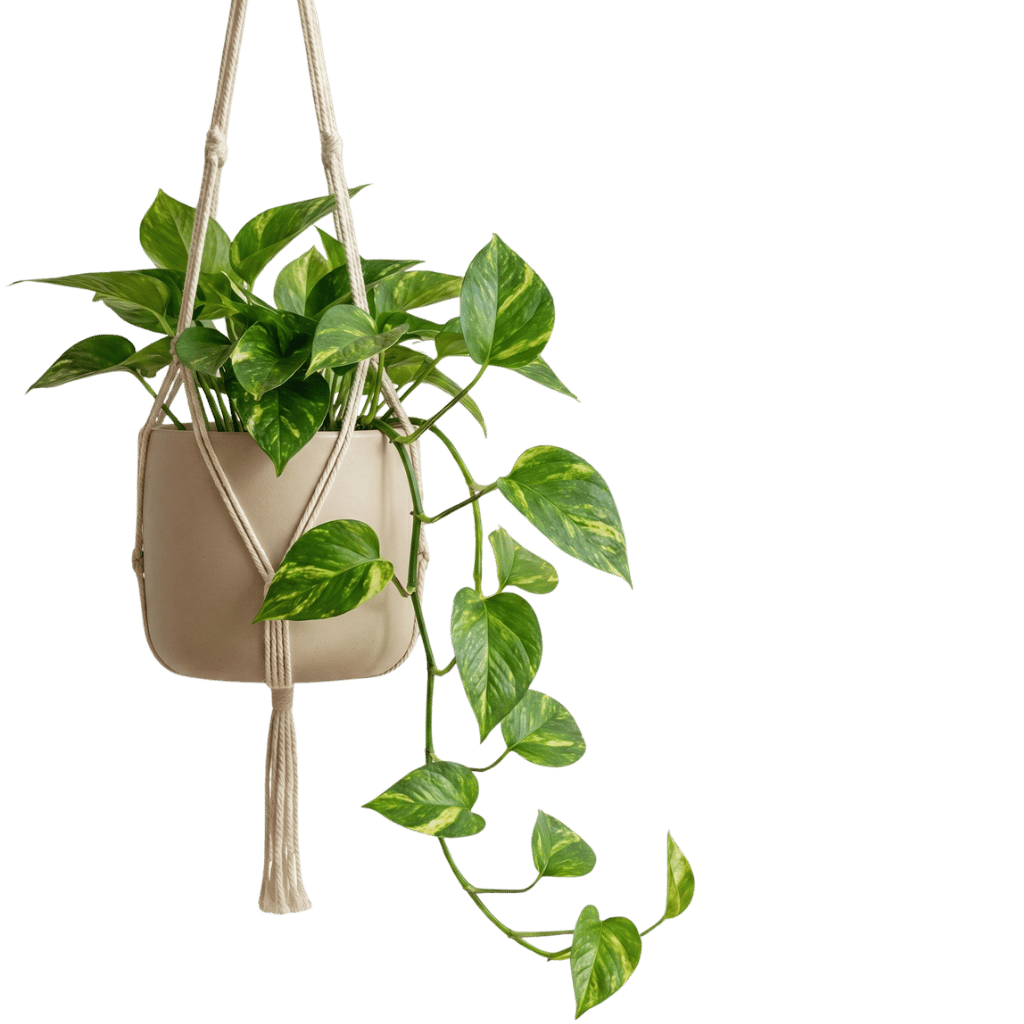
Golden Pothos, known scientifically as Epipremnum aureum, excels in diverse lighting but particularly favors bright, indirect sunlight for peak growth. In these light conditions, the plant achieves top growth and maintains its vibrant variegation.
Although it’s adaptable and can survive in low light environments, such settings might slow growth and reduce leaf variegation. You should avoid placing it in direct sunlight, as this can scorch its leaves. Instead, position your Golden Pothos near a window where it receives filtered light.
It’s also suitable for areas with minimal natural light, such as offices. By understanding these light requirements, you can guarantee your Golden Pothos thrives in various environments while maintaining its air-cleansing properties.
English Ivy and Its Light Needs
While English Ivy, or Hedera helix, adapts well to low-light environments, it truly thrives in indirect, bright light. For ideal growth, locate your English ivy near a window with filtered sunlight. This positioning not only encourages lush foliage but also enhances its air purification abilities.
The plant’s adaptability to low-light conditions makes it ideal for indoor environments, maintaining temperatures between 50°F and 70°F. However, make sure the soil remains moist without being soggy, as excess moisture in low-light can cause root rot.
Consider these care tips:
- Place your ivy in brighter light to boost growth.
- Monitor soil moisture to prevent root issues.
- Adapt to temperature ranges fitting typical homes.
- Enjoy cleaner air with this versatile plant.
Providing Proper Light for Bamboo Palm
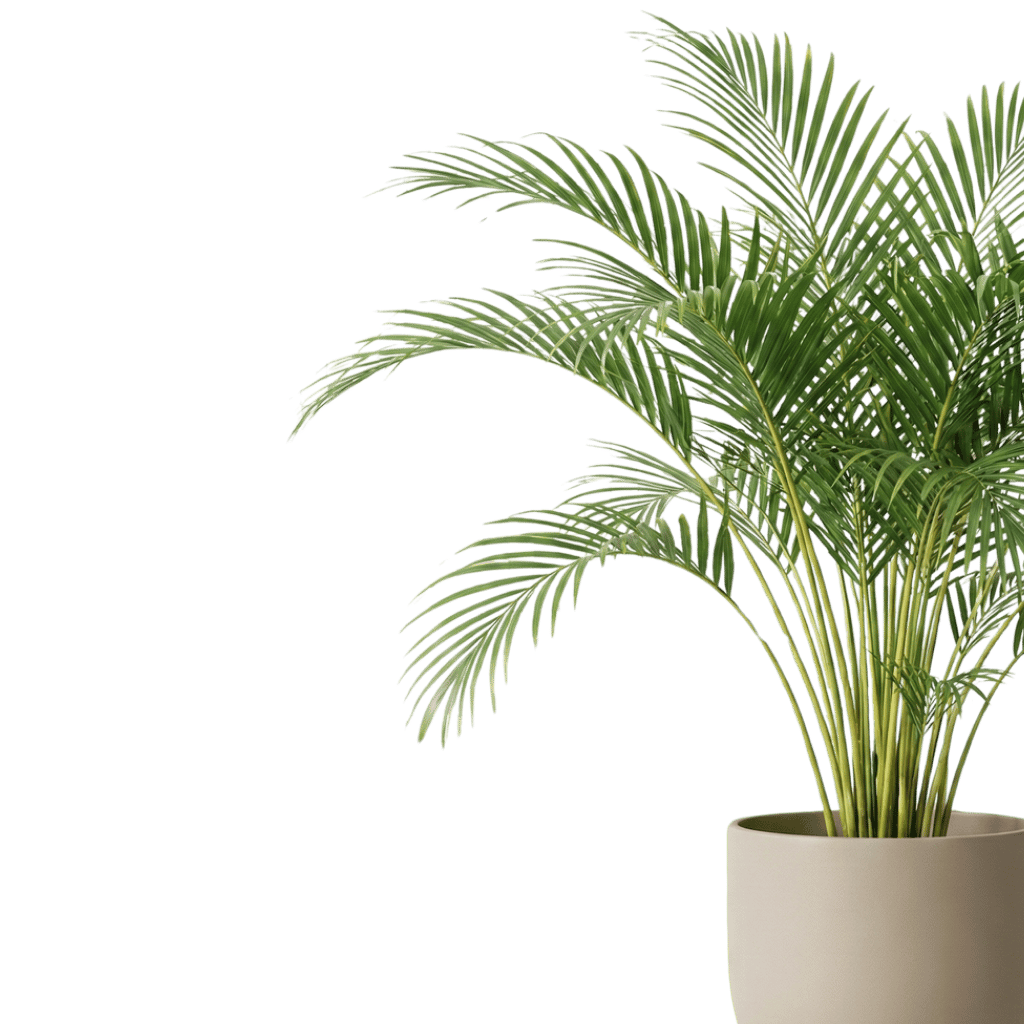
When caring for a Bamboo Palm, understanding its light preferences is crucial for healthy growth. This plant thrives in low to moderate light environments, making it suitable for areas with indirect sunlight.
For best growth, provide bright filtered light, which helps maintain its lush leaves. Avoid placing the Bamboo Palm in harsh direct light, as it can scorch the foliage.
The recommended temperature range for this plant is 65°F to 75°F, aligning with its light needs.
To guarantee even light exposure, regularly rotate your Bamboo Palm. This practice prevents the plant from leaning towards the light source and encourages balanced growth.
Lighting Tips for Dracaena Plants
Dracaena plants, featuring varieties such as Dracaena ‘Janet Craig,’ excel in low to moderate indirect light, ideal for dimly lit environments like offices or living rooms.
While they tolerate low light, Dracaena thrives in bright, filtered light, guaranteeing peak health and vibrant foliage. Avoid direct sunlight to prevent leaf scorch.
To maintain your Dracaena’s well-being, consider these lighting tips:
- Place in indirect light: Make sure they’re not exposed to harsh lighting conditions to avoid leaf drop and browning tips.
- Rotate regularly: This promotes even light distribution and balanced growth.
- Monitor for signs: Adjust placement if you notice any browning or leaf drop.
- Choose the right spot: Bright, filtered light is best for peak health.
Make sure your Dracaena enjoys a properly lit environment for healthy growth.
Conclusion
You’ve now got the insights to optimize light conditions for your air-cleansing houseplants. Spider plants thrive in bright, indirect light, while snake plants tolerate low light but prefer moderate brightness. Peace lilies need filtered light to flourish. Golden pothos are versatile, adapting to various light levels. English ivy likes bright, indirect light, and bamboo palms favor indirect sunlight. Finally, dracaena plants require moderate to bright indirect light. Adjust your home’s lighting to meet these specific needs and enjoy healthier, more vibrant plants.