
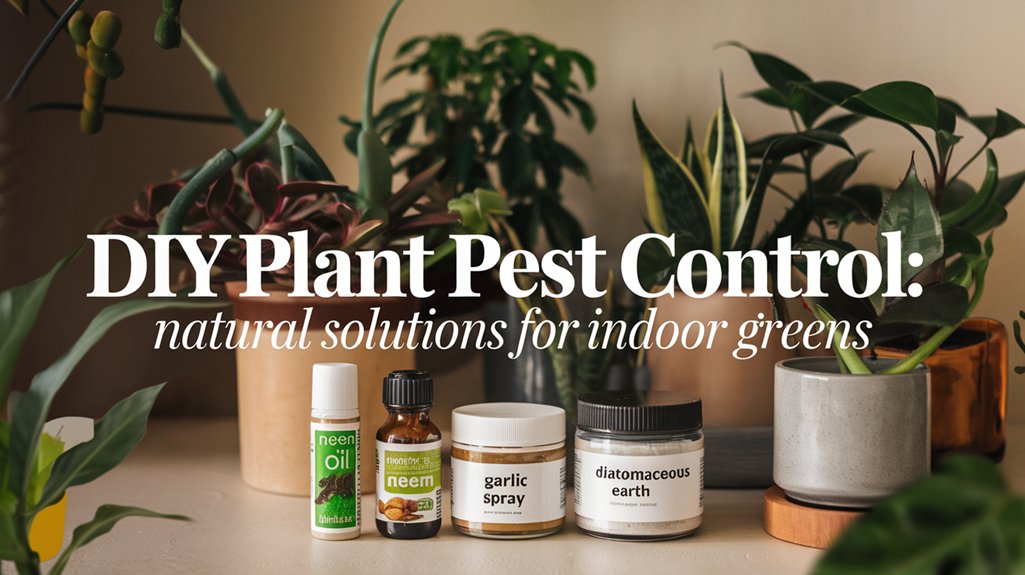

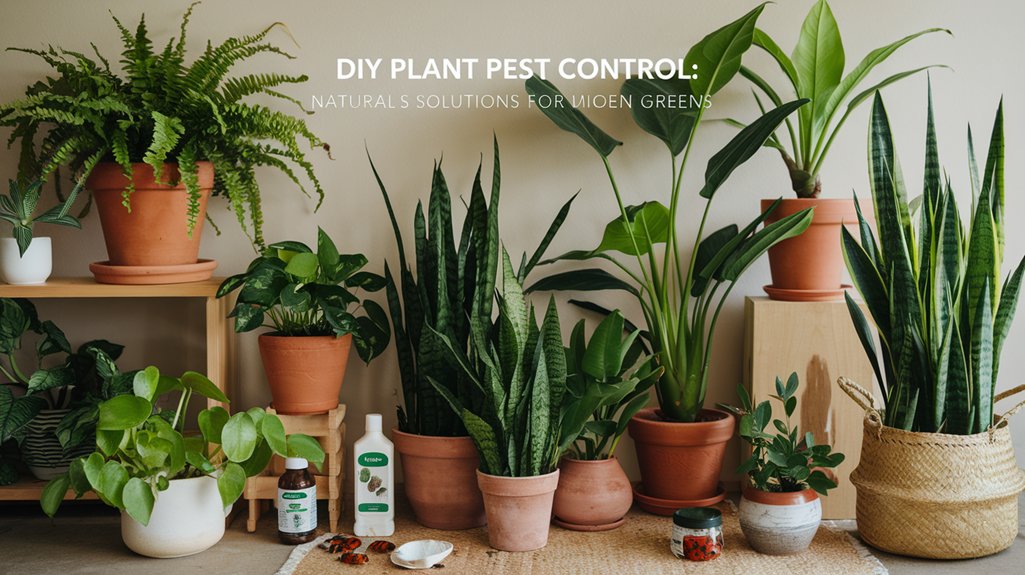
Combat indoor plant pests with natural solutions like tomato leaf spray, garlic oil spray, and hot pepper spray. These remedies deter pests using compounds like tomatine, allicin, and capsaicin, respectively. Soap spray manages soft-bodied insects by disrupting their membranes. Effective against slugs, beer traps utilize fermentation aromas, luring them away from plants. Consistent application guarantees sustained pest control. Discover more eco-friendly methods for maintaining a thriving, pest-free indoor garden.
Tomato Leaf Spray
Harness the power of tomato leaves to create an effective, natural insecticide for your garden.
To make a tomato leaf spray, chop two cups of fresh tomato leaves and soak them in one quart of water overnight. This process extracts tomatine, an alkaloid effective against pests like aphids.
After steeping, strain the mixture carefully and dilute if necessary before spraying it directly onto affected plants. This solution provides a non-toxic alternative for managing insect infestations on your indoor greens.
Apply the spray in the early morning or late evening to avoid leaf burn from sunlight. For best results, repeat applications every 4-7 days or after rainfall to guarantee your plants remain protected from persistent pest threats.
Garlic Oil Spray
Garlic oil spray offers an effective and natural method for deterring garden pests, leveraging the potent aroma of garlic to repel unwanted insects like aphids, spider mites, and whiteflies.
To prepare this natural insect repellent, soak minced garlic in mineral oil overnight. Mix it with water and a few drops of biodegradable dish soap to enhance application.
Apply the spray in the early morning or late evening to minimize leaf burn and optimize pest control for your indoor plants. The mixture can be stored for up to a week, facilitating regular maintenance.
Regular application every 4-7 days guarantees:
- Vigilant protection against persistent pests.
- Sustained plant health during peak growing seasons.
- Eco-friendly pest control with a strong scent.
- Ease of use with minimal effort.
Hot Pepper Spray
While garlic oil spray provides a robust natural defense against many garden pests, hot pepper spray offers another powerful alternative for pest control.
This natural insect repellent effectively deters spider mites, aphids, and whiteflies due to the capsaicin in peppers, which irritates these pests.
To concoct your DIY pest control solution, mix 2 tablespoons of red or cayenne pepper with 1 gallon of water, adding six drops of mild dish soap to guarantee adherence to plant surfaces.
Conduct a patch test on a small area before full use to prevent foliage damage.
Apply the spray during the evening to avoid heat damage and improve pest deterrence.
Reapply every 3-4 days and after rainfall for sustained effectiveness.
Soap Spray
Soap spray emerges as a highly effective homemade pesticide, perfect for targeting soft-bodied insects like aphids, spider mites, and mealybugs.
To create this solution, mix 1.5 teaspoons of mild liquid soap with 1 quart of water. This effective natural remedy suffocates pests, disrupts their cell membranes, and eliminates them without harming your plants.
For peak effectiveness, apply the soap spray in the early morning or late evening to prevent leaf burn.
To guarantee ideal pest control, follow these steps:
- Conduct a patch test on a few leaves before full application.
- Reapply every 4-7 days, especially after heavy rainfall.
- Monitor plant response to avoid adverse effects.
- Adjust timing to prevent direct sunlight exposure during application.
These steps will safeguard your indoor greens effectively.
Beer as a Slug Trap
If you’re battling a slug infestation in your garden, utilizing beer as a slug trap is an effective and sustainable solution.
Slugs are irresistibly drawn to the scent and taste of beer, making it an excellent non-toxic method for pest control.
To set up a beer trap, bury a container, like a cup or bowl, into the soil with the rim flush to the ground. Fill it with any type of beer—premium brands are unnecessary.
The beer will attract and capture the slugs overnight without harming beneficial insects.
In the morning, check the traps to assess their success and refill the containers as needed to maintain their efficacy.
This simple technique guarantees your garden remains slug-free and healthy.
Citrus Rinds for Slug Control
Although often overlooked, citrus rinds can serve as an effective tool for slug control in your garden. By using peels from oranges, grapefruits, or lemons as natural traps, you can manage slugs without chemicals.
Here’s how it works:
- Attraction: Slugs are drawn to the moisture and scent of citrus rinds, gathering underneath them.
- Trap: Place the rinds on the ground in your garden, creating a lure that slugs find irresistible.
- Inspect: After a few days, check the rinds for slugs. Remove and dispose of them to diminish the slug population.
- Eco-friendly: This method is safe for plants and beneficial insects, promoting chemical-free and sustainable gardening by recycling kitchen waste.
Embrace a greener approach with citrus rinds!
Cinnamon or Cayenne Pepper Barriers
Ground cinnamon and cayenne pepper serve as excellent natural barriers against a variety of garden pests. By sprinkling ground cinnamon around indoor plants, you create an effective deterrent for fungus gnats and fungal growth within potting soil.
This non-toxic method not only repels harmful insects but also helps maintain ideal moisture levels by forming a thin protective layer on the soil surface.
Cayenne pepper, with its potent scent, offers another powerful repelling mechanism. Mix it with water and spray around plant bases to establish a strong, non-toxic barrier against pests.
Both substances are safe around pets and children. For sustained effectiveness, reapply these barriers regularly, especially post-watering, ensuring they continue to protect your indoor plants from unwanted pests.
Red Pepper Spray
When it comes to natural insect repellents, red pepper spray stands out due to its efficacy against common pests like mites and whiteflies, thanks to its active compound, capsaicin.
To prepare this potent solution, mix 2 tablespoons of red pepper or cayenne pepper with 1 gallon of water, adding six drops of mild dish soap to emulsify.
Follow these steps:
- Apply the spray in the evening to minimize heat exposure and prevent leaf burn.
- Reapply every 3-4 days and after rain, as water can remove the protective layer from plant surfaces.
- Conduct a patch test on a small area to check for adverse reactions.
- Confirm thorough coverage to maximize the repellent’s effectiveness against pests.
Maintain vigilance and adapt your approach for best results.
Baking Soda Spray
Red pepper spray effectively wards off pests, but fungal issues like powdery mildew require a different approach.
Baking soda spray is a formidable ally in preventing powdery mildew by establishing an alkaline environment that inhibits fungal growth. To concoct this solution, mix 1 tablespoon of baking soda, 1 tablespoon of vegetable oil, and 1 teaspoon of biodegradable dish soap with 1 quart of water.
For continuous protection, apply this spray weekly or after heavy rainfall. Guarantee maximum coverage by targeting both the tops and undersides of leaves.
Before widespread application, test the baking soda spray on a small plant area to check for any adverse reactions. This practice effectively safeguards your indoor greens from fungal threats.
Milk for Fungal Protection
Although often overlooked, milk spray emerges as a scientifically-backed solution against fungal diseases like powdery mildew.
As a natural treatment, mix milk at a 40% ratio with water and apply it to your indoor plants. This spray harnesses milk’s antibacterial properties, effectively inhibiting fungal growth without relying on chemical fungicides.
Here’s how to use it:
- Mix: Prepare a mixture of 40% milk and 60% water.
- Spray: Apply the solution weekly to both the tops and bottoms of leaves for ideal coverage.
- Monitor: Watch for any signs of fungal diseases, adjusting application as needed.
- Enjoy: Revel in the eco-friendly method that promotes healthier plants.
Conclusion
Incorporating these natural pest control methods into your indoor plant care routine is both effective and eco-friendly. By using tomato leaf, garlic oil, hot pepper, and soap sprays, you directly target pests with scientifically proven compounds. Deploying beer traps and spice barriers like cinnamon and cayenne efficiently deters slugs and insects. Additionally, red pepper and baking soda sprays, along with milk treatments, provide extensive protection against fungal threats, ensuring your indoor greens thrive without synthetic chemicals.