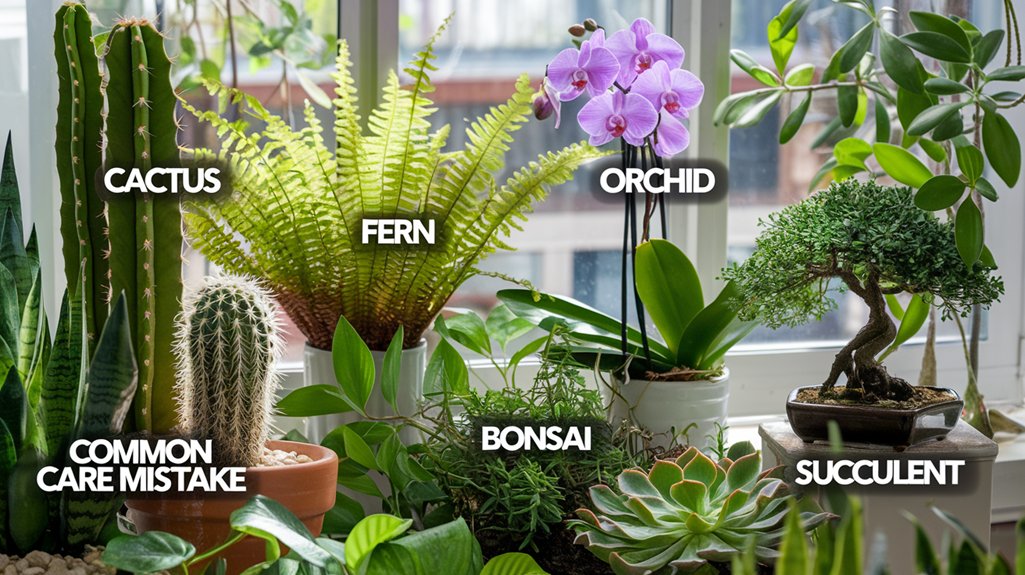

To keep your indoor plants thriving through winter, adjust the watering schedule to every 2-3 weeks, with reduced water volume. Enhance light exposure by moving plants closer to windows or using grow lights. Maintain temperatures between 60°F and 75°F, avoiding cold drafts. Clustering plants boosts humidity, maintain 40-50% levels using humidifiers. Regular pest inspections and care modifications guarantee plant health. There’s more to discover about optimizing these conditions effectively.
Adjust Watering Practices
When it comes to adjusting watering practices for your indoor plants, understanding their seasonal needs is vital.
During winter, indoor plants require less water due to reduced light and lower humidity. Shorter days mean photosynthesis slows, reducing moisture uptake. Adjust your watering frequency to every 2-3 weeks.
Always check soil moisture at the root level using a moisture meter or by poking your finger an inch deep. This prevents overwatering, which can lead to root rot—a common issue in colder months. Err on the side of caution; underwatering is safer.
Use room temperature water to avoid thermal shock, and make sure pots have adequate drainage to prevent stagnant water. Reduce water volume by 25% compared to summer, aligning with their diminished growth rate.
Optimize Light Exposure
Even though winter days are shorter, maximizing light exposure for your indoor plants is crucial for their health. During the winter months, decreased natural light necessitates moving plants closer to windows for maximum exposure to available sunlight.
Consider using supplemental grow lights, like Sansi 24 watt or Sansi 15 watt, to enhance light levels. To prevent uneven growth, rotate pots every few days, guaranteeing all sides receive adequate illumination. Monitor for light deficiency signs, such as yellowing leaves, which suggest your plants need more light.
However, avoid placing plants in direct sunlight against cold glass to prevent leaf burns; instead, provide filtered light for best growth. By adjusting these factors, you guarantee your plants remain robust and vibrant.
Manage Temperature and Drafts
Maximizing light exposure is just one aspect of keeping your indoor plants healthy; maintaining ideal temperature and avoiding drafts is equally essential.
Indoor plants thrive in temperatures between 60°F and 75°F. Consistent temperatures prevent stress and damage. Avoid positioning your plants near cold drafts from windows and doors, as sudden temperature changes can cause leaf drop.
Keep them away from direct heat sources like radiators and heating vents to prevent dry air and temperature fluctuations, which negatively impact plant health. For humidity-loving plants, consider using oil heaters or plant heat mats to sustain warmth, ensuring temperatures don’t dip below 10 to 15 degrees Celsius.
Grouping plants helps create a microclimate, offering additional warmth and shielding them from cold drafts.
Control Humidity Levels
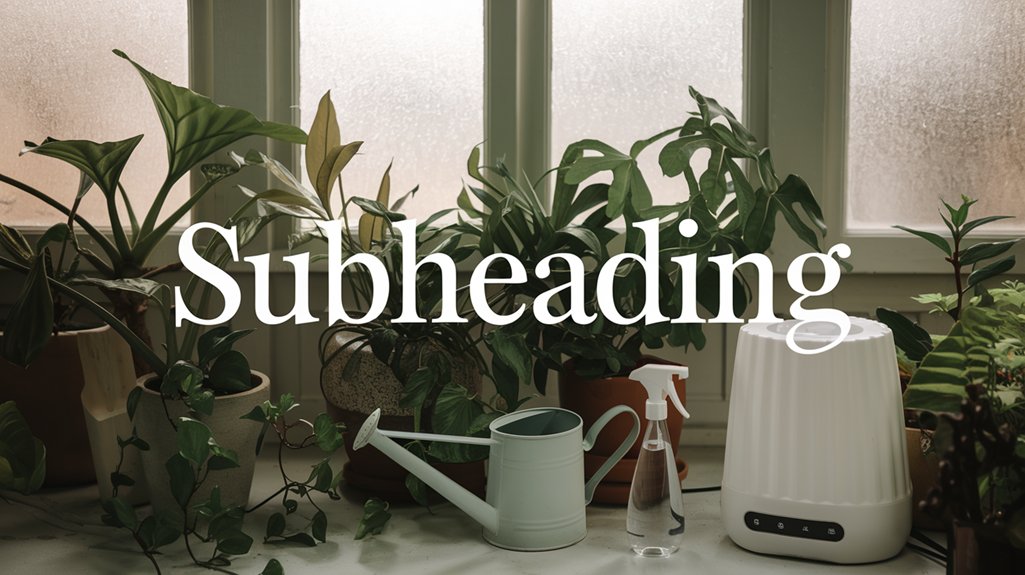
Maintaining perfect humidity levels is essential for the health of your indoor plants. Most thrive at 40-50% humidity, but winter’s indoor heating can reduce moisture levels. To increase humidity, consider clustering plants; their transpiration creates a humid microenvironment. A humidifier guarantees consistent moisture levels, unlike regular misting. Track conditions with a hygrometer to prevent low humidity, which causes leaf browning.
| Method | Benefit |
|---|---|
| Clustering plants | Enhances transpiration |
| Humidity tray | Elevates surrounding moisture |
| Humidifier | Maintains stable humidity levels |
| Hygrometer | Monitors precise humidity levels |
| Avoid misting | Ineffective for sustained humidity |
Elevate ambient moisture with a humidity tray filled with water and pebbles beneath your plants. Consistent monitoring and strategic placement can foster an excellent environment, safeguarding your indoor garden from stress.
Clean and Dust Plant Leaves
When dust accumulates on plant leaves, it considerably obstructs photosynthesis by blocking light absorption, especially during winter when sunlight is scarce.
To combat this, engage in regular cleaning to maintain ideal light penetration and overall plant health. Use a soft, damp cloth or dusting gloves every few weeks to remove dust effectively.
For stubborn grime, add a drop of lemon juice or mild soap to your cleaning water. This enhances the cleaning process, ensuring plant leaves remain clean and capable of efficient photosynthesis.
Clean foliage also facilitates easier inspection for signs of stress or pest infestations, providing an opportunity for timely intervention.
Monitor for Pests and Diseases
Why is winter such an essential time to monitor your indoor plants for pests and diseases?
During winter, pests like spider mites, aphids, and scale insects thrive in the warm, dry indoor environment. Regularly inspect leaves, especially the undersides, and stems for signs of infestation. Early detection is vital since these common houseplant pests can rapidly multiply.
Look for webbing or sticky residue as indicators of spider mites. Quarantine new plants for at least four weeks to prevent pests from spreading to your existing collection.
If you spot pests, treat them with diluted insecticidal soap or neem oil—both organic and effective. Regularly showering plants can help control pests but make sure foliage dries thoroughly to avoid fungal diseases.
Pause Fertilization
As you keep an eye out for pests and diseases, another important practice during winter is to pause fertilization. Most houseplants enter a resting phase, not actively growing due to reduced light.
It’s advisable to stop fertilizing in the fall, as fertilizer applied during this period can lead to harmful nutrient buildup in the soil. However, if you notice signs of new growth, consider using a diluted fertilizer at half strength. This guarantees plants receive essential nutrients without overfeeding.
Monitoring for nutrient deficiencies, such as yellowing leaves, helps determine when to resume fertilization in spring. Once daylight increases, actively growing plants will benefit from the essential nutrients provided by regular fertilization, promoting robust development and overall plant health.
Avoid Repotting
Although repotting might seem like a good way to refresh your indoor plants, it’s essential to understand that winter is the least favorable time for this activity.
During winter, plants enter a dormant phase, and repotting can shock dormant plants, disrupting their root system. This increases their susceptibility to disease and environmental stress.
Instead, focus on other plant care aspects to maintain healthy indoor plants:
- Monitor Humidity: Keep the air moisture levels ideal to support the plant’s needs.
- Watering: Adjust your watering schedule to prevent overwatering, which can lead to root rot.
- Minimize Stress: Avoid unnecessary disturbances to help plants conserve energy.
If poor soil conditions necessitate repotting, proceed with caution and care to minimize stress and promote recovery.
Support Dormancy Period
When indoor plants shift into their dormant phase during the winter months, it’s crucial to adjust your care routine to support this natural cycle.
During the dormancy period, water less often—approximately every 2-3 weeks—to prevent root rot. Allow the soil to dry out completely between waterings. Observe for signs of thirst, such as drooping leaves or wrinkled stems, but prioritize underwatering over excessive moisture.
This period is characterized by lower light levels, which contribute to reduced metabolic activity and energy conservation in indoor plants. Expect some leaf drop as plants adapt to reduced light, conserving energy until growth resumes in spring.
Avoid fertilizing, as healthy plants in dormancy don’t require extra nutrients, preparing them for vigorous growth post-dormancy.
Utilize Supplemental Lighting
Winter’s weaker sunlight necessitates a strategic approach to maintaining your indoor plants’ health. You need to utilize supplemental lighting to compensate for reduced natural light.
Consider using grow lights like the Sansi 24 watt or 15 watt models, which enhance light exposure and guarantee adequate light levels. To promote healthy growth, follow these guidelines:
- Regularly rotate your plants to distribute light exposure evenly, preventing spindly growth.
- Monitor your plants for signs of light deficiency, such as yellowing leaves or elongated stems, and adjust lighting accordingly.
- Enhance light exposure by placing plants near windows and supplementing with grow lights.
Conclusion
To keep your indoor plants thriving in winter, adjust watering to prevent root rot and optimize light exposure to compensate for shorter days. Manage temperature by avoiding drafts, and control humidity with a humidifier to mimic their natural environment. Clean leaves to enhance photosynthesis, and pause fertilization to respect the dormancy period. Avoid repotting to reduce stress. If natural light is insufficient, employ supplemental lighting to guarantee your plants receive adequate photosynthetically active radiation (PAR).