


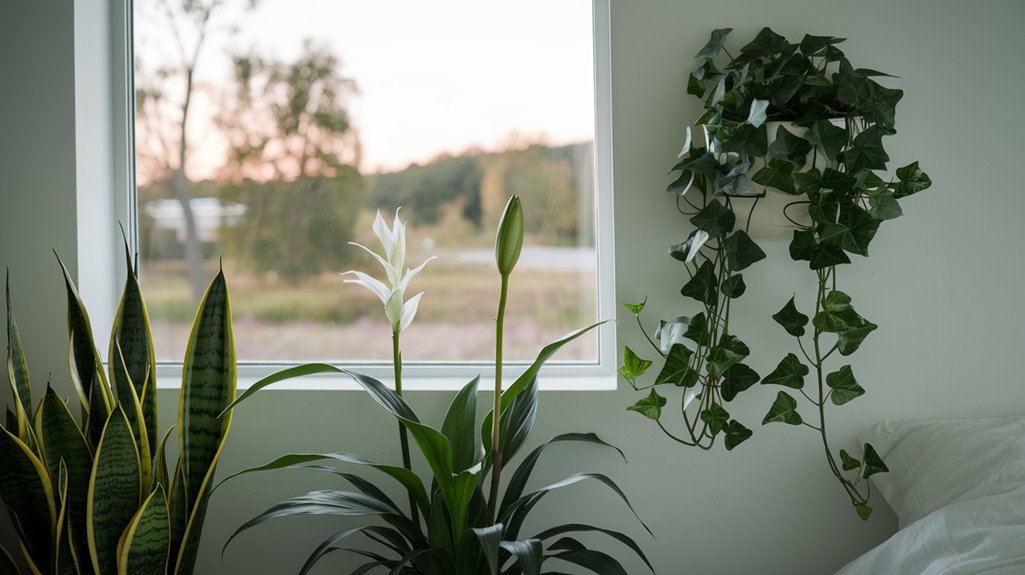
For bedroom air purification, consider placing the Peace Lily (Spathiphyllum spp.) for removing alcohols and acetone. Sansevieria trifasciata, known as the Snake Plant, excels in low light. Hedera helix (English Ivy) and Epipremnum aureum (Pothos) filter formaldehyde. Aloe vera’s succulent leaves cleanse benzene. Nephrolepis exaltata (Boston Fern) thrives in humidity, enhancing air quality. Discover how these and other plants like Dracaena, Philodendron, and Chinese Evergreen can transform your living space.
Peace Lily
The Peace Lily, or Spathiphyllum, stands out as an exceptional air purifier for your bedroom. Known for its air-purifying capabilities, it effectively removes indoor air pollutants like alcohols, acetone, trichloroethylene, benzene, and formaldehyde.
As a low-maintenance plant, it thrives in indirect sunlight, making it perfect for rooms with limited light. Guarantee consistent moisture by watering when the topsoil feels dry, promoting its health and longevity.
Beyond practicality, the Peace Lily adds aesthetic appeal with its elegant white flowers, enhancing your bedroom decor while considerably improving air quality.
However, be cautious—this plant is toxic to pets. Place it out of reach of cats and dogs to maintain a safe environment. Enjoy the dual benefits of beauty and purified air.
Snake Plant
Renowned for its robust air-purifying capabilities, Sansevieria, commonly known as the Snake Plant, is an ideal addition to your bedroom.
This plant excels in purifying the air by removing toxins such as benzene and formaldehyde from indoor environments. Its ability to thrive in low light conditions makes it perfect for bedrooms with limited natural sunlight.
The Snake Plant is drought-tolerant, requiring watering only every 2-6 weeks, so it’s a low-maintenance option for busy individuals. Its tall, striking leaves not only enhance bedroom decor but also improve indoor air quality.
Uniquely, it absorbs carbon dioxide at night and releases oxygen, which can enhance your sleep quality, making it a beneficial and stylish choice for your sleeping space.
English Ivy
Consider adding English Ivy (Hedera helix) to your bedroom for its exceptional air-purifying properties.
This versatile plant excels at removing pollutants like formaldehyde, benzene, and xylene, purifying the air effectively. It thrives in indirect sunlight, making it ideal for bedrooms with limited light. English Ivy adapts to various environments, ensuring its growth in diverse conditions.
However, it requires consistent moisture and is sensitive to high temperatures, so careful attention to its watering needs is essential. Additionally, English Ivy’s trailing vines offer a decorative touch to any space.
Keep in mind:
- Pollutant Removal: Purifies the air by eliminating harmful chemicals.
- Light Requirements: Prefers indirect sunlight.
- Watering Needs: Needs consistent moisture.
- Pet Safety: Toxic to pets; keep out of reach.
Aloe Vera
Switching from English Ivy to Aloe Vera (Aloe barbadensis miller), you’ll discover another excellent air-purifying plant for your bedroom.
With its renowned air-purifying properties, Aloe Vera effectively removes harmful pollutants like formaldehyde and benzene, ensuring cleaner air. This succulent thrives in bright indirect sunlight, ideal for rooms with ample natural light.
As a low-maintenance plant, it requires minimal watering, making it perfect for busy individuals and beginner plant parents. Aloe Vera not only improves air quality but also offers health benefits through its healing qualities, particularly for skin care.
Additionally, its ability to release oxygen at night contributes to a healthier sleeping environment, promoting restful sleep. Incorporating Aloe Vera into your space supports both air quality and wellness.
Pothos
If you’re looking for a versatile and low-maintenance plant to enhance your bedroom’s air quality, Pothos (Epipremnum aureum) is an excellent choice.
This air-purifying wonder effectively removes indoor toxins like formaldehyde, benzene, and xylene, improving indoor air quality.
Pothos thrives in low-light conditions, perfect for bedrooms with limited sunlight exposure. It requires minimal maintenance, tolerating infrequent watering, making it an ideal option for busy lifestyles.
Its heart-shaped leaves add aesthetic appeal and grow long, cascading vines, suitable for hanging baskets or shelves.
Here are some key points:
- Air Purification: Removes formaldehyde, benzene, xylene.
- Light Conditions: Thrives even in low-light areas.
- Maintenance: Minimal, ideal for beginners.
- Space Coverage: Purifies air up to 200 square feet.
Spider Plant
The Spider Plant (Chlorophytum comosum) excels at purifying indoor air by removing toxins like carbon monoxide and formaldehyde. This air-purifying marvel enhances indoor air quality, making your environment healthier.
You’ll find it thrives in bright indirect light, though it can adapt to lower light conditions. Its versatility is perfect for various bedroom settings.
Spider Plants are low-maintenance and resilient, so even if you’re busy or a beginner, you’ll have success. They can filter air effectively in spaces up to 200 square feet.
Propagate easily by replanting its “pups” to enjoy more of these beneficial plants. With its ability to remove toxins and improve air quality, the Spider Plant is a must-have for any indoor environment.
Dracaena
While enhancing your bedroom’s air quality, Dracaena, also known as the corn plant, effectively removes trichloroethylene, a common indoor toxin.
This air-purifying plant thrives in low-light environments, making it ideal for indoor settings with limited natural light. Dracaena’s care is straightforward, requiring watering only when the topsoil feels dry, ensuring it remains easy to maintain.
However, consider pet safety, as Dracaena can be toxic to animals if ingested.
Here are some key features of Dracaena:
- Adaptability: Thrives in low to medium light, perfect for indoor spaces.
- Aesthetics: Its tall, dark green leaves add elegance to any room.
- Maintenance: Requires minimal watering, making it low-maintenance.
- Pet Safety: Keep it out of reach from pets to prevent ingestion.
Philodendron
Consider adding a Philodendron to your bedroom for both beauty and function.
The Philodendron hederaceum, particularly the Heart-Leaf variety, is renowned for its air-purifying capabilities, effectively removing indoor toxins such as formaldehyde and xylene. This low-maintenance plant is perfect for busy lifestyles, requiring watering only when the top inch of soil is dry.
Its adaptability to low light conditions makes it an excellent choice for bedroom spaces. With lush, heart-shaped leaves, the Philodendron lends a tropical aesthetic to your bedroom decor while enhancing improved air quality.
Additionally, it’s a pet-friendly option, ensuring your furry friends remain safe. Embrace the dual benefits of aesthetic appeal and cleaner air by incorporating this versatile plant into your space.
Chinese Evergreen
Incorporating air-purifying plants into your bedroom can greatly enhance both its aesthetic and air quality.
The Chinese Evergreen (Aglaonema) stands out with its striking leaves and versatile nature. This plant thrives in low-light conditions, perfect for spaces with limited sunlight.
Here’s why you should consider a Chinese Evergreen:
- Air-Purifying: Effectively filters indoor air pollutants like formaldehyde and benzene, contributing to improved air quality.
- Low-Maintenance: Requires occasional watering, making it ideal for novice plant owners or those with busy schedules.
- Humidity Tolerance: Adaptable to varying humidity levels, ensuring resilience in typical indoor environments.
- Aesthetic Appeal: Its variegated leaves add a sophisticated touch to your bedroom decor.
With minimal care, the Chinese Evergreen is an excellent choice for enhancing your living space.
Boston Fern
The Boston Fern (Nephrolepis exaltata) stands out for its ability to purify the air, effectively filtering out indoor pollutants like xylene, toluene, and benzene. This enhances air quality in your bedroom, promoting a healthier sleep environment.
These ferns thrive in bright indirect sunlight and demand high humidity. Position them in naturally humid areas, like bathrooms or kitchens, to meet their moisture needs. Regular watering is essential; guarantee the soil remains consistently moist. Mist the leaves frequently to maintain humidity levels.
With their lush fronds and vibrant aesthetic, Boston Ferns don’t just purify the air; they also add natural beauty to your space. Embrace their humidity-boosting qualities to alleviate dry air discomfort and enjoy improved indoor air quality.
Conclusion
Incorporating air-purifying plants like Spathiphyllum (Peace Lily) and Sansevieria trifasciata (Snake Plant) into your bedroom can enhance air quality. Guarantee ideal growth by placing them in indirect sunlight and maintaining moderate soil moisture. Hedera helix (English Ivy) and Aloe barbadensis (Aloe Vera) thrive in well-drained soil with occasional watering. Epipremnum aureum (Pothos) and Dracaena spp. are low-maintenance, needing minimal light. With proper care, these plants will improve your bedroom’s ambiance and air quality.