
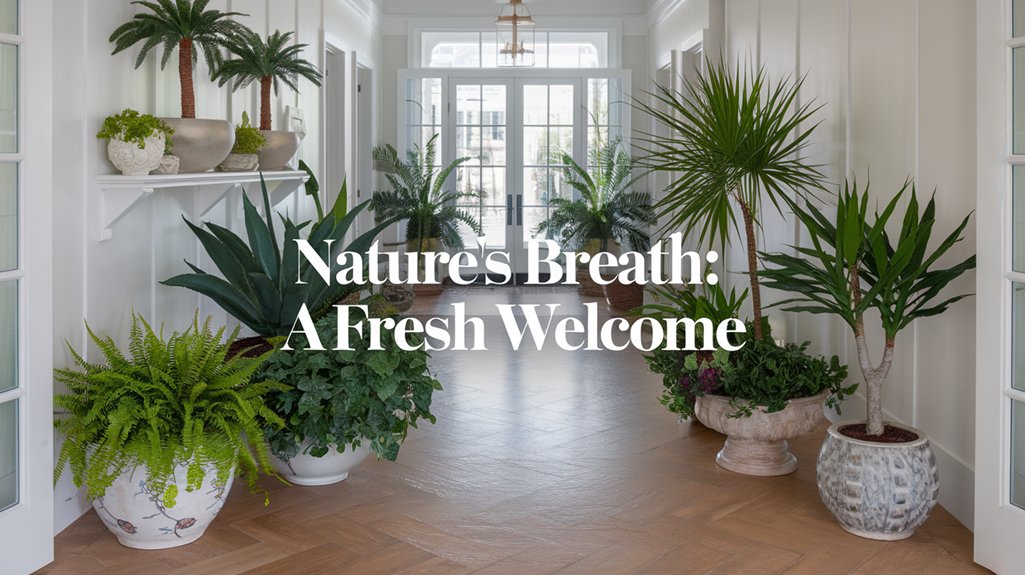
Enhance your hallway and entryway air quality with air-purifying plants like Pothos, Snake Plants, and Peace Lilies. These plants thrive in low-light and improve indoor air by removing toxins such as formaldehyde and benzene. They’re also low-maintenance, making them perfect for busy spaces. To maximize their benefits, place them near natural light and water them according to their needs. Confirm your plants are healthy and well-maintained to keep your space fresh and inviting. Discover how to optimize their placement and care further.
The Role of Air-Purifying Plants in Hallways and Entryways
While often overlooked, the strategic placement of air-purifying plants in hallways and entryways plays an essential role in enhancing indoor air quality.
Air-purifying plants like the Snake Plant excel in these areas by effectively removing toxins such as formaldehyde and benzene from the indoor air. Their ability to thrive in lower light conditions typical of entryways guarantees they flourish without needing excessive care.
These plants also regulate humidity levels, absorbing moisture through their leaves, which promotes a healthier indoor environment. Additionally, they contribute to reducing stress levels and improving mood, creating a more welcoming atmosphere as you enter your home.
Beyond health benefits, their aesthetic appeal adds a natural elegance, enhancing both the beauty and functionality of your living space.
Top Plant Selections for Hallways and Entryways
When selecting plants for hallways and entryways, consider their adaptability to varying light conditions and air-purifying capabilities. Pothos is a standout choice for its ability to thrive in low light while enhancing air quality with minimal maintenance. Snake Plants, known for their resilience, excel in dark entryways, requiring little water and providing excellent filtration. Peace Lilies, with their beautiful blooms, purify air in low-light spots, adding elegance to your space. Chinese Evergreens, ideal for darker corners, are slow-growing and easy to care for, boosting air quality with striking foliage.
| Plant | Features |
|---|---|
| Pothos | Low light, air-purifying |
| Snake Plant | Minimal care, air-filtering |
| Peace Lily | Blooms in low light, purifies |
| Chinese Evergreens | Striking foliage, low light |
| ZZ Plant | Adaptable, improves air quality |
Light and Care Considerations for Entryway Plants
How do you guarantee your entryway plants thrive under varying conditions? Start by evaluating light exposure. Choose low-light plants like Snake Plants or ZZ plants for dim spaces, while brighter areas suit Bird-of-Paradise and Moth Orchids.
Address water needs by selecting species with minimal requirements, such as Snake Plants that thrive on infrequent watering. Monitor humidity levels; Chinese Evergreens prefer low humidity, whereas Peace Lilies need more moisture.
Tailor care requirements to specific plant species. Regular pruning keeps plants like Umbrella Plants manageable. Rotate plants periodically to promote even growth and maximize light exposure, essential for entryway plants in evolving spaces.
Arranging Plants for Maximum Impact
To maximize the impact of your entryway plants, start by strategically arranging them to enhance both aesthetics and functionality.
Group plants like tall Snake Plants with cascading Pothos to create visual interest and boost air purifiers’ effectiveness. Position them near natural light sources to improve lighting conditions, enhancing growth and air-filtering for species such as Peace Lilies.
Use decorative plant stands or hanging arrangements to elevate plants, guaranteeing they’re unobtrusive in high-traffic areas. Implement self-watering pots for consistent moisture levels, especially for Rubber Plants, promoting indoor air purification.
Regularly rotate plants to guarantee even light exposure, optimizing their contribution to the air quality.
- Grouping plants for visual interest
- Position near natural lighting
- Use decorative plant stands
- Employ self-watering pots
- Rotate for even growth
Maintaining Healthy Hallway and Entryway Plants
Although maintaining healthy hallway and entryway plants may seem straightforward, it requires careful attention to various factors that influence plant health.
Begin by regularly inspecting your indoor plants for signs of stress like yellowing leaves or pest infestations, ensuring any issues are addressed promptly to maintain ideal air quality.
Adjust watering needs according to the typically lower humidity in hallways; keep the soil moist but not waterlogged. Select pots with drainage holes to prevent overwatering and root rot.
Prune dead leaves to encourage healthy growth and periodically rotate plants for even light exposure, which also prevents them from leaning excessively.
Enhancing Aesthetic Appeal With Greenery
Incorporating greenery into hallways and entryways not only elevates the visual appeal of these changing spaces but also contributes to a healthier environment.
By selecting plants that thrive in lower light, like Snake and ZZ Plants, you guarantee these areas remain vibrant.
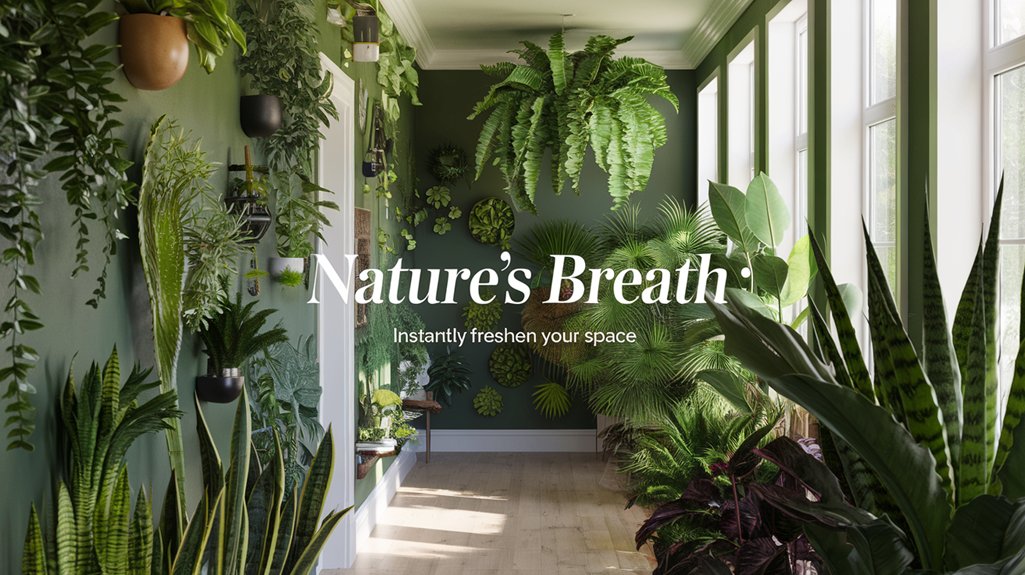
Hanging Pothos effectively utilizes vertical space, adding lush charm to narrow corridors.
Vibrant Moth Orchids serve as focal points, injecting color and elegance into plain spaces.
To create dynamic arrangements, group plants like Peace Lilies and Chinese Evergreens, enhancing air quality and design.
- Snake and ZZ Plants: Perfect for low-light conditions.
- Hanging Pothos: Utilizes vertical space efficiently.
- Moth Orchids: Adds vibrant color and elegance.
- Peace Lilies and Chinese Evergreens: Improve air quality.
- Dynamic Grouping: Enhances overall aesthetic appeal.
Conclusion
You’ve now got the knowledge to transform your hallway or entryway into a vibrant, air-purifying sanctuary. By selecting the right plants and understanding their light and care needs, you’ll enhance both air quality and aesthetic appeal. Arrange them thoughtfully for maximum impact and maintain their health with regular attention. Remember, the right greenery not only enriches your home’s atmosphere but also provides a welcoming touch of nature as you step through the door.