


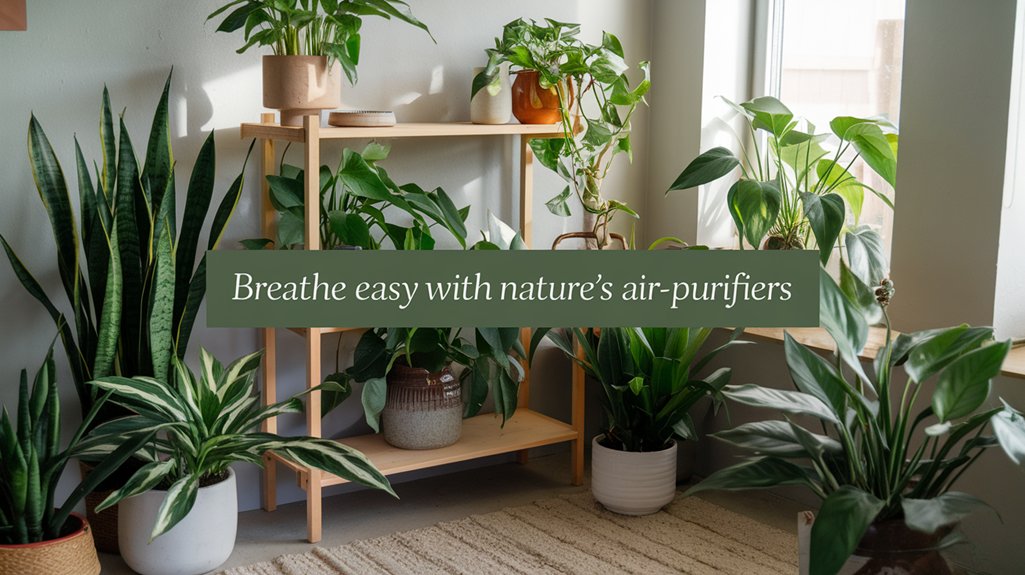
Transform your home into a lush, purified sanctuary with air-purifying plants. For the living room, Peace Lilies and Snake Plants remove VOCs, while Areca Palms beautify. Bedrooms benefit from Snake Plants, which release oxygen at night. In bathrooms, Spider Plants thrive with humidity, keeping air fresh. For your workspace, choose Parlor Palms for no-fuss decor. Playrooms should feature child-safe Spider Plants. Each plant demands specific care, perfectly curated to fit your space’s needs, keeping you wanting more.
Transforming Your Living Room With Greenery
Transforming your living room with greenery isn’t just about aesthetics; it’s a scientifically-backed way to improve indoor air quality. By incorporating air-purifying plants, you can effectively remove toxins like formaldehyde and benzene from your space.
Start with a Peace Lily or Marble Queen Pothos; these plants excel at filtering harmful VOCs. The Snake Plant is another excellent choice, thriving with minimal care while boosting oxygen levels.
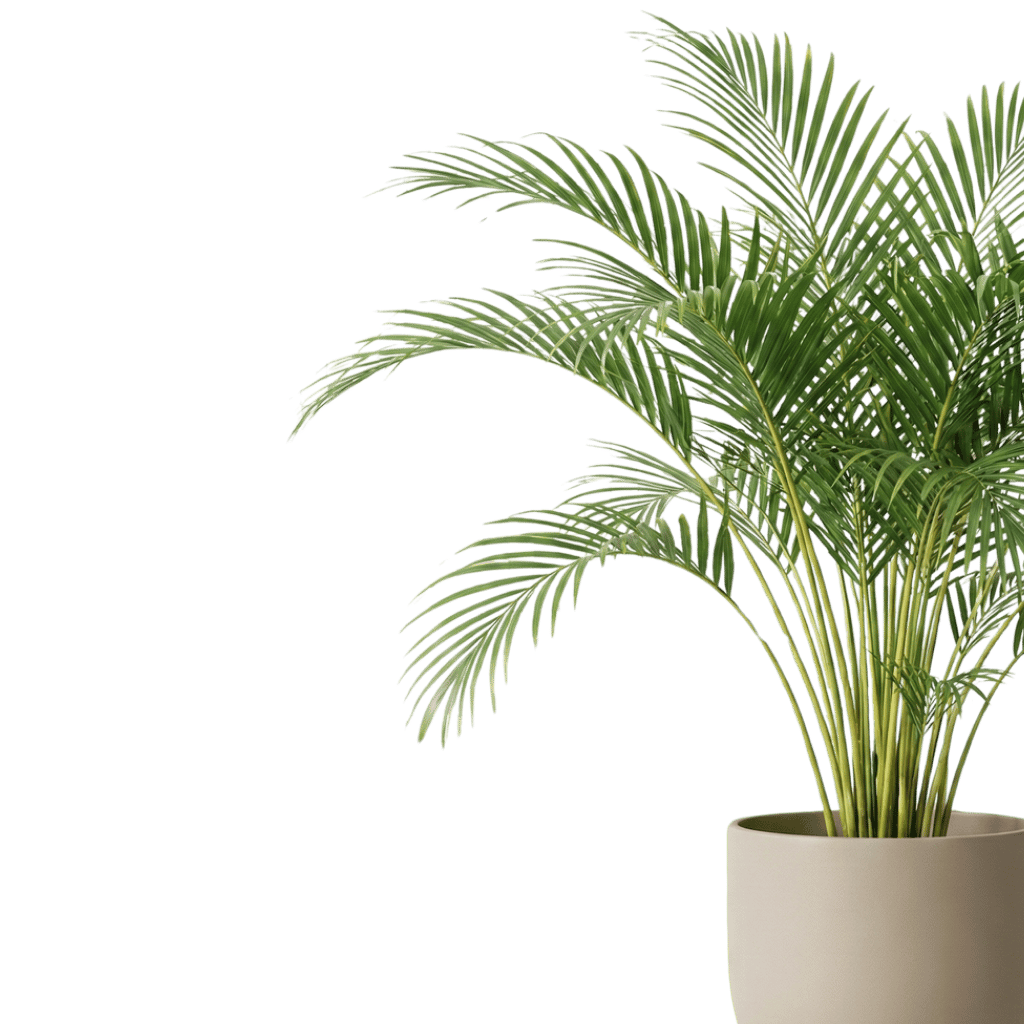
To increase humidity and decor, group species like Boston Ferns and Areca Palms. For ideal results, target one plant per 100 square feet to efficiently cleanse the air.
Enhance your living room’s decor with stylish pots and stands, turning your space into a lush, vibrant environment that’s both inviting and health-promoting.
Best Air-Purifying Plants for Bedrooms
While selecting plants for your bedroom, focus on species that purify the air without demanding extensive care.
Air-purifying plants like the Snake Plant, also known as Mother-in-Law’s Tongue, are perfect for bedrooms. It produces oxygen at night, enhancing air quality, and requires watering only every 2-8 weeks.
Peace Lilies thrive in low-light conditions, efficiently filtering formaldehyde and benzene.
Gerbera Daisies remove toxins like benzene and boost oxygen levels at night.
Money Plants excel in air purification but keep them away from pets due to their toxicity.
- Snake Plant: Minimal watering, oxygen at night
- Peace Lilies: Filter formaldehyde, thrive in low light
- Gerbera Daisies: Enhance oxygen, great for sleep
- Money Plants: Excellent air purifiers, toxic to pets
- Plant Density: One plant per 100 square feet
Incorporating one or two indoor plants can greatly purify the air in your bedroom.
Enhancing Your Bathroom With Indoor Plants
If you want to revitalize your bathroom, consider introducing indoor plants that thrive in humid conditions. Lady Palms are perfect for removing ammonia from cleaning products, enhancing air quality. Boston Ferns need high humidity and can elevate moisture levels while purifying air. Opt for Spider Plants in children’s bathrooms; they’re non-toxic and safe for pets, effectively reducing carbon monoxide and xylene. Areca Palms adapt excellently to the bathroom environment, thriving in filtered light and maintaining ideal humidity levels. All these plants not only purify, but also add natural beauty to your space.
| Plant Type | Benefits |
|---|---|
| Lady Palm | Removes ammonia, thrives in humidity |
| Boston Ferns | Elevate moisture, filter pollutants |
| Spider Plants | Non-toxic, purifies xylene, safe for pets |
| Areca Palms | Maintains humidity, filtered light thriving |
| All Plants | Enhance air quality, add natural beauty |
Creating a Healthier Workspace With Plants
Enhancing your workspace with air-purifying plants can greatly improve both air quality and productivity. Incorporating species like the Heartleaf Philodendron and Spider Plant can filter indoor air pollutants such as formaldehyde and carbon monoxide.
These plants purify air, ultimately boosting health and productivity. The NASA Clean Air Study suggests one plant per 100 square feet, so for a 150 square foot workspace, 1.5 to 2 plants are ideal.
Opt for easy-care options to fit your busy schedule:
- Heartleaf Philodendron: Thrives in indirect light, purifying the air efficiently.
- Spider Plant: Increases humidity, requires minimal water.
- Parlor Palm: Prefers indirect sunlight, easy to maintain.
- Money Plant: Tolerates low light, improves indoor air quality.
- Snake Plant: Hardy, needs infrequent watering.
These choices will purify your workspace and enhance your health.
Child-Friendly Air-Purifying Plants for Playrooms
Creating a playroom environment that’s both safe and healthy is essential, and incorporating air-purifying plants can make a significant difference.
Choose child-friendly, non-toxic options like Spider Plants, which efficiently filter xylene and carbon monoxide, ensuring a safe environment.
Boston Ferns, pet-friendly as well, raise humidity levels, enhancing comfort while combating indoor air pollutants.
Areca Palms, with their moisture-absorbing abilities, thrive in playrooms, promoting a healthier climate without endangering kids.
Lady Palms excel in low-light conditions, effectively removing ammonia and maintaining a toxin-free area.
By integrating these plants, you enhance air quality, reduce toxins, and create a calming atmosphere conducive to learning and play.
Regularly water and provide indirect sunlight for ideal growth, ensuring your playroom stays vibrant and healthy.
Conclusion
By strategically placing air-purifying plants throughout your home, you’ll transform each space into a more vibrant and healthier environment. Choose spider plants or peace lilies for the living room to enhance air quality. Opt for snake plants in the bedroom for their oxygen-boosting properties. Use ferns in the bathroom to thrive in humidity, and add succulents to your workspace for low-maintenance greenery. For playrooms, select non-toxic options like Boston ferns. With proper care, these plants will flourish and purify your air.