
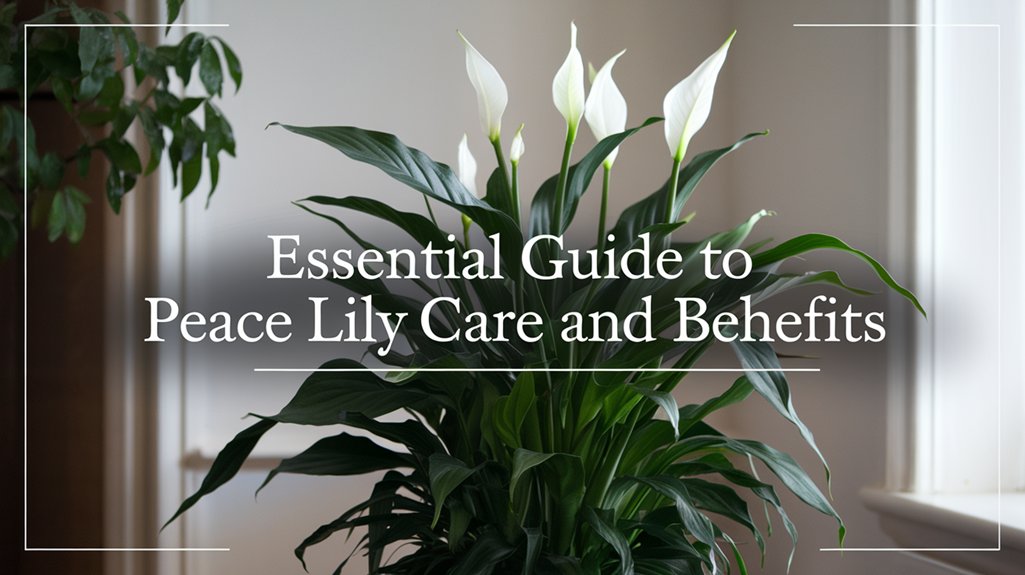
To care for your Peace Lily (Spathiphyllum ‘Mauna Loa’), position it in bright indirect light, ideally near an east-facing window. Use a well-draining potting mix with a pH of 6.0-7.0 in a pot with drainage holes. Maintain temperatures between 65°F and 85°F. Water when the top inch of soil is dry, and fertilize every 4-6 weeks in warmer months. Address leaf issues like yellowing from overwatering. Learn more about managing common problems and success tips.
Choosing the Right Location
How do you guarantee your Peace Lily thrives in its new home?
Position your peace lily where it receives bright, indirect light. An east-facing window is ideal, but a south-facing window works if it’s less than 3 feet away, ensuring ample indirect sunlight. Avoid direct sunlight to prevent leaf burn, which can lead to leaf drop.
Monitor the location’s temperature, maintaining a range between 65°F and 85°F (18°C to 29°C) for best growth. Be vigilant of drafts or cold spots as they can affect the plant’s health.
Regularly check light exposure, considering weather fluctuations like cloud cover. If you notice leaf curling or paling, excessive light may be the issue, and you should adjust its location accordingly.
Soil and Planting Requirements
For ideal Peace Lily growth, selecting the appropriate soil and planting method is vital. Use a well-draining potting mix enriched with organic matter to maintain peak moisture levels. Confirm the pot includes drainage holes and has a diameter of 6-8 inches for ideal conditions. Position the crown of your peace lily level with the soil surface. The soil’s pH should range from 6.0 to 7.0. Watering is vital when the top inch feels dry.
Repotting should occur when the plant doubles in size or annually to refresh soil nutrients. Opt for terra-cotta or clay containers, which help wick excess moisture from the roots.
| Key Factor | Description |
|---|---|
| Potting Mix | Well-draining with organic matter |
| Container Size | 6-8 inches diameter |
| Drainage Holes | Vital for moisture control |
| Soil pH Level | 6.0 to 7.0 |
| Repotting Frequency | Annually or plant size doubles |
Watering and Fertilization Guidelines
After establishing the right soil and planting conditions, focus on maintaining ideal hydration and nutrient levels for your Peace Lily.
Watering should occur when the top inch of soil feels dry to the touch, ensuring the soil remains consistently moist but not soggy to prevent root rot. Use room temperature water for irrigation.
Fertilization is essential; apply a balanced liquid fertilizer every 4-6 weeks during spring and summer to support best growth and blooming.
Avoid over-fertilization, especially in fall and winter, as it can lead to leaf burn and plant damage.
Monitor your Peace Lily for signs of distress, like yellowing leaves, which may indicate overwatering or nutrient deficiencies, and adjust your practices accordingly for a thriving plant.
Managing Light and Temperature
While managing light and temperature, it’s vital to provide your Peace Lily with the right conditions to flourish.
Make sure it receives six to eight hours of indirect light daily by placing it less than three feet from a south-facing window. This proximity allows for filtered sunlight, promoting healthy growth without risking leaf burn.
Monitor light conditions, as curling or pale leaves indicate excessive light, while drooping leaves suggest insufficient exposure.
Temperature plays a significant role in your Peace Lily’s health.
Maintain room temperature between 68°F and 85°F (20°C to 29°C), as they’re sensitive to cold. Avoid temperatures below 60°F (15°C) to guarantee ideal health.
Consistent monitoring and adjustments are pivotal for maintaining the perfect environment for your Peace Lily’s thriving growth.
Common Problems and Solutions
To effectively address common problems with Peace Lilies, it’s crucial to understand their underlying causes.
Yellowing leaves often result from overwatering, leading to root rot, or underwatering, causing stress. Regularly monitor soil moisture levels to prevent these issues.
Brown leaf tips typically indicate low humidity, underwatering, or direct sunlight exposure, necessitating adjustments to your care routine.
Drooping leaves may signal either overwatering or insufficient light, so check both watering habits and light exposure.
Common pests like mealybugs and spider mites require vigilant inspections and swift treatment to maintain plant health.
Fertilization frequency also impacts leaf health; over-fertilization can cause brown tips and root burn, whereas balanced fertilization during growth phases supports ideal peace lily vitality.
Understanding Toxicity and Safety Precautions
Although Peace Lilies are popular houseplants thanks to their lush foliage and low maintenance needs, their toxicity is an essential consideration for households with children and pets.
The Peace Lily contains calcium oxalate crystals, which, when ingested by humans, can lead to symptoms such as nausea, vomiting, diarrhea, and abdominal pain.
Pets like dogs and cats experience similar effects, including drooling, vomiting, diarrhea, and weakness, if they chew on or ingest the plant material or sap.
To mitigate these risks, maintain the Peace Lily out of children’s and pets’ reach. Use gloves when handling the plant to prevent skin irritation.
Monitor your pets’ behavior around houseplants and consider non-toxic plants to guarantee a safe environment for everyone.
Conclusion
By understanding the specific needs of your peace lily, you’ll guarantee its health and vibrancy. Choose a spot with indirect light and maintain a warm environment. Use well-draining soil and keep it consistently moist, but avoid overwatering. Fertilize regularly with a balanced formula for lush growth. Be vigilant for signs of pests or nutrient deficiencies. Remember, peace lilies are toxic, so handle them with care, especially around pets and children. Your attentiveness will reward you with a thriving plant.