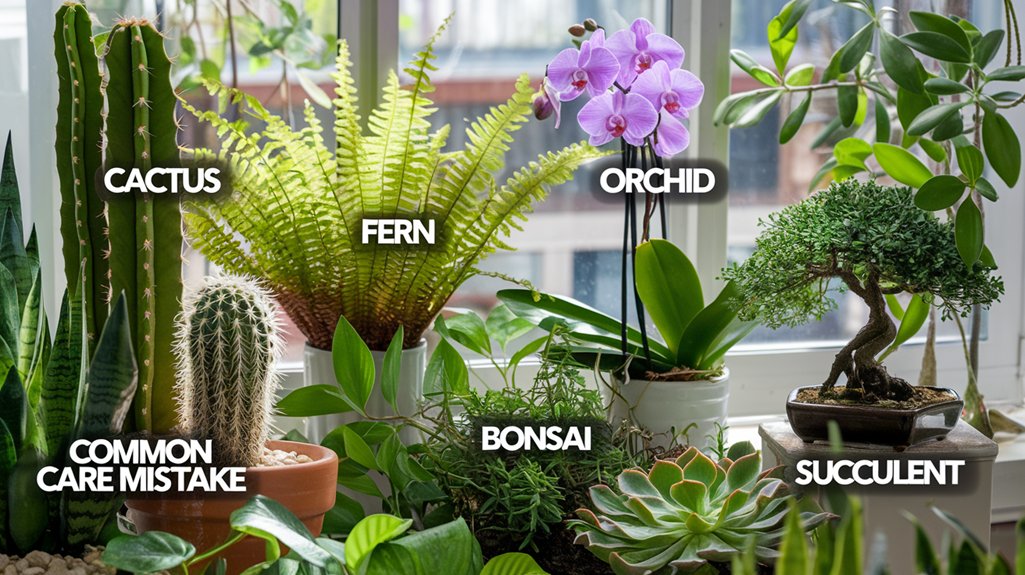




The Boston Fern (Nephrolepis exaltata ‘Bostoniensis’) boasts impressive fronds, reaching up to 4 feet, with deltoid-shaped leaflets and undulating edges, thriving under medium bright light. Guarantee well-drained yet moist soil and maintain high humidity through misting. Fertilize every 4-6 weeks for peak growth and prune brown fronds to prevent pests. Propagate via stolons or division, and watch for spider mites in dry conditions. Explore its care intricacies and witness this fern flourish.
Understanding the Characteristics of Boston Fern
The Boston fern, scientifically termed Nephrolepis exaltata ‘Bostoniensis’, captivates with its distinctive botanical features.
You’ll notice its broad, arching fronds, which can extend up to 4 feet long and 6 inches wide, forming a cascade of lush, feathery foliage. Each frond consists of numerous leaflets, or pinnae, that display a deltoid shape with slightly serrate, undulating edges arranged in an alternate pattern.
These fronds aren’t just decorative; they house round sori along the margins on their undersides, essential for reproduction.
Boston ferns also produce long, thin runners, known as stolons, which root upon ground contact, forming new plants.
This cultivar is renowned for its air-purifying characteristics, enhancing indoor environments considerably.
Optimal Growing Conditions for Boston Ferns
Although Boston ferns are resilient, providing them with ideal growing conditions guarantees their lush growth and health.
Boston fern needs include medium bright light, making east-facing windows most suitable indoors. Outdoors, aim for full to partial shade.
Important to growing Boston ferns is maintaining a well-drained yet moist soil, using a soilless potting medium that retains moisture without becoming soggy. Regular watering is essential, as consistent moisture supports their vitality.
High humidity levels are crucial; misting or placing them in steamy environments like bathrooms can enhance their well-being.
Protect these ferns from temperatures dropping below 40ºF, with most suitable night temperatures around 65ºF.
Adhering to these conditions guarantees effective care for Boston ferns, promoting their thriving development.
Effective Care Practices for Healthy Boston Ferns
When cultivating Boston ferns, prioritizing effective care practices assures vibrant health and robust growth.
Begin with well-drained, moisture-retaining soil or a soilless medium to guarantee ideal moisture retention and prevent root rot. Consistent moisture is critical; keep the soil moist but not soggy.
High humidity is essential—mist the leaves twice weekly and consider humidifiers or pebble trays. Fertilize with a balanced liquid or slow-release formula at half strength every 4-6 weeks during active growth.
Regular pruning of brown fronds promotes new growth and mitigates pests. Repotting should occur biennially or when the fern outgrows its container.
Vigilantly monitor for stress indicators like leaf drop, adjusting care practices for moisture and humidity as needed.
Addressing Common Problems and Pests in Boston Ferns
Maintaining healthy Boston ferns requires vigilance against common problems and pests, which can disrupt their growth and vigor.
Brown fronds and leaf drop often signify low humidity or inconsistent moisture levels. To combat this, guarantee consistent moisture and elevate humidity, perhaps through misting or pebble trays.
Pests like spider mites thrive in dry conditions and can be managed with water sprays or neem oil. Be wary of overwatering, as it precipitates root rot and fungal diseases such as powdery mildew.
Always use well-draining soil to prevent these issues. Regularly inspect your fern for pests or signs of fungal diseases, and remove dead fronds promptly to minimize spread.
Propagation and Repotting Techniques for Boston Ferns
For successful propagation and repotting of Boston ferns, it’s crucial to understand the nuances of their growth habits.
To propagate Boston ferns, division is ideal during late winter or early spring. Guarantee each division retains adequate fronds and roots to thrive.
When repotting, select a container 2-3 sizes larger, employing a well-draining mix of multipurpose and soil-based compost. This supports ideal growing conditions and prevents root-bound issues.
Repot every couple of years to refresh the nutrient content. After repotting, water thoroughly to expel air pockets, aiding root establishment.
Propagation via stolons involves gently extracting a rooted runner tip and planting it in moist soil, promoting robust new growth and maintaining the integrity of the root ball.
Conclusion
In summary, mastering the cultivation of Nephrolepis exaltata ‘Bostoniensis’ involves understanding its specific characteristics and providing ideal growing conditions. Guarantee consistent moisture, high humidity, and indirect sunlight to promote healthy growth. Implement effective care practices, such as regular pruning and monitoring for pests like spider mites and scale insects. Propagate through division during repotting to maintain plant health. By addressing potential problems promptly, you’ll guarantee your Boston Fern thrives in its environment, showcasing its lush, verdant foliage.