

Super Fresh
Harvested and shipped within days when you order.
Fair Prices
We eliminate extra steps so you get better value.
Rated for Real Life
Clearly labeled so you can choose the right plant fast.
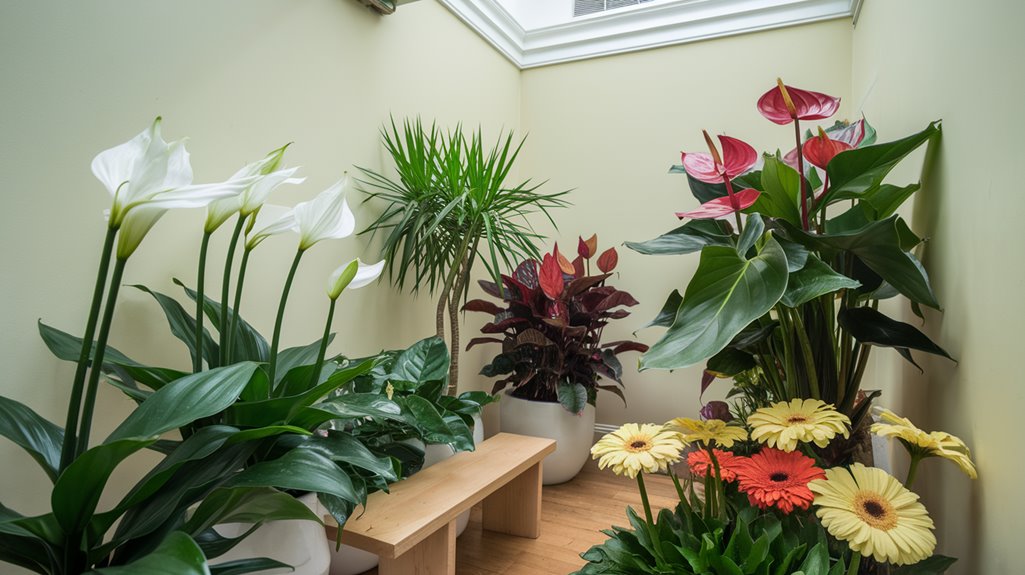
Discover air-purifying plants that double as stunning home decor. Phalaenopsis and Moth Orchids not only enhance interiors but also remove toxins like xylene and toluene. Peace Lilies and Anthuriums, with their elegant blooms, eliminate trichloroethylene and formaldehyde. These plants thrive in indirect light and require minimal maintenance. Even the vibrant King of Hearts effectively purifies air, offering heart-shaped leaves that captivate. Explore these botanicals further for their full benefits.
When you consider incorporating plants into your living space for both aesthetic appeal and health benefits, orchids, particularly the Phalaenopsis variety, stand out as an excellent choice.
These air-purifying plants are adept at removing toxins like xylene and toluene, greatly improving air quality. According to NASA’s Clean Air Study, orchids are recommended for enhancing indoor environments.
Their elegant appearance, coupled with the ability to thrive in temperatures ranging from 15 to 30 degrees Celsius, makes them ideal for homes. They prefer indirect light, which suits most indoor settings, and their beautiful blooms, appearing twice yearly, add sophistication.
Orchids require minimal maintenance, needing less frequent watering, thereby aligning with busy lifestyles while purifying the air and beautifying your space.
Shifting focus from the elegance of orchids, the Peace Lily, or Spathiphyllum, emerges as another formidable contender in the domain of air-purifying plants.
Renowned for its elegant white flowers, this plant not only enhances aesthetics but also considerably improves indoor air quality. It effectively removes toxins from the air such as trichloroethylene, benzene, and formaldehyde.
Here’s why the Peace Lily is an ideal choice for your space:
While enhancing your living space with their vibrant colors, Moth Orchids, or Phalaenopsis, are also efficient air purifiers known for their ability to filter out pollutants like xylene and toluene.
These air purifying plants are celebrated for improving indoor air quality with their beautiful blooms. Their elegant flowers provide aesthetic appeal, transforming any room they inhabit.
Moth orchids thrive in bright filtered light, essential for their growth and blooming. They’re low-maintenance, preferring temperatures between 15 to 30 degrees Celsius and requiring infrequent watering.
As they filter pollutants, these orchids not only beautify interiors but also enhance well-being by contributing positively to the environment. Incorporating them into your home can effectively combine beauty and function.
Though often admired for its striking appearance, the King of Hearts, scientifically known as Homalomena wallisii, offers more than just visual appeal.
Its vibrant flowers and heart-shaped leaves not only enhance the aesthetic value of indoor spaces but also act as air-purifying agents. This plant effectively removes volatile organic compounds, such as xylene and toluene, leading to a healthier indoor environment.
Consider these key features:
Incorporating King of Hearts into your home promotes both aesthetic charm and improved air quality.
Anthurium, with its vibrant heart-shaped flowers, not only captivates aesthetically but also serves a functional role in indoor air purification.
Known for its striking red or white blooms, Anthurium enhances ambiance while purifying air by eliminating toxins like formaldehyde and ammonia.
These indoor plants thrive in bright, indirect light and prefer elevated humidity levels, adapting well to homes or offices.
Low maintenance in nature, Anthuriums require moderate watering and periodic fertilization to maintain their beautiful blooms and support a prolonged blooming cycle lasting several months.
By improving air quality, Anthuriums also elevate mood, making them a favored choice among plant enthusiasts.
Incorporating this plant into your space guarantees both visual appeal and a healthier environment, resulting in improved indoor living conditions.
You’ve explored how orchids, peace lilies, moth orchids, King of Hearts, and anthuriums are more than just decorative plants. These botanical wonders not only enhance your space with vibrant blooms but also improve air quality through natural filtration processes. By incorporating these plants, you’re engaging in a scientifically-backed method to reduce indoor pollutants. Embrace this fusion of beauty and function, as each plant contributes to a healthier, more aesthetically pleasing environment in your home.