
Super Fresh
Harvested and shipped within days when you order.
Fair Prices
We eliminate extra steps so you get better value.
Rated for Real Life
Clearly labeled so you can choose the right plant fast.
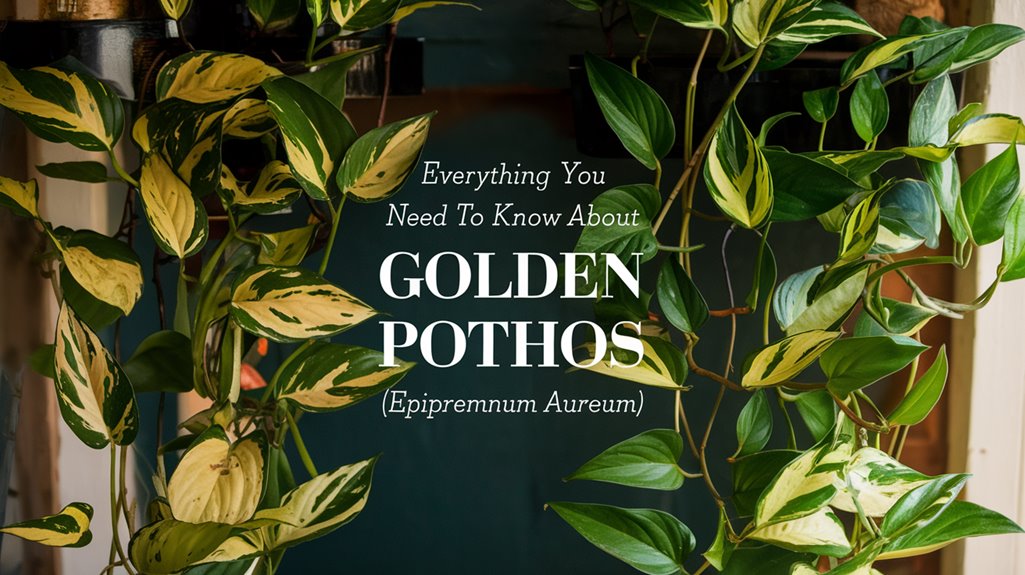
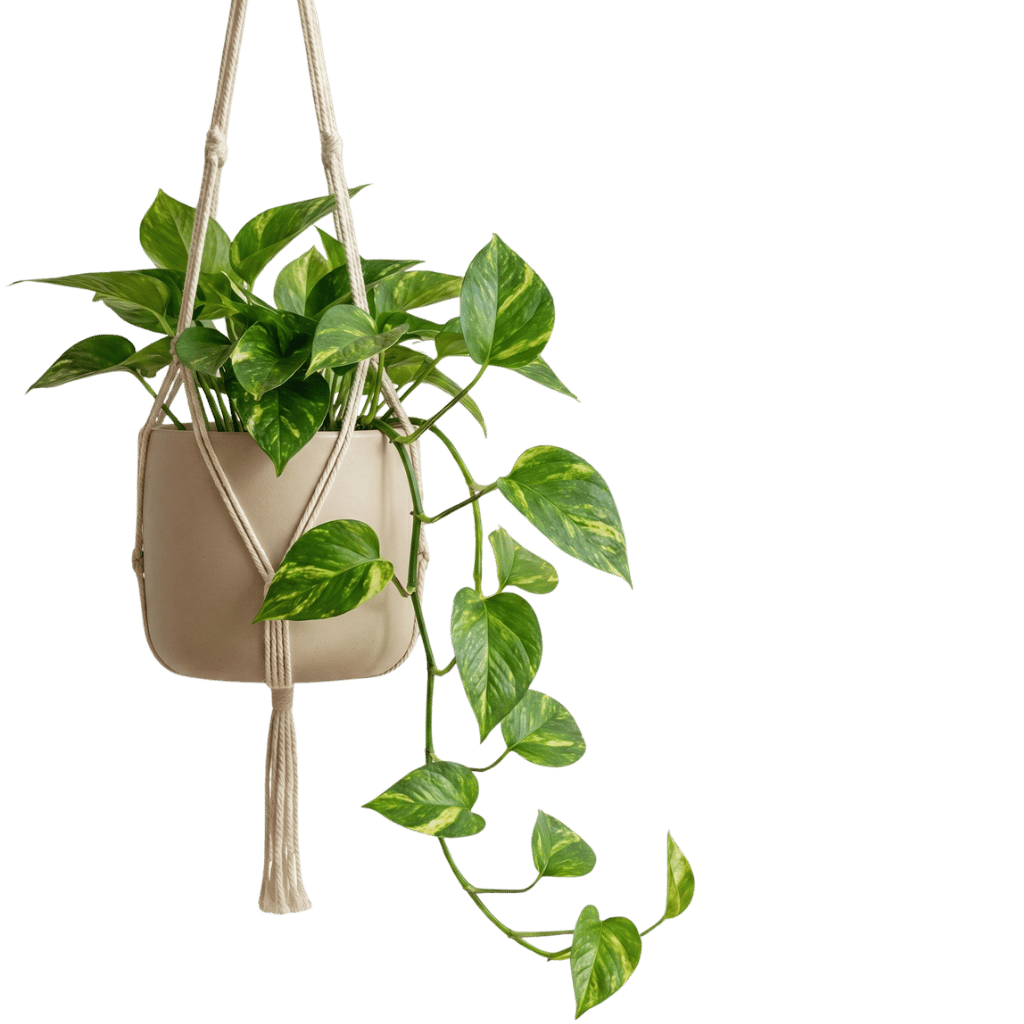
Golden Pothos (Epipremnum aureum) thrives in bright indirect light, prefer temperatures between 65°F-85°F, and needs well-draining soil with a pH of 6.1-6.8. Water every 1-2 weeks, allowing the soil to dry between sessions, and maintain 40-60% humidity. Regularly inspect for pests like mealybugs and spider mites, and use neem oil if needed. Fertilize monthly with a balanced solution during the growing season. Want more specifics about Golden Pothos care?
Although the Golden Pothos (Epipremnum aureum) is a hardy plant, understanding its light requirements is crucial for optimal growth.
This species thrives in bright indirect light, typically when positioned near east or west-facing windows. Such conditions foster ideal growth and maintain the striking patterns in variegated varieties.
If you’re providing medium to low indirect light, be aware that it may result in leggy growth and cause variegated leaves to turn solid green.
Direct sunlight should be avoided as it can scorch the leaves, leading to discoloration or damage.
Thus, guarantee adequate lighting conditions to support healthy development. Regularly monitor light levels to prevent issues related to insufficient illumination, securing the plant’s vibrant appearance and robust growth.
For ideal soil conditions, Golden Pothos (Epipremnum aureum) thrives in a well-draining potting soil rich in organic matter.
A standard houseplant mix, enhanced with Perlite and orchid bark, guarantees aeration and prevents root rot by allowing the soil to dry out completely between waterings. The best pH range of 6.1 to 6.8 facilitates nutrient absorption, vital for the plant’s robust growth.
Regular repotting, every 1-2 years, guards against the plant becoming root-bound.
Choose a container with adequate drainage holes, ideally one to two inches larger in diameter than the previous pot. Incorporating coarse planting media, like chunky bark, can mimic native habitat conditions, enhancing drainage and creating an environment where Golden Pothos can flourish.
Having established the ideal soil conditions, it’s important to understand the watering practices that complement them and promote healthy growth for your Golden Pothos (Epipremnum aureum).
Water your indoor plant every 1-2 weeks, allowing the soil to dry out completely between waterings. This prevents root rot by guaranteeing the roots aren’t submerged in water for extended periods.
Use lukewarm water at approximately 60°F, and let city water sit for 24 hours to allow chemicals to dissipate. Confirm thorough watering until it drains from the pot’s holes, discarding any excess water to avoid soggy soil.
Adjust your watering frequency based on light conditions—more frequent in bright light, less in dim settings—to maintain ideal moisture and prevent overwatering, indicated by yellowing leaves.
Why is it essential to maintain specific temperature and humidity levels for your Golden Pothos? This plant, scientifically known as Epipremnum aureum, thrives in temperatures ranging from 65°F to 85°F (18°C to 29°C).
It tolerates temperatures as low as 50°F (10°C) but may experience stress below this. Golden Pothos prefers an indoor humidity level of 40-60%, aligning well with environments like kitchens and bathrooms where moisture levels are naturally higher.
Maintaining higher humidity enhances growth and foliage appearance. To achieve this, use a humidifier or place a pebble tray with water nearby. Insufficient moisture results in dry, crispy leaf edges, signaling the need for increased humidity.
While adaptable to standard indoor conditions, it flourishes with added moisture, especially during dry winter months.
While caring for your Golden Pothos, scientifically known as Epipremnum aureum, it’s crucial to follow proper fertilization guidelines to secure ideal growth and vibrant foliage.
During the active growing season of spring and summer, monthly fertilization with a balanced, water-soluble fertilizer is recommended.
Here’s a detailed feeding schedule to contemplate:
Following these steps guarantees your pothos thrives.
When exploring the diverse world of Pothos, you’ll discover several enchanting varieties that cater to different aesthetic preferences and environmental conditions.
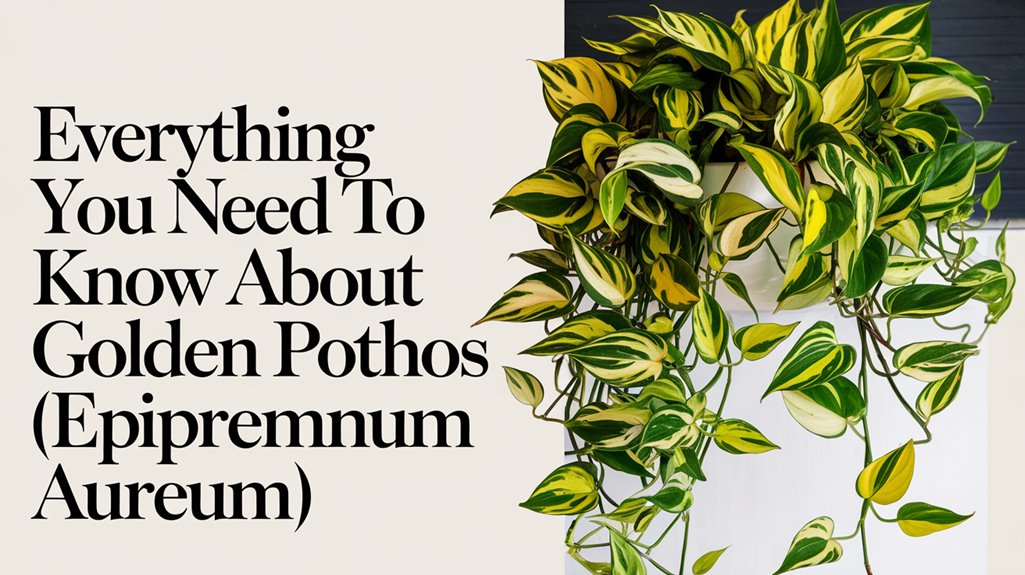
The Golden Pothos, or Epipremnum aureum, is renowned for its vibrant golden-yellow variegation on heart-shaped leaves, perfect for indoor decor.
Marble Queen, with its striking white and green variegation, demands higher light requirements to maintain its distinct coloring.
The Neon variety, in contrast, boasts bright chartreuse leaves that flourish even in lower light conditions.
Pearls and Jade presents a unique pattern with gray, green, and white perimeter colors, adding visual interest.
Silver Satin Pothos features thick gray-green leaves with silver splotches, enhancing its aesthetic and drought tolerance.
Each variety’s light requirements are key to preserving their variegation and vibrancy.
Exploring the diverse varieties of Pothos reveals the Golden Pothos as a popular choice for both aesthetic appeal and ease of care.
To propagate this species, start with cuttings from healthy vines, ensuring each has three leaves and is trimmed just below a node. Here’s how you can proceed:
Monitor progress and adjust care as needed for ideal results.
Potting a Golden Pothos requires precision to guarantee ideal growth and health.
Begin by selecting a pot one size larger, roughly 2 inches wider in diameter than the current container, ensuring it features a drainage hole to prevent waterlogging.
Choose a well-draining potting mix enriched with organic matter, incorporating Perlite and orchid bark to enhance aeration.
Repotting should occur every 1-2 years or when the plant becomes root-bound, ideally in spring to minimize stress on the plant.
After repotting, water thoroughly to facilitate recovery, allowing excess water to exit through the drainage hole to avert root rot.
Consistently monitor growth and watch for signs of being pot-bound, such as drooping leaves or visible roots, to determine repotting necessity.
Golden Pothos, scientifically known as Epipremnum aureum, often faces challenges from pests and diseases that require vigilant care.
To maintain your pothos health, be alert for these common issues:
When faced with common plant issues in your Epipremnum aureum, why not employ a strategic approach to secure its vibrant health? Yellowing leaves often signify overwatering. Adjust your watering schedule to let the soil dry out completely. If drooping leaves appear, deep watering is essential for hydration. Black spots indicate excess moisture; maintain proper drainage to prevent root rot. Insufficient light leads to leggy growth, so reposition your plant for ideal sunlight.
Pests like mealybugs and spider mites love Pothos. Inspect regularly and apply neem oil for effective management.
| Issue | Solution |
|---|---|
| Yellowing leaves | Allow soil to dry; adjust watering schedule |
| Drooping leaves | Provide immediate deep watering |
| Black spots | Reduce watering; maintain proper drainage |
| Leggy growth | Move to a brighter location |
By understanding the specifics of Epipremnum aureum care, you’ll cultivate a thriving golden pothos. Confirm it receives bright, indirect light and plant in well-draining soil. Maintain moderate watering, allowing the soil to dry between sessions. Keep temperatures between 65-85°F and humidity above 50%. Fertilize monthly during the growing season. Master propagation through stem cuttings, and repot when roots outgrow the pot. Vigilantly monitor for pests and diseases, addressing issues promptly to maintain plant health.