
Super Fresh
Harvested and shipped within days when you order.
Fair Prices
We eliminate extra steps so you get better value.
Rated for Real Life
Clearly labeled so you can choose the right plant fast.

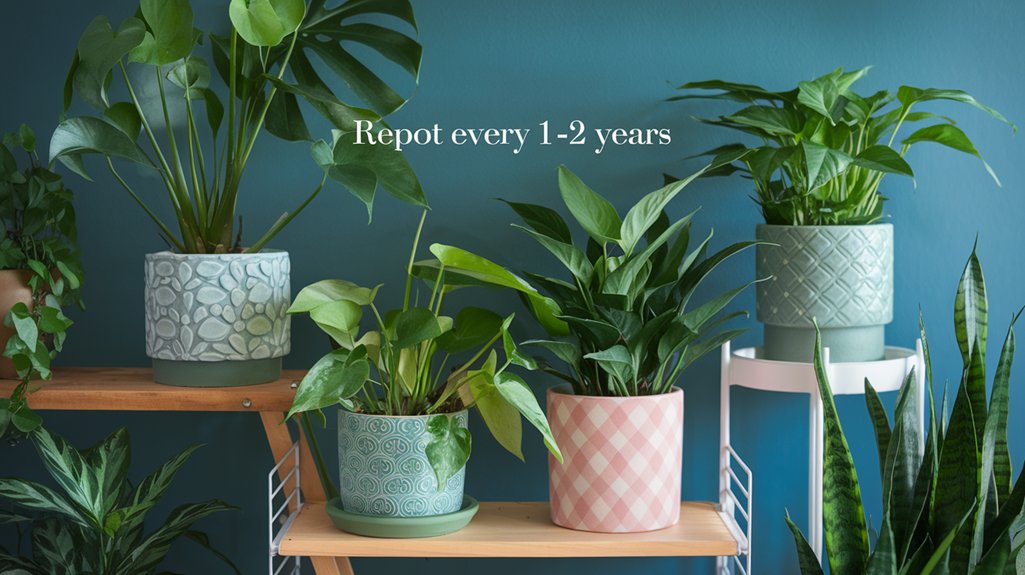
Repot air-purifying plants every 1-2 years to maintain their health. As roots grow, they become root-bound, escaping through drainage holes. Fresh soil guarantees ideal aeration and nutrients, preventing compaction while supporting growth. Choose containers just 1-2 inches wider, enhancing stability without trapping moisture. Amend potting mix for your plant’s specific needs; remember to moisten for easier shift. Discover how timing and technique can further enhance your plant’s vibrancy and health.
When your air-purifying plant’s roots begin peeking out of the drainage holes, it’s a clear sign it needs repotting due to being root-bound.
Root congestion can stunt new growth, and the plant’s ability to uptake nutrients is compromised. If you notice water immediately draining without soaking the soil, it indicates the roots are overly compacted, necessitating a larger pot for effective hydration.
Additionally, a plant top-heavy and prone to tipping over signals the need for increased stability through repotting.
Minimal new growth and smaller leaves suggest that root expansion is restricted, limiting the plant’s overall vigor.
Finally, a salty crust on the soil surface is a sign of excess mineral buildup, requiring soil replacement for ideal nutrient absorption.
Repotting air-purifying plants at the perfect time is crucial for their health and growth. The best time to tackle the repotting process is during late winter or early spring, aligning with the plant’s growing season. This timing guarantees the root system can expand without stress and fully benefit from a fresh soil mixture.
Look for signs such as roots protruding from drainage holes or water not soaking in as indicators that repotting is necessary.
Selecting the right container for your air-purifying plants is essential to guaranteeing their ideal growth and health.
Begin by choosing a new potting container that’s 1-2 inches larger in diameter than the current one, which is an important step to provide space for root expansion without causing excess dampness. Ascertain the new pot has a drainage hole; this is a good idea to prevent water accumulation that leads to root rot.
Consider the pot’s material carefully—terracotta offers excellent air circulation, whereas plastic retains moisture, benefiting humidity-loving species. Avoid considerably larger pots to prevent issues with overly damp potting soil.
Finally, select a container that harmonizes with your home decor while fulfilling the plant’s functional requirements.
To guarantee a seamless shift for your air-purifying plants, it’s crucial to meticulously prepare the soil before repotting.
Begin by lightly wetting the potting mix to achieve peak soil moisture, reducing plant stress during the change. Confirm the new pot is pristine, free from minerals and debris, which could negatively impact plant health.
Place a few inches of new soil into the pot, allowing the root ball ample space to establish and grow. Select a suitable potting mix tailored to your plant’s specific needs, incorporating amendments for better drainage or moisture retention if necessary.
Avoid excessive moisture to prevent root rot. Enhancing the soil with plant food can further support robust growth.
When starting on the repotting process, begin by carefully removing the plant from its current pot. Handle the stem and leaves gently to prevent damage.
Inspect the root ball for tightly packed or circling roots, and loosen them to promote healthy growth. Choose a new pot 1-2 inches larger in diameter with adequate drainage holes. This prevents waterlogging and supports a proper watering schedule.
Fill the bottom with fresh potting soil, place the plant centrally, and add soil around it, ensuring the existing soil level remains below the rim. Water thoroughly post-repotting, facilitating the plant’s adaptation and continued ability to purify air.
Position the plant in suitable lighting to ease its adjustment to the new pot environment.
While traditional repotting is effective, several innovative alternatives can maintain plant health without the hassle of upsizing pots.
Root-pruning allows you to trim up to one-third of the root mass, promoting robust growth without expanding the pot size.
A soil refresh involves replacing the topsoil layer with new potting mix, enhancing nutrient availability without a complete soil overhaul.
Air pruning containers feature slits that naturally prune roots, consequently preventing root-bound conditions and encouraging healthier root systems.
Self-watering pots efficiently regulate moisture levels, reducing the frequency of repotting and ensuring ideal hydration.
You can also elevate the plant using pot feet or stones to enhance drainage and address root-bound situations without changing the container.
Innovative repotting methods offer a fresh perspective on plant care, yet the importance of watering practices in maintaining plant health can’t be overstated.
Proper watering guarantees plants remain happy and healthy by preventing overwatering and underwatering. Conduct a finger test; when the soil feels dry, it’s time to water. Apply enough water to see drainage, which promotes robust root mass development.
When you repot, consider adding a well-draining soil mix to maintain moisture balance effectively. Be cautious of water quality; municipal water is usually fine, but well water with high salt content can harm your plants.
Adjust your watering frequency as seasons change and plants grow to guarantee ideal hydration. Always monitor moisture levels to support your plant’s health.
Fertilization plays a crucial role in nurturing air-purifying plants, as it supplies the essential nutrients required for vigorous growth and enhanced air-cleaning performance.
During the active growing months of spring or summer, you’ll want to fertilize every two weeks using water-soluble fertilizers. Apply a balanced 20-20-20 fertilizer, ensuring the ratio of nitrogen, phosphorus, and potassium supports robust foliage and root development. Spread it evenly over the top of the soil so the nutrients are readily available as plants grow.
Regular fertilization promotes sustained plant health.
To summarize, repotting your air-purifying plants is fundamental for their ideal health and growth. By recognizing signs like root-bound conditions and nutrient depletion, you can time repotting effectively. Choose a container with adequate drainage, and prepare a nutrient-rich soil mix to support your plant’s needs. Follow each step meticulously, or consider alternatives like root pruning when appropriate. Remember, consistent watering and targeted fertilization are essential for maintaining vigor and maximizing your plant’s air-purifying capabilities.