

Super Fresh
Harvested and shipped within days when you order.
Fair Prices
We eliminate extra steps so you get better value.
Rated for Real Life
Clearly labeled so you can choose the right plant fast.
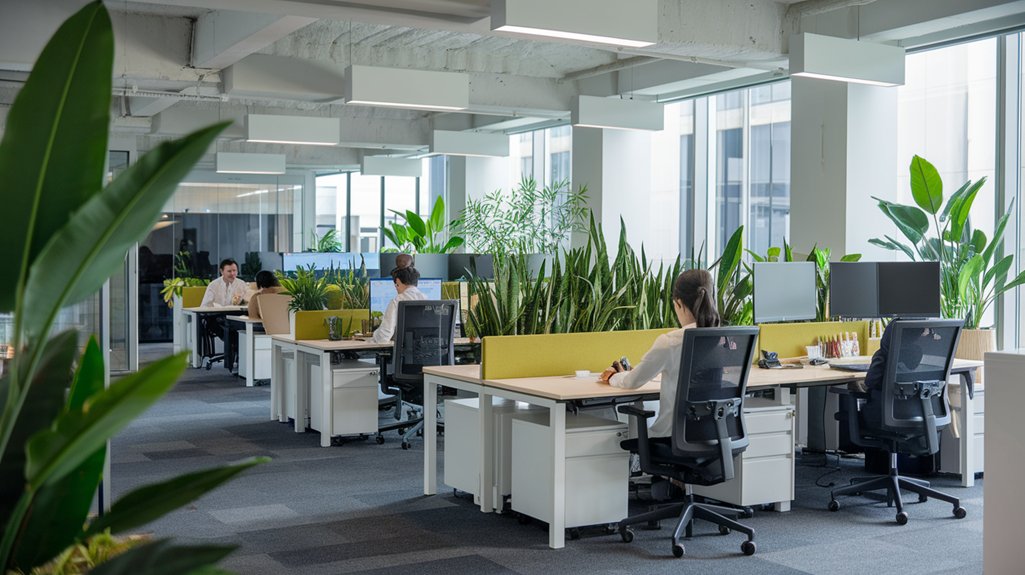
By incorporating plants into your workspace, you can boost employee productivity by up to 15%. Greenery enhances focus, concentration, and memory retention, making a more inviting atmosphere for work. With one plant per three employees, you’ll notice improvements in air quality and mental clarity, reducing stress and improving well-being. Plants also regulate humidity and temperature, creating comfortable conditions. As employees feel more valued, overall job satisfaction and team cohesion increase. Discover how plants can transform your workplace productivity further.
Although often overlooked, incorporating greenery into office spaces greatly boosts employee productivity.
Scientific studies reveal that the presence of plants can enhance productivity by up to 15%, attributed to improved focus, concentration, and memory retention.
You’ll find that office workers’ quality of work increases in plant-enhanced environments, reporting a 10% rise in attentiveness and faster reaction times.
Data suggests that strategically placing one plant per three employees can remarkably impact productivity and employee health, creating a more satisfying workplace atmosphere.
The aesthetic and psychological benefits of greenery make the environment more inviting and motivating, fostering creativity and output.
Therefore, integrating plants into your workspace isn’t just about aesthetics; it’s a strategic move to elevate workplace efficiency and employee well-being.
When you integrate plants into the workplace, you create a serene environment that enhances concentration and mental clarity.
Scientific studies demonstrate that office plants effectively contribute to stress reduction by alleviating anxiety levels. Specific herbs, such as lavender and rosemary, are particularly potent in promoting mental well-being.
Data reveals that employees report a 10% increase in attentiveness when surrounded by greenery, which underscores the significant role plants play in boosting productivity.
Furthermore, the presence of live plants can decrease blood pressure, fostering a relaxed state that directly impacts work performance.
Consequently, incorporating office plants is a strategic approach to enhance mental well-being and productivity, leading to greater job satisfaction and an overall healthier work atmosphere.
Introducing plants into the workplace markedly enhances air quality and offers numerous health benefits. NASA’s research demonstrates that certain indoor plants can filter harmful pollutants like formaldehyde and carbon monoxide, thereby improving air quality.
This cleaner air can lead to lower blood pressure and reduced sick building syndrome symptoms among employees. Plants help increase oxygen levels, which enhances breathing conditions and overall well-being. In an office environment, this translates to fewer health issues and reduced absenteeism.
Additionally, the strategic placement of plants aids in regulating humidity and temperature, creating a more comfortable and productive workspace. By enhancing air quality, plants not only contribute to employee health but also foster a healthier, more efficient office environment.
Beyond improving air quality and health, plants play a significant role in shaping a positive and inviting workplace environment. When you place plants around the office, you’re not just adding decor; you’re investing in landscaping that improves workers’ quality of life.
Data indicates a 15% increase in productivity when employees are surrounded by greenery. This green office approach heightens psychological engagement, leading to increased happiness and job satisfaction. Moreover, plants signal that you value employee well-being, strengthening the employer-employee relationship.
Aesthetically pleasing environments transform spartan workspaces into more inviting settings, enhancing morale and team cohesion. Essentially, integrating plants into office design is a strategic move toward fostering a productive and harmonious workplace atmosphere.
Although often overlooked, the incorporation of natural elements like plants in the workplace greatly enhances cognitive function.
Studies demonstrate that plants in the office can boost employee productivity by 15%. This data underscores the link between greenery and cognitive performance. Employees surrounded by plants exhibit superior memory retention and excel in basic cognitive assessments.
Significantly, the presence of plants increases mental clarity and concentration, enabling faster task completion with fewer errors. In fact, research reveals a 10% rise in attentiveness when plants are present, directly correlating natural elements with cognitive engagement.
Additionally, plants alleviate mental fatigue, fostering an environment primed for focused work. Integrating plants into office design isn’t merely aesthetic; it’s a strategic enhancement of cognitive function and productivity.
When designing a workspace with limited resources, you can leverage plants to create cost-effective yet impactful improvements. Implementing cost-effective design strategies by incorporating one plant per three employees can enhance air quality, promoting employee wellness and productivity without considerable financial outlay.
Strategically place plants so each employee sees at least one from their desk. This boosts psychological engagement, elevating cognitive function and productivity metrics. Minor layout adjustments to optimize natural light and views further enhance employee wellness.
Plants also act as natural sound barriers, diminishing noise pollution and fostering a conducive work environment with minimal cost. Effective plant integration through simple design strategies not only results in a visually appealing workspace but also markedly increases employee satisfaction and motivation.
You’ve seen how incorporating plants into your workspace can greatly boost productivity. By reducing stress and enhancing mental well-being, plants help create a positive work environment. They improve air quality, leading to better health outcomes and cognitive function. Embracing greenery is a cost-effective strategy that enhances employee satisfaction and efficiency. Data shows that natural elements can foster an inviting atmosphere, making your office not only more beautiful but also more productive and healthier.