
Super Fresh
Harvested and shipped within days when you order.
Fair Prices
We eliminate extra steps so you get better value.
Rated for Real Life
Clearly labeled so you can choose the right plant fast.

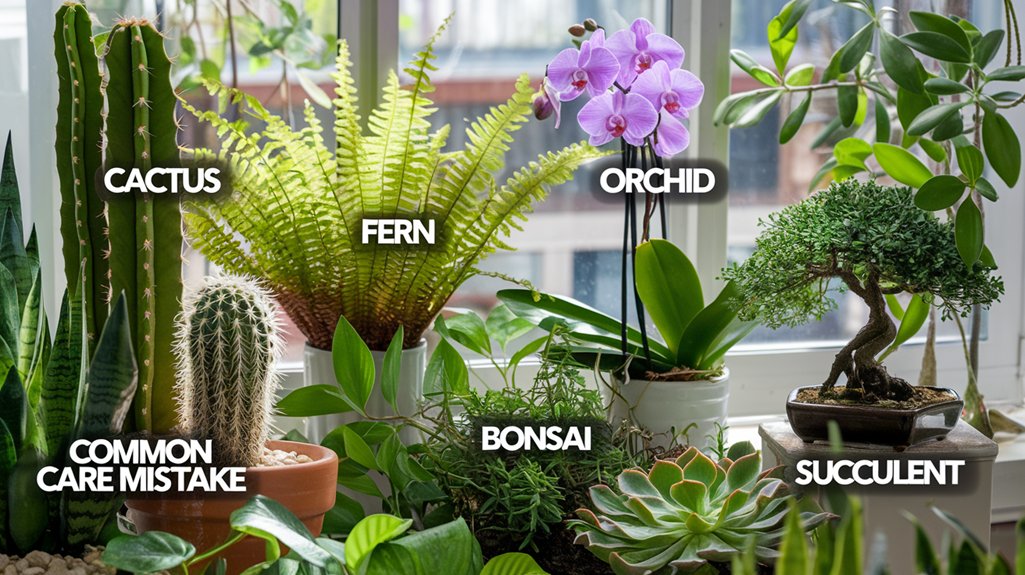
To create the perfect microclimate for indoor plants, assess your home’s light and humidity conditions with a light meter and hygrometer. Position plants like ferns and orchids where humidity exceeds 50%, and place light-loving species by south-facing windows. Guarantee even air circulation using fans or strategic placement. Regularly monitor and adjust temperatures for tropical or succulent preferences. Employing these methods optimizes growth and plant health, enhancing your understanding of precise indoor cultivation techniques further.
When creating the perfect microclimate for your indoor plants, it’s crucial to start by selecting species that align with the specific environmental conditions of your space.
Focus on humidity requirements first; ferns and calathea thrive in high humidity, making them ideal for moisture-rich environments.
Guarantee proper air circulation, especially for epiphytes like orchids, which need significant airflow to mimic their natural habitats.
Group plants with similar sunlight needs; for example, snake plants and pothos both adapt well to moderate light.
Match your plant choices to the temperature range of your space: tropical species require consistent warmth, while succulents prefer cooler temperatures.
This strategic selection optimizes growth conditions, guaranteeing your indoor plants flourish in their tailored microclimate.
How do you accurately assess your home’s microclimates to guarantee optimal conditions for your indoor plants?
Begin by evaluating light conditions with a light meter to identify areas with prime illumination for your plants. Use this data to find varying light intensities across the home.
Next, measure humidity levels in different rooms. Bathrooms and kitchens often have higher humidity, perfect for moisture-loving species like ferns.
Track temperature fluctuations with minimum/maximum thermometers to understand thermal variations, especially near heating vents.
Assess air circulation by observing stagnant zones where airflow is restricted, as good air movement prevents fungal diseases.
Regularly monitor these parameters and document them to make informed decisions, ensuring each plant thrives in its prime microclimate.
Although managing humidity is essential for indoor plant health, particularly for tropical species, achieving the ideal moisture level requires strategic techniques.
To excel in humidity management, keep the humidity at or above 50%. Grouping humidity-loving plants together is a smart method to create a localized microclimate. This approach leverages plant transpiration to elevate moisture levels while reducing watering frequency.
Employ humidity trays by filling them with gravel and water, ensuring pots stay elevated to prevent root rot. Regular misting offers an immediate but temporary humidity boost; avoid water accumulation on leaves to prevent mold.
During dry winter months, position plants in naturally humid areas like bathrooms or kitchens, provided there’s sufficient light, to maintain favorable conditions.
After establishing ideal humidity, focus shifts to enhancing light conditions for robust plant growth.
Use a light meter to assess light intensity across different home areas, as variances in window size and obstructions impact light availability. Position light-loving plants on a south-facing window sill for maximum exposure, while shade-tolerant species flourish in north-facing or shaded spots.
Rotate plants regularly to guarantee even light exposure, preventing growth imbalances. Guard against leaf burn by employing sheer curtains or moving plants back from windows during peak sunlight.
Monitor seasonal changes; as winter approaches and light intensity diminishes, adjust placements or introduce grow lights to supplement natural light. This careful management guarantees your plants receive ideal light year-round.
Maintaining the ideal temperature range of 65°F to 75°F (18°C to 24°C) is crucial for the health and growth of most indoor plants, as deviations can stress them and impede development.
Monitor temperature using minimum/maximum thermometers to track fluctuations. If plants are on upper floors or near heating vents, they’re more susceptible to dehydration due to rising warm air. Guarantee optimal humidity levels to mitigate this effect.
Avoid placing plants near drafty windows or doors in winter; sudden drops can shock them, causing leaf drop. For tropical species or those needing warmer conditions, use heat mats to maintain consistent root or germination temperatures.
Regularly adjust plant placement to enhance their environment, guaranteeing sustained growth and vitality.
To enhance the health of your indoor plants, improving air circulation is crucial. Stagnant air can lead to fungal diseases, particularly affecting epiphytes like orchids.
Use ceiling fans to effectively circulate air, thereby preventing humidity buildup that could harm plants grouped together. Good air movement improves transpiration, aiding in nutrient uptake and managing moisture levels, keeping humidity ideal.
Incorporate small oscillating fans for targeted airflow in areas with limited natural movement. This helps maintain a healthy microenvironment for your plants.
Rotate plants regularly to guarantee all sides receive adequate air exposure, promoting even growth and reducing mold risks.
While guaranteeing healthy air circulation is crucial, the foundation of plant health lies in the soil composition and nutrient management.
Start with a well-aerated soil mix comprising peat, coir, vermiculite, perlite, and sand to prevent compaction and promote root expansion. Avoid using heavy garden soil.
The soil food web plays a critical role; beneficial microorganisms decompose organic materials, enhancing nutrient availability. Regularly integrate compost to enrich soil health, providing a sustainable nutrient source.
Incorporate humic acid in your watering regimen to stimulate microbial activity, fostering robust plant growth.
Mulching aids in maintaining ideal soil moisture, feeding beneficial microbes, and safeguarding roots from pests. Consequently, managing these components guarantees a thriving indoor plant microclimate.
Ensuring the importance of your indoor plants involves a deliberate approach to regular maintenance and care practices.
Begin by routinely checking soil moisture levels to guarantee adequate hydration while averting root rot. Utilize a moisture meter for precision.
Prune any dead or decaying leaves immediately, as this prevents pathogen proliferation and sustains plant vigor.
Monitor humidity levels diligently, especially in arid conditions, employing humidity trays or clustering plants to enhance moisture retention.
Rotate plants periodically, ensuring uniform light exposure and promoting balanced growth.
Additionally, evaluate air circulation; stagnant air fosters fungal infections. Use fans or reposition plants to facilitate airflow.
This methodical regimen fosters a thriving indoor plant microclimate, optimizing conditions for robust health and growth.
In creating the perfect microclimate for your indoor plants, you’ve aligned scientific principles with practical steps. By selecting species suited to your environment, managing humidity, maximizing light, controlling temperature, and enhancing air circulation, you guarantee ideal growth conditions. Remember, nutrient-rich soil and regular maintenance are essential for sustained health. Continuously monitor these variables with precision, adjusting as needed. With this meticulous approach, your indoor garden will thrive, reflecting your dedication to botanical excellence.