
Super Fresh
Harvested and shipped within days when you order.
Fair Prices
We eliminate extra steps so you get better value.
Rated for Real Life
Clearly labeled so you can choose the right plant fast.
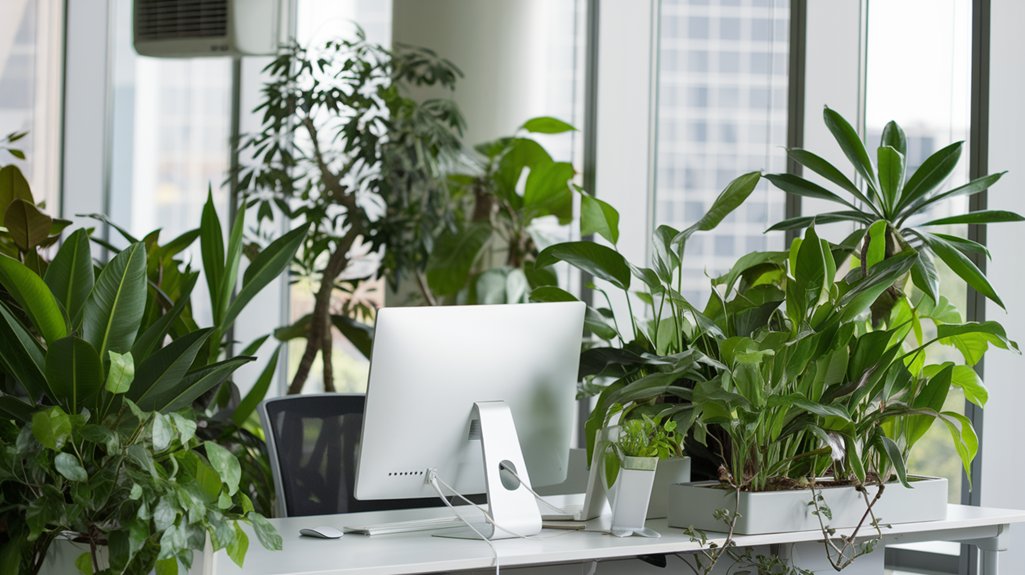
To maintain plants in air-conditioned offices, choose hardy varieties like Snake Plant or Peace Lily for low light and dry air adaptability. Position these plants 3-4 feet from AC vents to avoid cold drafts. Monitor humidity using a hygrometer, aiming for 40-60%, and consider misting tropical species. Water appropriately, checking soil dryness, and maintain regular pruning and leaf cleaning. Ensuring these factors will optimize plant health. Explore further for additional techniques and insights.
Selecting the right plants for air-conditioned environments is essential for maintaining vibrant and healthy foliage in office spaces.
Indoor plants like the Snake Plant (Sansevieria masoniana) and ZZ Plant (Zamioculcas zamiifolia) are excellent choices due to their tolerance of low light and minimal watering needs. These hardy varieties thrive despite low humidity typical in air-conditioned settings.
The Peace Lily (Spathiphyllum) adapts well, provided its roots remain moist, making it ideal for drier conditions.
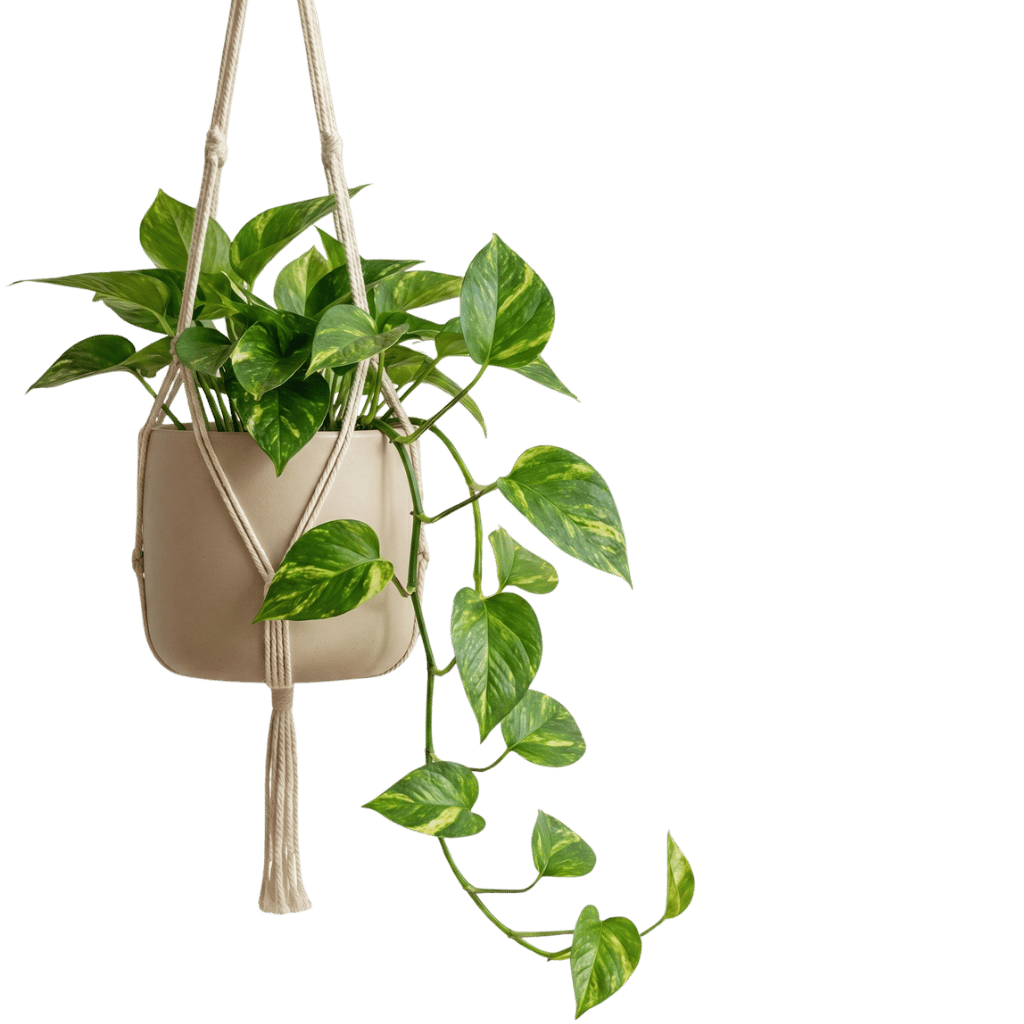
Golden Pothos (Epipremnum aureum) not only purifies the air but also flourishes in reduced light, common in office environments.
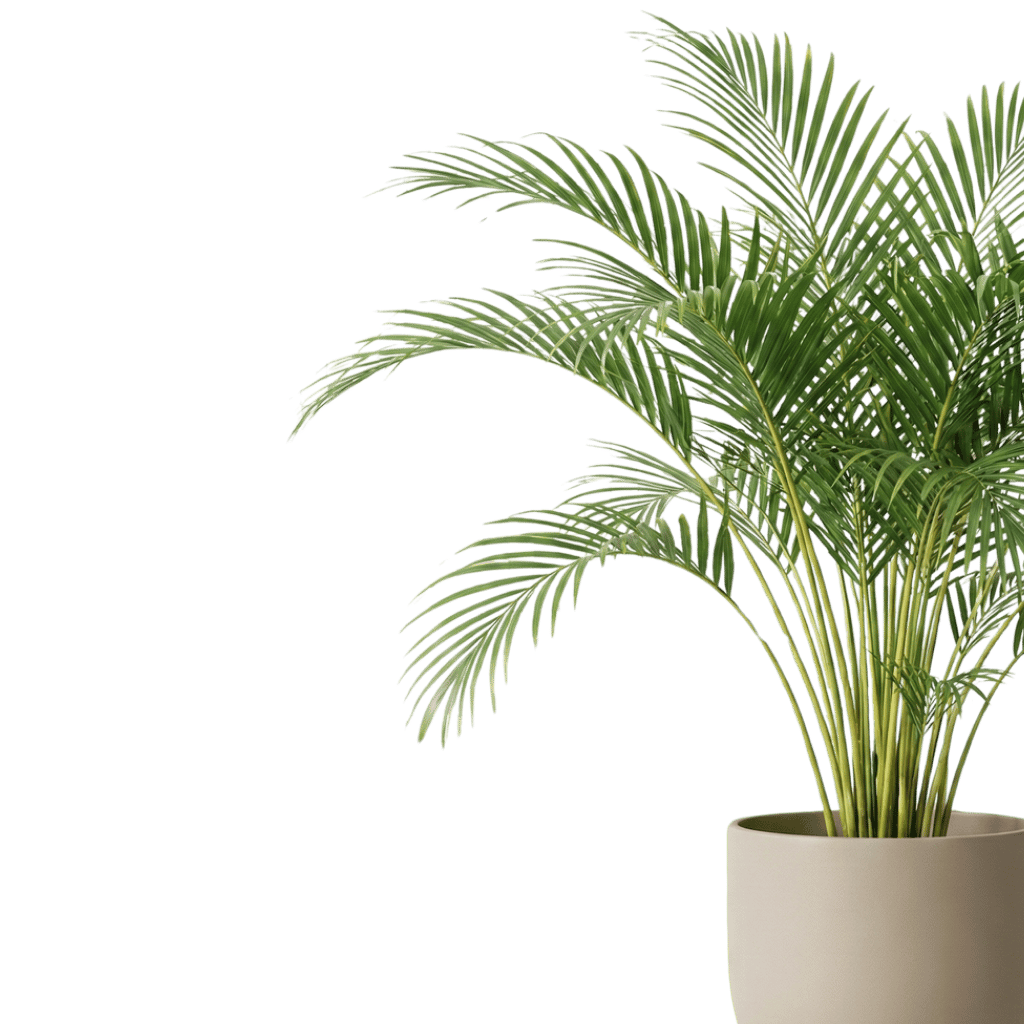
Rubber Plant (Ficus elastica) and Parlor Palm (Chamaedorea elegans) withstand temperature fluctuations and adapt to low humidity, ensuring these plants thrive under air conditioning.
Having chosen the right plants for your air-conditioned office, it’s crucial to take into account their positioning to maximize health and growth.
Positioning plants at least 3-4 feet away from air conditioning vents minimizes exposure to cold air, which can stress sensitive species. Verify your plants reside in areas with stable temperatures, avoiding direct cold air flow from AC units, thereby fostering a conducive environment for plant health.
Regularly monitor plant placement, especially during seasonal shifts, as changing air currents can impact indoor air conditions. Grouping plants together can create a microclimate that retains humidity, offering protection against direct airflow.
Be vigilant for signs of stress, like wilting or discoloration, indicating the need for repositioning to optimize indoor air conditions.
Although air conditioning offers a comfortable environment for office workers, it often lowers indoor humidity levels, which can be detrimental to plant health.
To guarantee your plants thrive, start by monitoring humidity using a hygrometer, aiming for levels between 40-60%. This range is ideal for most indoor plants and helps prevent wilting and leaf discoloration.
Regularly misting leaves is beneficial, particularly for tropical species accustomed to higher humidity. Implementing a humidifier can effectively counteract dry air conditions, boosting humidity in air-conditioned spaces.
Additionally, grouping plants together can create a microclimate, preserving moisture and supporting overall plant health.
When maintaining plants in air-conditioned offices, mastering effective watering techniques is fundamental to guaranteeing their health and vigor.
Start by establishing a precise watering schedule, tailored to each plant species and the unique conditions of air-conditioned spaces. Regularly check soil moisture by inserting your finger an inch deep; if it’s dry, water with room temperature liquid to avoid root shock. Air conditioning accelerates soil drying, so frequent moisture assessments are essential.
For tropical varieties, a misting routine is beneficial, countering the desiccating effects of air conditioning by boosting humidity around the foliage.
Consider using self-watering pots or moisture-retaining soil blends to stabilize hydration levels. These strategies guarantee peak plant vitality, maintaining lush, thriving greenery in your climate-controlled office environment.
To guarantee your office plants thrive, effectively utilizing light sources is fundamental. Most plants tolerate low light but flourish with bright, indirect sunlight. Position your plants near windows to maximize natural light exposure.
If natural light is insufficient, especially in winter or rooms with limited exposure, consider installing grow lights. These artificial lights replicate sunlight, essential for photosynthesis. Rotate plants every few weeks to guarantee even light distribution, preventing uneven growth.
Monitor the proximity of your plants to light sources; too close can cause leaf burn, while too far can stunt growth. Employ light meters to accurately measure intensity levels, tailoring plant placement to their specific needs. This is imperative in air-conditioned environments where light levels may vary.
Effective plant maintenance in air-conditioned offices requires diligent attention to their specific needs.
Regular plant maintenance involves routinely checking soil moisture to avoid overwatering or underwatering, adjusting based on the humidity levels influenced by air conditioning.
You should clean plant leaves weekly to remove dust, enhancing photosynthesis and moisture absorption.
Pruning dead or yellowing leaves is essential for promoting healthy growth and preventing disease spread.
In dry, air-conditioned environments, mist plants like Peace Lilies frequently to maintain ideal humidity levels.
Establish a consistent maintenance schedule to monitor plant health, including checking for pests and adapting care routines to seasonal temperature and humidity changes.
Understanding the subtle indicators of plant stress is essential in maintaining healthy plants in air-conditioned offices. Wilting leaves might mean your plant’s suffering from cold air stress, especially in air-conditioned environments. Look for yellowing or browning; these signs often point to insufficient heat and humidity. Stunted growth is another red flag, particularly in species sensitive to low temperatures like the Snake Plant. Poor flowering and reduced blooms often correlate with inadequate air quality and low light levels.
| Symptom | Possible Cause |
|---|---|
| Wilting Leaves | Cold air exposure |
| Yellow/Brown Leaves | Insufficient humidity |
| Stunted Growth | Prolonged cold air exposure |
| Poor Flowering | Inadequate warmth and humidity |
Addressing these issues promptly guarantees your office plants thrive despite air-conditioned challenges.
To guarantee your office plants thrive in air-conditioned environments, select species suited for low humidity and indirect airflow. Position them strategically to avoid direct air streams, which can dry them out. Regularly monitor humidity and adjust as needed, perhaps using humidifiers. Implement precise watering techniques to prevent over or under-watering. Maximize available light with supplemental sources when necessary. Maintain a consistent care routine, and promptly address any signs of stress to keep plants healthy and vibrant.