

Super Fresh
Harvested and shipped within days when you order.
Fair Prices
We eliminate extra steps so you get better value.
Rated for Real Life
Clearly labeled so you can choose the right plant fast.

Air-purifying plants effectively adjust indoor humidity, keeping it between 30-50% which is ideal for respiratory health. Plants like Boston Ferns and Peace Lilies perform transpiration, absorbing water via roots and releasing moisture through stomata. This process alleviates dry skin and respiratory issues while reducing allergens. By selecting the right plants, like Areca Palm and Spider Plant, you’ll enhance both air quality and aesthetic appeal. Stay tuned to discover more benefits and practical tips for your home.
When you think about indoor air quality, don’t overlook the essential role of humidity.
Maintaining humidity levels between 30-50% is vital for comfort and respiratory health. Air-purifying plants can naturally enhance indoor humidity through transpiration, releasing moisture into the environment. This process not only alleviates dry skin but also reduces respiratory discomfort, such as sore throats and dry coughs.
Ideal humidity helps create a less favorable environment for dust mites and mold, which thrive in dry conditions. By strategically placing air-purifying plants, you can enhance moisture levels, improving overall indoor air quality.
This balanced humidity level supports mood and productivity while ensuring that your home remains a comfortable and healthy living space.
Don’t underestimate the power of humidity!
Although you might not always see it, the process of transpiration in air-purifying plants plays an essential role in enhancing indoor air quality. This natural process involves water absorption through roots, traveling upwards, and evaporating via stomata on leaves. By releasing water vapor, plants like Boston Ferns and Peace Lilies increase humidity in indoor environments, alleviating dry air conditions. Their large leaf surface areas make them particularly effective, potentially reducing respiratory issues and improving air quality.
| Plant Type | Transpiration Benefit |
|---|---|
| Boston Ferns | High humidity enhancement |
| Peace Lilies | Moderate cooling effect |
| Leaf Surface | Larger area, more transpiration |
| Stomata | Pores for vapor release |
| Indoor Air | Improved quality, less dryness |
Incorporating these plants into your home or office can create a comfortable and healthier atmosphere.
Ever wonder how increasing indoor humidity can considerably impact your health and comfort?
By maintaining humidity levels between 30% and 50%, you can alleviate respiratory issues, like dry throat and cough, keeping your airways moist and reducing irritation. This range also minimizes virus survival, decreasing colds and flu risks.
Higher humidity supports skin hydration, easing dry skin and eczema symptoms, thereby enhancing skin health.
Plants release moisture through transpiration, making your indoor environment more comfortable, particularly in dry winter months.
Proper humidity levels improve indoor air quality by reducing dust and allergens, creating a healthier living space.
Increasing indoor humidity can greatly enhance your health and comfort, and plants play a pivotal role in achieving those ideal moisture levels.
Air purifying indoor plants not only improve humidity but also clean the air by removing pollutants. Here are three top choices:
Incorporating these plants can transform your space, making it healthier and more inviting.
To maintain healthy air-purifying plants, you’ll need to cater to their specific environmental needs, guaranteeing they thrive and efficiently cleanse your indoor air.
Start by providing appropriate light conditions; most plants prefer indirect sunlight, essential for sustaining their air-purifying abilities.
Water regularly, but be cautious—avoid overwatering to prevent root rot. Let the top inch of soil dry before the next watering.
Maintain a humidity level of 40-60% for plants like Boston Ferns and Peace Lilies, enhancing their growth and purification efficiency.
Fertilize every 4-6 weeks during their growing season with a balanced houseplant fertilizer to promote ideal health.
Regularly inspect for pests and diseases and remove dead leaves to maintain effective air-purifying capabilities.
While maintaining healthy air-purifying plants is important, integrating them with other air quality solutions can greatly enhance your indoor environment. By using air purifiers alongside plants, you maximize natural purification and mechanical filtration, tackling a wider range of pollutants.
Here’s how you can improve your indoor space:
This strategic combination elevates indoor air quality and enhances your living environment.
When considering the quality of the air in your home, it is crucial to recognize the presence of common indoor pollutants such as formaldehyde, benzene, and trichloroethylene. These toxins, often found in household products like cleaners and paints, contribute to indoor air pollution and can trigger respiratory issues. NASA studies highlight air-purifying plants like the Snake Plant and Spider Plant as effective solutions for improving indoor air quality. These plants absorb pollutants through their leaves, breaking down toxins and releasing oxygen. Additionally, they aid in humidity regulation, easing respiratory discomfort. However, remember that their effectiveness is limited in high pollutant concentrations, so pair plants with ventilation. Here’s a quick reference table:
| Pollutant | Source | Plant Solution |
|---|---|---|
| Formaldehyde | Cleaners, Plastics | Snake Plant |
| Benzene | Paints, Detergents | Spider Plant |
| Trichloroethylene | Solvents | Peace Lily |
| Xylene | Varnishes | Boston Fern |
| Ammonia | Window Cleaners | Aloe Vera |
How do you choose the perfect air-purifying plants for your home environment? Consider the following factors to guarantee you improve indoor air quality effectively:
Additionally, prioritize non-toxic varieties like Bamboo Palm if you have pets, guaranteeing a safe environment.
Incorporating air-purifying plants into your space not only enhances indoor air quality but also adds a natural aesthetic touch to your home.
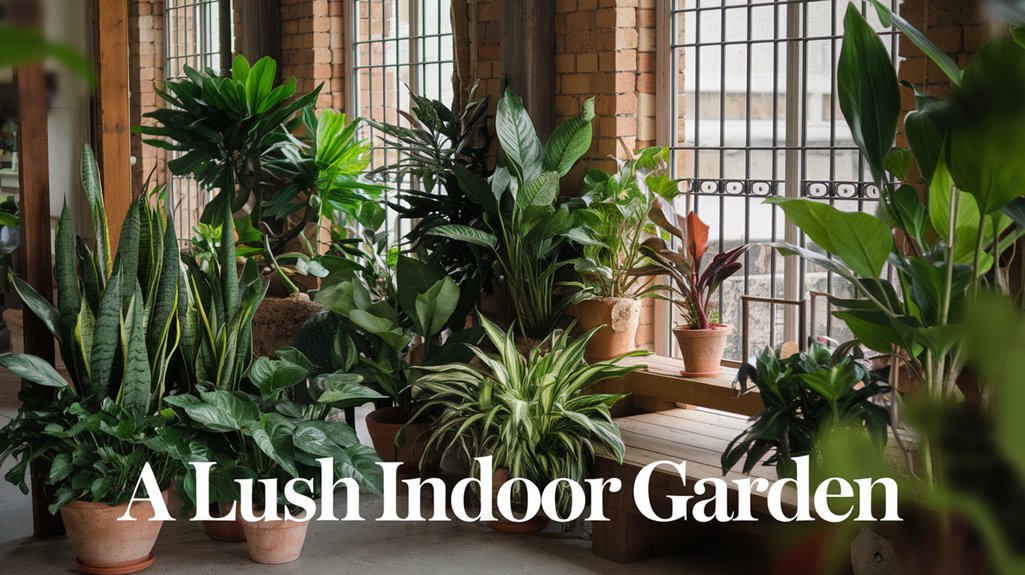
Utilize tiered plant stands or hanging planters to incorporate plants like Spider Plants and Peace Lilies, maximizing vertical space for better indoor air purification.
Create a living wall with Bamboo Palm and English Ivy to enhance air quality while providing a striking focal point.
Integrate plants into furniture; use shelves or a coffee table with built-in planters for Rubber Plants and Snake Plants.
Choose decorative ceramic pots for Dracaena and Golden Pothos to regulate moisture and add style.
Design multi-functional spaces by combining these plants with natural light, ensuring thriving Boston Ferns and Aloe Vera enhance your home’s ambiance.
By integrating air-purifying plants into your home, you enhance indoor humidity and improve air quality. Focus on selecting species that thrive in your environment, like peace lilies or spider plants, as they excel in transpiration. Regularly monitor soil moisture, and combine these plants with other air quality solutions for best results. Understanding plant care and indoor pollutants enables you to create a healthier, more comfortable living space, harnessing nature’s ability to cleanse and balance your home’s atmosphere.