
Super Fresh
Harvested and shipped within days when you order.
Fair Prices
We eliminate extra steps so you get better value.
Rated for Real Life
Clearly labeled so you can choose the right plant fast.
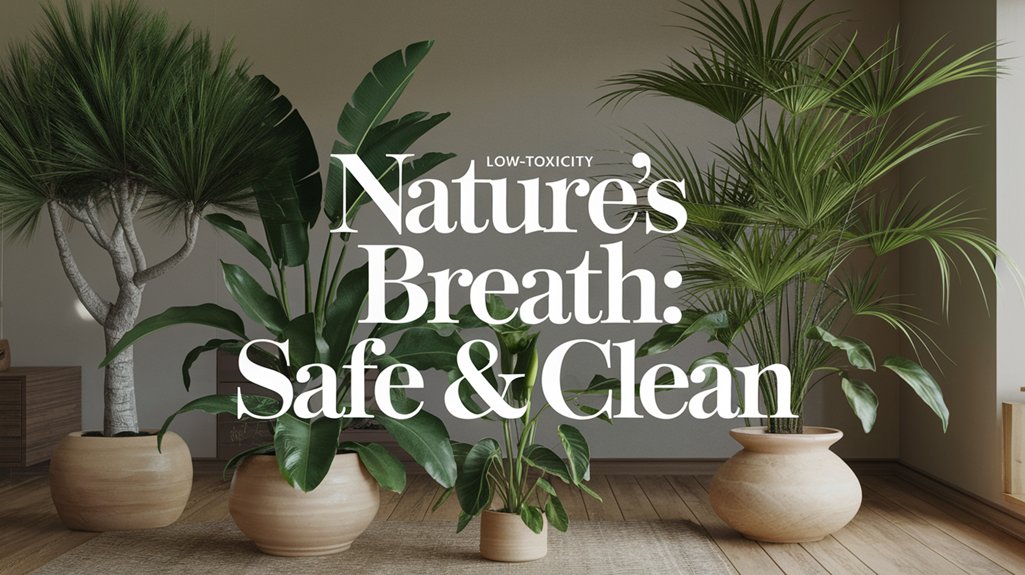
Low-toxicity plants like the Spider Plant and Bamboo Palm enhance indoor air quality by removing pollutants such as formaldehyde and benzene. These plants are safe for pets and kids and contribute to respiratory health by naturally improving humidity levels. With proper care, including monitoring sunlight and avoiding overwatering, these plants effectively support a healthier indoor environment. Integrating these plants with air purifiers synergizes to optimize air quality. Discover further to uncover more ways to purify your air naturally.
Although often overlooked, incorporating low-toxicity plants into indoor spaces can greatly enhance air quality.
These plants, like the spider plant and bamboo palm, effectively purify indoor air by eliminating harmful pollutants such as formaldehyde and benzene. This air-purifying capability is essential for maintaining a healthy environment without compromising the safety of pets and children.
Beyond detoxifying the air, these plants offer aesthetic benefits, creating a more pleasant atmosphere. They also contribute to improved indoor humidity, which supports respiratory health and mitigates mold growth.
When used alongside air purifiers, low-toxicity plants can synergistically optimize air quality, ensuring a thorough approach to indoor air purification. This dual strategy promotes overall well-being and sustains a healthier living space.
When considering top low-toxicity air-purifying plants, it’s essential to evaluate their ability to detoxify indoor environments while ensuring safety for pets and children.
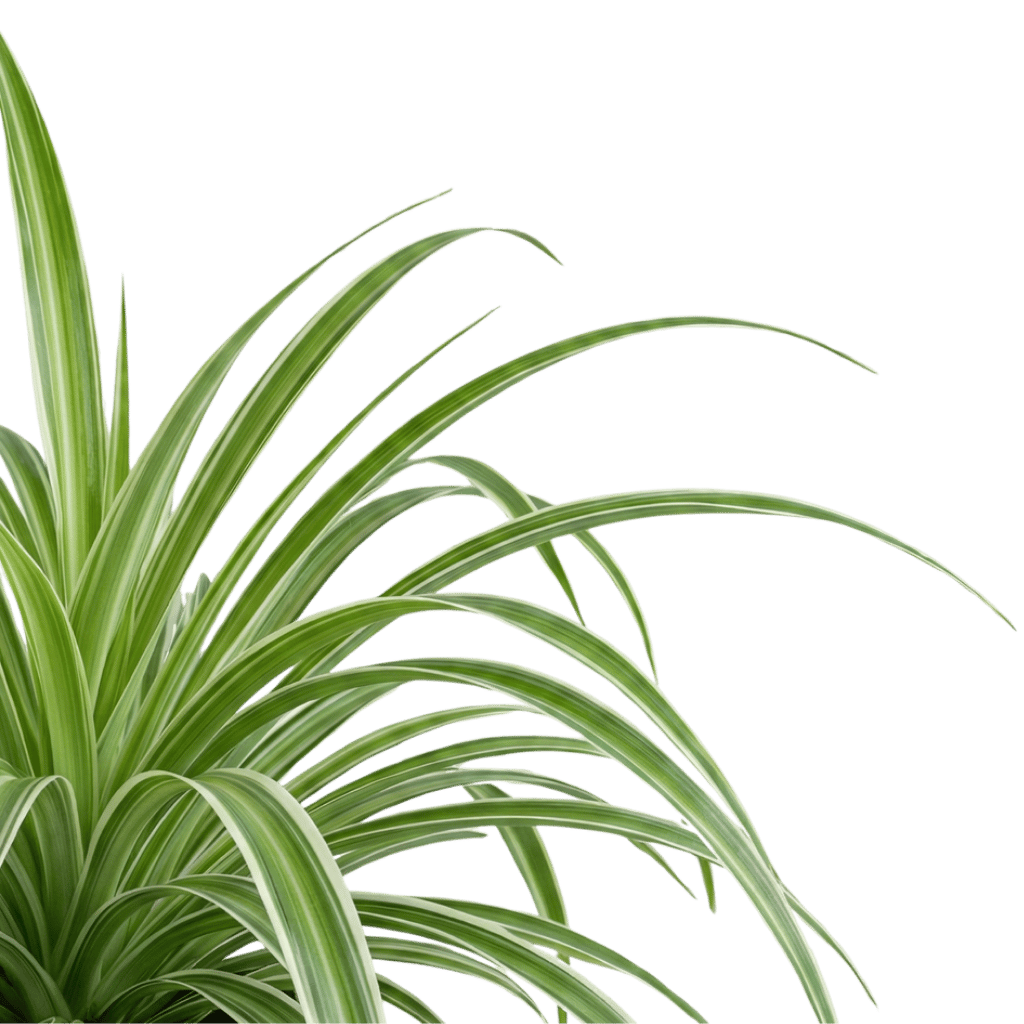
The Spider Plant (Chlorophytum comosum) effectively removes carbon monoxide and formaldehyde, thriving in indirect light.
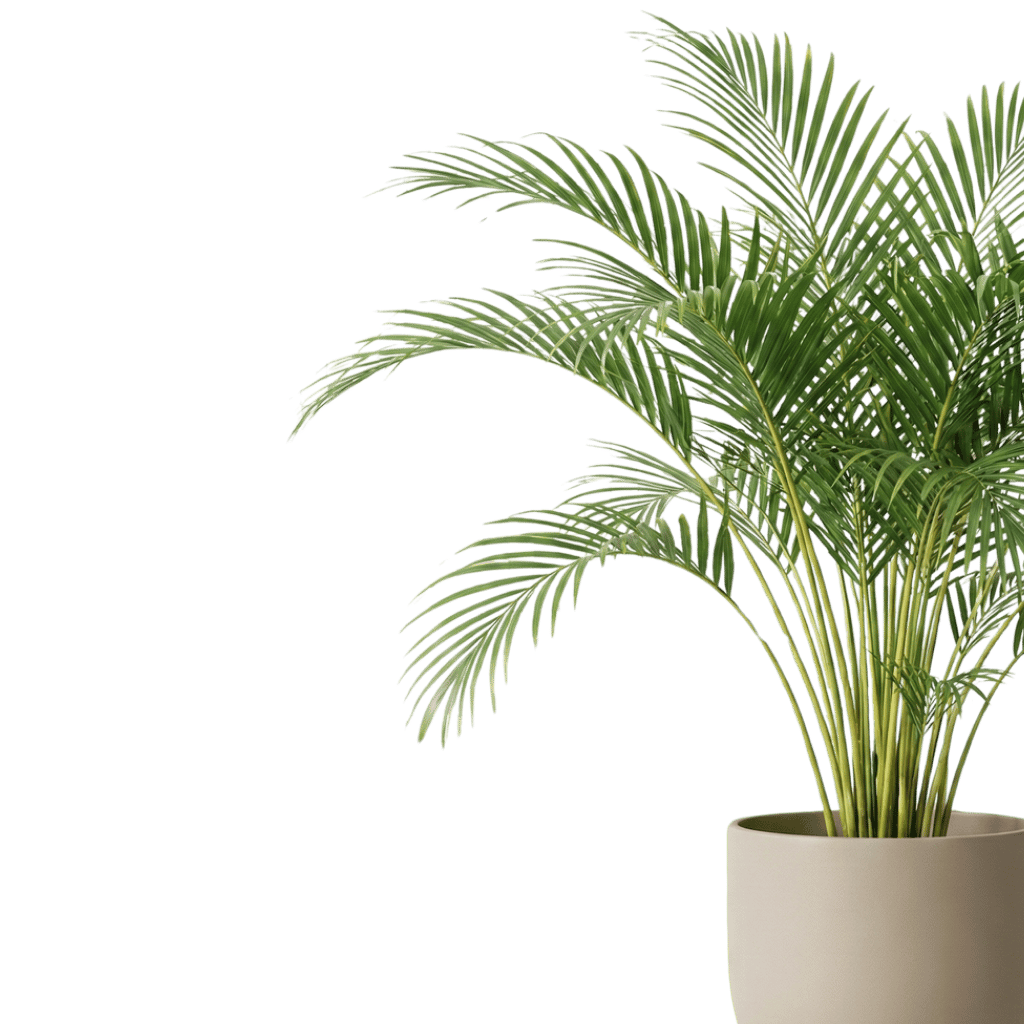
With its non-toxic nature, the Bamboo Palm (Chamaedorea seifrizii) excels at filtering benzene and formaldehyde, proving pet-friendly.
The Areca Palm (Dypsis lutescens) stands out for its air-purifying capabilities and natural humidifying properties, safely eliminating several toxins.
Meanwhile, the Parlor Palm (Chamaedorea elegans) is a non-toxic option that improves air quality, adaptable to various lighting conditions.
Finally, while the Peace Lily (Spathiphyllum) is efficient at removing indoor pollutants, keep it out of reach of pets due to mild toxicity.
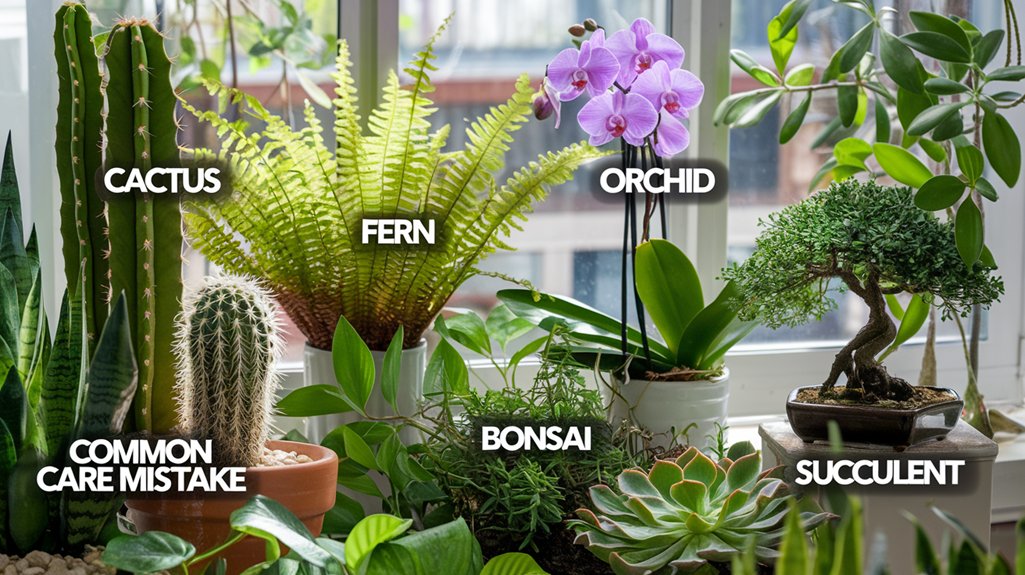
To guarantee your low-toxicity air-purifying plants thrive, it’s important to monitor their watering needs by checking the top two inches of soil for dryness, as overwatering can lead to root rot, particularly in species like the Weeping Fig and Peace Lily.
Regularly check that your plants receive ample indirect sunlight, promoting ideal photosynthesis. Maintaining appropriate humidity levels is vital for species such as Boston Fern, where misting can prevent leaf browning for healthy growth. Pruning dead or yellowing leaves encourages new growth and preserves plant aesthetics.
Incorporating low-toxicity air-purifying plants into your home offers a natural method to enhance indoor air quality, as these plants effectively remove pollutants like formaldehyde and benzene. According to NASA’s Clean Air Study, certain plants such as the Spider Plant and Bamboo Palm can purify the air by absorbing volatile organic compounds while being safe for pets. These plants not only act as natural air purifiers but also function as natural humidifiers, reducing mold growth and respiratory issues linked to dry air. Peace Lily and English Ivy, though highly effective at removing pollutants, are toxic to pets and should be positioned carefully.
| Plant | Feature |
|---|---|
| Spider Plant | Safe for pets, removes VOCs |
| Bamboo Palm | Natural humidifier, safe for pets |
| Peace Lily | Absorbs VOCs, toxic to pets |
| English Ivy | Excellent air filter, toxic to pets |
While low-toxicity air-purifying plants naturally enhance indoor air quality by absorbing harmful chemicals, integrating these botanical allies with modern air purifiers offers a thorough solution to indoor pollution.
NASA’s studies indicate that plants purify air by absorbing toxins like formaldehyde and benzene. However, their impact might be limited in high concentrations. That’s where air purifiers come in, efficiently removing toxins and airborne particles quickly.
A multi-faceted approach, combining plants and air purifiers, guarantees a balanced indoor environment.
Ultimately, this synergy optimizes the health of your indoor environment.
Why not transform your home into a pet-friendly green space that also purifies the air?
Select low-toxicity plants like the Spider Plant (Chlorophytum comosum) and Bamboo Palm (Chamaedorea seifrizii). Both are non-toxic and effective in enhancing indoor air quality.
Avoid toxic options like English Ivy and Pothos, which can harm pets. Instead, incorporate the Parlor Palm (Chamaedorea elegans) and Gerbera Daisy (Gerbera jamesonii), which improve aesthetics and are safe for cats and dogs.
Regular maintenance, including appropriate watering and light exposure, is essential for preserving their air-purifying properties.
By integrating low-toxicity plants, you enhance indoor air quality while guaranteeing a safe environment for pets. These plants, like the Spider Plant and Boston Fern, are proven to filter toxins such as formaldehyde and benzene. To maximize their benefits, keep them well-watered and guarantee adequate sunlight. Complement your green space with air purifiers and proper ventilation to bolster air quality. Ultimately, you’re creating a scientifically backed, healthy living space that balances natural beauty with practical air purification.