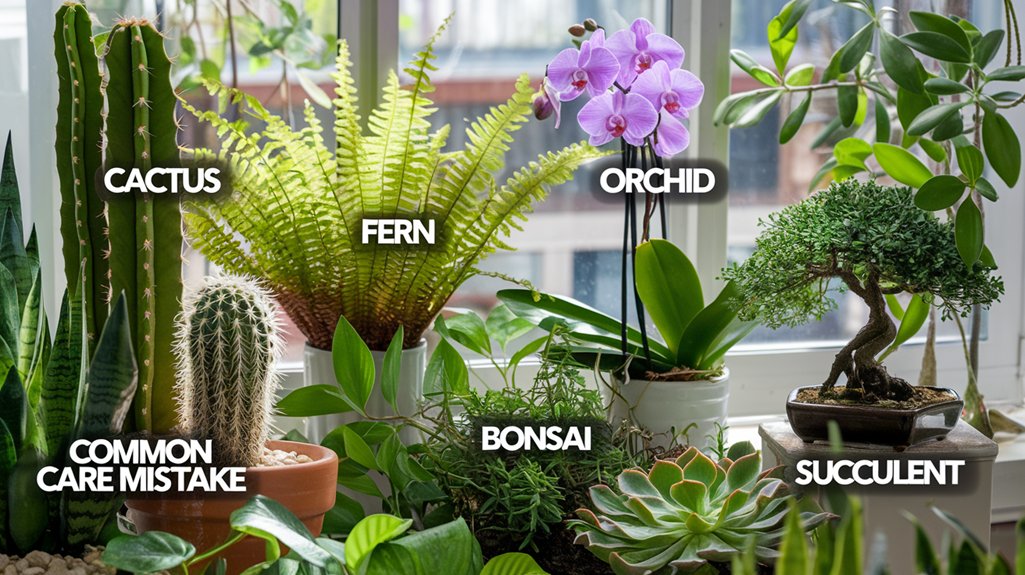



Super Fresh
Harvested and shipped within days when you order.
Fair Prices
We eliminate extra steps so you get better value.
Rated for Real Life
Clearly labeled so you can choose the right plant fast.
Living around greenery offers significant mental health benefits. Without access to green spaces, you’re 21% more likely to experience anxiety disorders and 39% more prone to mood disorders. Just 30 minutes in nature weekly can enhance well-being, alleviating depressive symptoms by up to 7%. Regular outdoor exposure lowers stress by reducing cortisol, heart rate, and blood pressure. Communities that embrace greenery see notable improvements in mental health, offering insights into leveraging nature for well-being.
While urbanization has brought numerous conveniences, it has also resulted in a stark reduction in access to green spaces, greatly impacting mental health.
You’re 21% more likely to develop anxiety disorders and 39% more likely to suffer mood disorders without adequate green spaces. The mental health benefits of nature are substantial; just 30 minutes weekly in outdoor green spaces can reduce depression and enhance well-being.
Exposure to nature decreases stress by lowering heart rate, blood pressure, and cortisol levels. Communities engaging in greening initiatives report reduced depressive symptoms, highlighting the transformative power of quality green spaces.
However, deprived neighborhoods often lack high-quality parks, exacerbating mental health inequalities. Ensuring access to these spaces is vital for community mental health.
Although urban environments often lack natural settings, the practice of forest bathing, or “Shinrin-yoku,” offers a compelling solution to urban stressors by immersing individuals in forested areas to promote mental health.
By connecting with nature, you can experience notable reductions in cortisol levels, a key stress hormone linked to anxiety and depression. Engaging in forest bathing can lead to significant mental health improvements.
Consider these benefits:
Forest bathing isn’t just a trend; it’s an evidence-based approach to enhancing mental health through nature immersion.
Forest bathing illustrates the profound impact of nature on mental health, and recent research supports this connection with compelling evidence.
Studies indicate that exposure to nature decreases heart rate, blood pressure, and cortisol levels, enhancing mental well-being. Spending 90 minutes outdoors twice weekly can boost mental performance and reduce burnout.
A notable study reveals that neighborhoods with a NatureScore above 60 experience 50% fewer mental health encounters, underscoring the link between urban greenness and reduced mental health issues.
Furthermore, residing in areas with a NatureScore above 40 markedly lowers the likelihood of developing depression (by 51%) and bipolar disorders (by 63%).
Engaging with nature, even through viewing natural scenes, improves cognitive function and happiness, reinforcing nature’s essential role in mental health.
As urban centers continue to expand, integrating green spaces into these landscapes becomes essential for fostering mental well-being.
Transforming urban landscapes by adding greenery can reduce stress and depressive symptoms. Spending time in these areas has been shown to decrease depression rates globally by 7% with just 30 minutes weekly.
Here’s why it matters:
Despite the rapid urbanization worldwide, the significance of connecting with nature for mental well-being can’t be overstated. Urban residents face a 21% higher likelihood of anxiety disorders and a 39% increase in mood disorders due to limited green space access. This underscores how essential nature connection is for your mental well-being.
Just 90 minutes outdoors twice a week can boost cognitive performance, highlighting nature’s role in enhancing mental faculties. Communities engaging in greening initiatives report fewer depressive symptoms, directly linking nature with mental health benefits.
A modest 30-minute weekly exposure to outdoor green spaces could potentially decrease global depression prevalence by 7%, reinforcing the necessity of regular nature interaction. Increased nature connectedness correlates with less depression and more happiness, emphasizing its critical role.
When faced with challenging times, the role of nature becomes increasingly significant for mental health. Spending time in nature has shown to improve well-being, providing an essential buffer against stress and anxiety.
During the COVID-19 pandemic, 45% of people in the UK reported that green spaces helped them cope. Here’s why:
Thus, engaging with nature is fundamental during crises, aiding emotional recovery and mental fortitude.
Understanding the quality of your connection to nature reveals profound mental health benefits. A robust nature connectedness, defined by emotional attachment and sensory engagement, notably enhances your mental health.
Studies show that simply noticing and appreciating natural elements can improve well-being and reduce stress levels. This sense of connectedness is linked to increased happiness and decreased depression and anxiety.
Engaging in activities like writing or reflecting on nature further deepens appreciation, fostering positive mental states. Such interactions don’t just benefit individuals; they also encourage pro-environmental behaviors, reinforcing the reciprocal relationship between you and nature.
Connecting with nature plays an essential role in enhancing happiness, as evidenced by a multitude of studies linking nature connectedness to increased joy and creativity. A strong bond with natural environments leads to greater calmness and reduced mental distress.
Here’s how nature connectedness can boost your mental health:
Despite growing acknowledgment of the mental health benefits of nature, not everyone enjoys equal access to these resources. Access to high-quality green spaces is inequitably distributed, often leaving low-income and racial/ethnic minority neighborhoods with limited proximity to quality parks.
This inequitable distribution results in parks with fewer amenities and reduced usage, diminishing potential mental health benefits. During the COVID-19 pandemic, these disparities became more apparent, exacerbating mental health disorders in marginalized groups.
Barriers like inaccessible routes for disabled individuals and safety concerns further deter effective utilization. Ensuring equitable access to green spaces is essential, as over 22% of U.S. adults experience mental health disorders.
Addressing these inequalities can greatly enhance community well-being through improved access to nature.
As efforts continue to address inequities in access to green spaces, individuals can actively engage with nature to enhance mental health.
Time outdoors is a proven method to improve mood and reduce stress. Studies show that spending 90 minutes outdoors twice a week boosts mental performance.
Here are practical ways to engage with nature:
These activities foster mental well-being and happiness.
You’ve seen how embracing greenery can markedly enhance mental well-being. Evidence indicates that engaging with nature, from forest bathing to urban green spaces, reduces stress and boosts happiness. However, it’s essential to acknowledge disparities in nature access and aim for inclusivity. By fostering a deeper connection to nature, you can actively promote mental health. Prioritize spending time in green environments and encourage others to do the same for a healthier, more balanced life.