


Super Fresh
Harvested and shipped within days when you order.
Fair Prices
We eliminate extra steps so you get better value.
Rated for Real Life
Clearly labeled so you can choose the right plant fast.
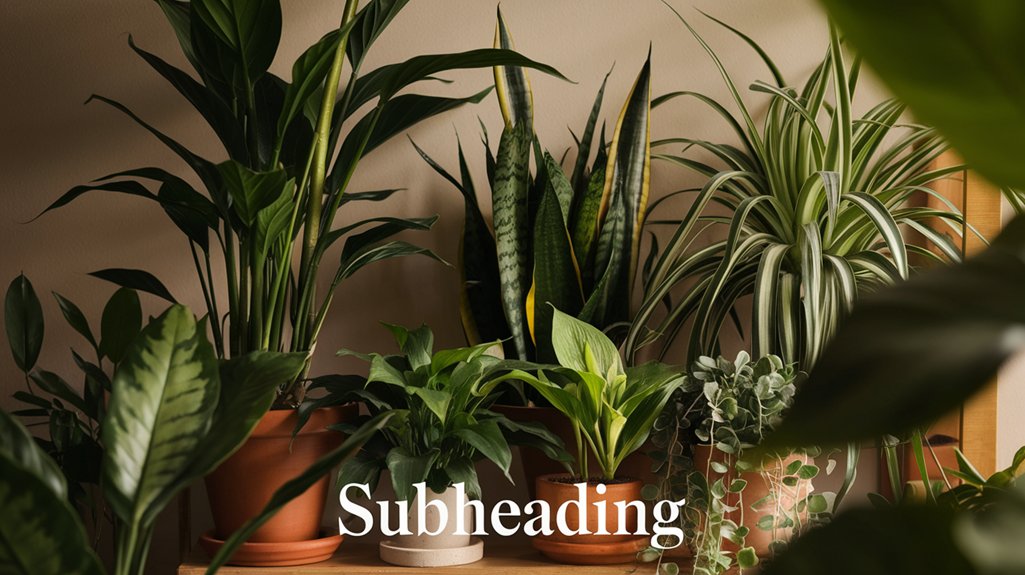
NASA’s research highlights premier air-cleansing plants like Chlorophytum comosum (Spider Plant), Sansevieria trifasciata (Snake Plant), and Spathiphyllum spp. (Peace Lily). Spider Plants tackle formaldehyde, xylene, and toluene. Snake Plants oxygenate at night, lowering benzene and toluene. Peace Lilies elegantly purify ammonia and benzene. Other species, such as Aloe vera and Nephrolepis exaltata (Boston Fern), excel in their roles, enhancing indoor air. Exploring these remarkable botanical varieties further reveals their extraordinary detoxifying capabilities.
Among the myriad of flora that enhance indoor environments, the Spider Plant (Chlorophytum comosum) stands out due to its remarkable air-purifying capabilities.
According to NASA’s Clean Air Study, this tenacious plant effectively removes formaldehyde, xylene, and toluene, greatly improving indoor air quality. You’ll appreciate its resilience, as it thrives in indirect sunlight, requiring minimal care.
The Spider Plant’s ability to propagate through “pups” allows you to expand your air purification efforts effortlessly. Additionally, its non-toxic nature guarantees safety for pets and children, making it a versatile choice for households.
With its small white flowers and robust air purification properties, the Spider Plant not only beautifies your space but also enhances the air you breathe, promoting a healthier living environment.
Although the Snake Plant (Sansevieria trifasciata) may seem unassuming, it’s a powerhouse when it comes to improving indoor air quality, especially during the night. This plant, also known as Mother-In-Law’s Tongue, uniquely produces oxygen nocturnally, enhancing your bedroom environment.
As an air-purifying marvel, it tackles pollutants like benzene, formaldehyde, trichloroethylene, xylene, and toluene, ensuring cleaner indoor air. NASA’s Clean Air Study underscores its efficacy, recommending it for domestic spaces.
Thriving in low-light conditions, the Snake Plant is ideal for beginners due to its minimal maintenance needs and drought resilience, requiring watering every 2-8 weeks. Incorporating this plant into your home not only boosts air quality but also reduces toxins, creating a healthier living space effortlessly.
If you’re looking for an elegant solution to improve indoor air quality, seek no further than the Peace Lily (Spathiphyllum spp.). This striking plant excels at removing harmful pollutants like ammonia, formaldehyde, trichloroethylene, and benzene, as confirmed by the NASA study. Its natural air purification powers make it an indispensable asset in combatting indoor air pollution. Thriving in low-light conditions, the Peace Lily is perfect for spaces with indirect sunlight and consistently moist soil. Beyond its air-cleansing capabilities, it offers aesthetic appeal with its stunning white summer blooms. However, be cautious as it’s toxic to pets and children if ingested.
| Pollutant | Removed by Peace Lily |
|---|---|
| Ammonia | Yes |
| Formaldehyde | Yes |
| Trichloroethylene | Yes |
| Benzene | Yes |
| Aesthetic Appeal | High |
For those seeking a resilient plant with impressive air-purifying abilities, Aloe Vera (Aloe barbadensis miller) stands out as a formidable choice. This succulent excels in removing formaldehyde and benzene, two common indoor air pollutants, effectively enhancing air quality in your home.
Recognized by NASA’s Clean Air Study, Aloe Vera contributes considerably to air purification, making it a valuable household plant. Thriving in bright, indirect sunlight, it requires minimal care, perfect for both novice and seasoned plant enthusiasts.
Beyond its air-cleansing properties, Aloe Vera is renowned for its medicinal benefits, particularly in soothing skin irritations and burns. Incorporating this plant not only improves indoor air but also adds an aesthetic and functional dimension to your living space.
Renowned for its air-purifying prowess, the Boston Fern (Nephrolepis exaltata) excels at removing formaldehyde and xylene from indoor environments. By doing so, it greatly enhances air quality. Thriving in humid conditions, this non-toxic plant requires regular watering to maintain its moisture levels, benefiting respiratory health in dry climates. Its preference for indirect sunlight makes it an ideal choice for various indoor settings without the risk of sun damage. Additionally, as a non-toxic plant, it’s safe for homes with children and pets.
| Attribute | Requirement | Benefit |
|---|---|---|
| Light | Indirect sunlight | Ideal for indoors |
| Humidity | High humidity | Respiratory health |
| Safety | Non-toxic plant | Safe for families |
Incorporate a Boston Fern into your space to improve indoor air quality effortlessly.
English Ivy (Hedera helix) stands out as a robust air purifier, adept at eliminating pollutants like benzene, formaldehyde, xylene, and toluene from your indoor environment.
Its toxin-removing capabilities greatly enhance air quality, making it an invaluable addition to your home. English Ivy also excels at reducing mold presence, which is particularly beneficial for allergy sufferers.
Thriving in stable temperatures, this plant’s care routine is straightforward; make sure it receives direct sunlight and regular watering.
Its versatility allows it to seamlessly blend into various indoor settings, offering both aesthetic appeal and practical benefits.
As a hardy species, English Ivy not only beautifies your space but also actively improves the air you breathe, fulfilling dual roles as a visual delight and a diligent air purifier.
The Rubber Plant (Ficus elastica) stands as a highly efficient air purifier, adept at stripping formaldehyde and other toxins from your indoor environment.
As an air purifying plant, it thrives in diverse lighting, favoring bright, indirect light to maximize its air-cleaning prowess. This plant is low-maintenance, requiring water only when the top inch of soil dries out, ideal for busy individuals or beginners. Remarkably, it can grow up to 8 feet tall indoors, enabling it to cover more space and purify larger areas efficiently.
Beyond its air-cleansing capabilities, the Rubber Plant enhances aesthetics with its glossy, broad leaves, adding a calming and inviting aura to your indoor space.
Incorporate this plant to improve your indoor air quality while enjoying its visual appeal.
Incorporating NASA’s top air-cleansing plants into your environment enhances air quality with minimal effort. You’ll find the Chlorophytum comosum, or Spider Plant, excels in versatility, while the Sansevieria trifasciata boosts nighttime oxygen. Spathiphyllum spp., known as Peace Lily, elegantly cleans air, and Aloe barbadensis, or Aloe Vera, fights formaldehyde. Nephrolepis exaltata, the Boston Fern, enhances humidity, Hedera helix reduces mold, and Ficus elastica, the Rubber Plant, offers low-maintenance purification. Embrace these botanical solutions for a fresher atmosphere.