
Super Fresh
Harvested and shipped within days when you order.
Fair Prices
We eliminate extra steps so you get better value.
Rated for Real Life
Clearly labeled so you can choose the right plant fast.
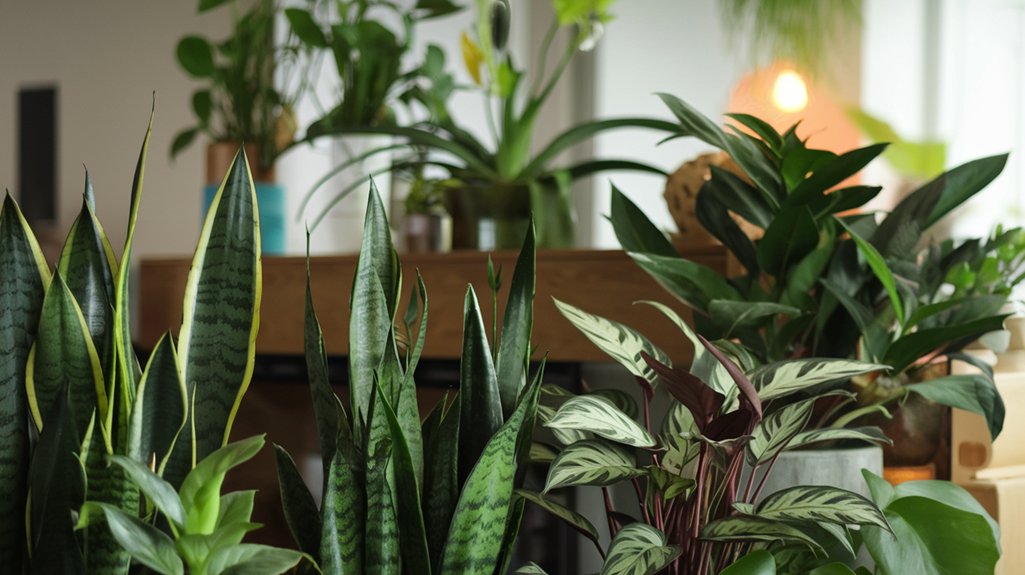
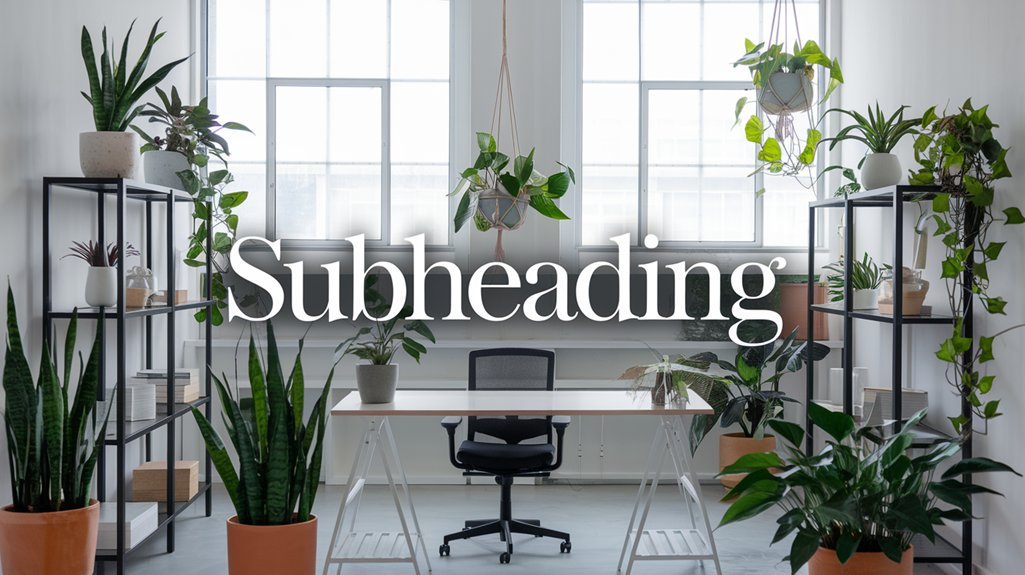
Low-light plants that require minimal care are perfect for transforming your office space. Consider the Snake Plant and ZZ Plant for their robust air-purifying qualities and resilience in low-light environments. The Peace Lily and Heartleaf Philodendron offer aesthetic and air-quality enhancements, while Dracaena Lisa fits compact areas. These plants thrive with minimal maintenance and limited sunlight, contributing to a pleasant atmosphere and increased productivity. Discover how specific care tips further optimize plant health and office aesthetics.
While considering ways to enhance your office environment, don’t overlook the multifaceted benefits of low-light plants. In office spaces with limited sunlight, plants like the Snake Plant and Peace Lily thrive, offering significant air-purifying properties.
These plants excel at filtering common pollutants, such as formaldehyde and benzene, thereby improving overall air quality. Their minimal care requirements make them ideal for busy settings, ensuring they flourish without demanding extensive maintenance.
The presence of these resilient plants not only elevates employee morale but also boosts productivity by fostering a more pleasant and stress-free atmosphere.
When selecting plants for an office environment with limited sunlight, it’s crucial to choose varieties that not only survive but thrive with minimal care.
The Snake Plant stands out for its air-purifying capabilities and ability to thrive in low-light conditions, demanding little maintenance.
Similarly, the ZZ Plant, or Zanzibar Gem, is an ideal office plant, enduring low-sunlight environments with minimal water.
The Heartleaf Philodendron is another robust choice known for its adaptability and low fuss care requirements.
With its elegant white blooms, the Peace Lily not only thrives in low light but also enhances air quality.
For vertical spaces, the Dracaena Lisa offers a slender profile, fitting snugly into office corners while requiring minimal light, making it perfect for compact areas.
Even in an office setting with minimal sunlight, maintaining healthy low-light plants requires attention to specific care strategies. First, make sure your Snake Plants and ZZ Plants receive 4-6 hours of artificial light daily, as they’re unable to thrive in complete darkness. Water these indoor plants sparingly, allowing the soil to dry fully to prevent overwatering.
| Plant Type | Care Strategy |
|---|---|
| Snake Plants | Infrequent watering, 4-6 hours artificial light |
| ZZ Plants | Allow soil to dry, monitor leaf condition |
| Soil | Well-draining, repot when roots cramped |
| Light | Adjust seasonally, make sure consistent exposure |
Monitor for signs of thirst like wilted leaves, and use well-draining soil for peak health. Adjust plant care routines with seasonal changes to support healthy growth. Remember, these plants are natural air purifiers, benefiting your office environment.
To enhance your office environment with low-light plants, start by precisely evaluating the lighting conditions available. Identify areas with minimal sunlight where species like the Snake Plant or ZZ Plant can thrive.
Consider their maintenance requirements; resilient varieties such as the Cast Iron Plant or Pothos demand little care, making them ideal for hectic office settings. Opt for plants with air-purifying capabilities—Peace Lily and Philodendron are excellent for improving indoor air quality with minimal upkeep.
Assess your space constraints; tall plants like Dracaena Lisa add vertical greenery, while cascading Pothos enhance shelves. If pets are present, choose safe options like Spider Plants or Boston Ferns.
Many plant enthusiasts stumble upon several pitfalls when caring for low-light plants in office settings. Overwatering is a prevalent issue—plants like the ZZ Plant and Snake Plant thrive with infrequent watering. Always verify the soil’s dry before adding water, and use well-draining soil to prevent root rot. Placing these plants in direct sunlight can cause stress, so prioritize indirect light. Minimal light doesn’t mean no light; adjust placements seasonally to meet their light requirements. Monitor for signs of distress, such as yellowing leaves or stunted growth, and make care adjustments accordingly.
| Mistake | Effect on Plant | Solution |
|---|---|---|
| Overwatering | Root rot | Infrequent watering |
| Direct sunlight | Stress, damage | Indirect light |
| Poor drainage | Root problems | Well-draining soil |
| Ignoring seasons | Unhealthy growth | Adjust light placement |
| Neglecting signs | Irreversible damage | Regular monitoring |
While transforming your office space, incorporating low-light plants like the Snake Plant and Peace Lily can instantly elevate aesthetics by infusing vibrant greenery and a touch of nature.
These office plants, with their robust air-purifying abilities, enhance both visual appeal and air quality, making your workspace healthier and more inviting.
The ZZ Plant and Dracaena Lisa are ideal for their striking foliage, creating an inviting atmosphere with minimal maintenance.
Meanwhile, cascading Pothos utilizes vertical space, turning dull corners into lively focal points, boosting overall aesthetics.
To further improve aesthetics, consider colorful pots for plants like Silver Evergreen.
This harmonious blend of plant and decor brightens your workspace, fostering a more pleasant and productive environment.
Incorporating low-light plants into your office can boost aesthetics and air quality while requiring minimal maintenance. By selecting species like snake plants or pothos, you can enjoy greenery without extensive care. Remember, consistent watering and occasional fertilization are key to plant health. Avoid overwatering, which can lead to root rot, and choose plants that fit your specific lighting conditions. With the right choices and care, you’ll transform your workspace into a vibrant, inviting environment.