
Super Fresh
Harvested and shipped within days when you order.
Fair Prices
We eliminate extra steps so you get better value.
Rated for Real Life
Clearly labeled so you can choose the right plant fast.
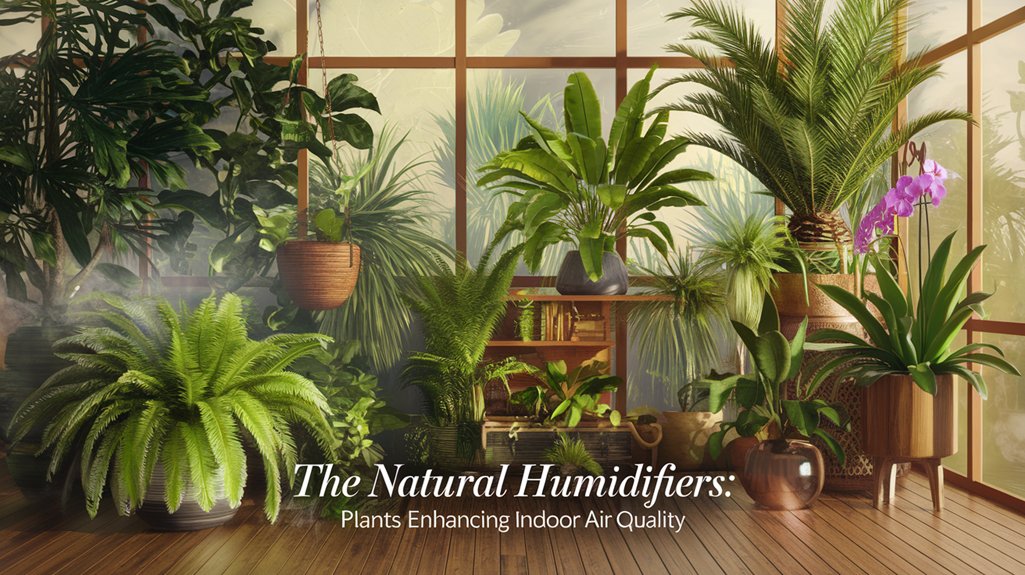
Plants act as natural humidifiers through transpiration. They absorb water from roots and release moisture via leaf stomata, enhancing indoor air quality. Transpiration is influenced by temperature and humidity, impacting indoor humidity levels. Plants like Ficus and Epipremnum greatly boost moisture, creating a healthier atmosphere. Grouping plants can create a humid microenvironment, optimizing indoor conditions. Utilize tools like hygrometers to monitor and adjust humidity effectively. For more detailed insights, explore further into plant-based humidity control strategies.
When you explore how plants affect indoor humidity, understanding transpiration is fundamental. Transpiration involves plants absorbing water through their roots and releasing vapor via stomata in their leaves.
This process notably impacts indoor humidity, as moisture transfer rates vary by species and environmental conditions. For instance, plants can emit between 35 g to 58 g of moisture daily, depending on the season.
Temperature and humidity levels also play essential roles; higher temperatures and lower humidity enhance transpiration rates, optimizing the moisture balance in indoor environments.
This process not only increases air humidity but is crucial for nutrient uptake, as it creates negative pressure. This pressure draws water and nutrients upwards, ensuring plant vitality and contributing to a healthier indoor atmosphere.
Although you might expect indoor plants to consistently contribute to humidity, their effect varies with the seasons. In the cooler months, indoor plants like Ficus and Epipremnum are more effective at elevating humidity levels due to reduced air exchange rates, enhancing their moisture contribution. In contrast, summer’s higher air exchange can dilute this effect despite increased evapotranspiration. Significantly, in hot, dry conditions, the moisture contribution of these plants is essential for humidity regulation. The impact also varies by plant species, with Ficus contributing 35 g per plant per day in winter and 58 g in summer.
| Season | Ficus (g/day) | Epipremnum (g/day) |
|---|---|---|
| Winter | 35 | 35 |
| Spring | 45 | 45 |
| Summer | 58 | 58 |
| Fall | 40 | 40 |
| Yearly | Variable | Variable |
To guarantee ideal plant health, it’s vital to maintain specific humidity levels tailored to the plant’s native environment.
Desert plants thrive at 30% to 40% humidity, while temperate varieties prefer 40% to 60%. Tropical species require 50% to 70% for best growth.
Indoor humidity below 30% stresses most plants, impairing moisture retention, especially in dry winter months. Maintaining best humidity levels above 40% guarantees efficient transpiration, enhancing nutrient uptake and promoting vigorous growth.
Regular monitoring is essential; it aids in adjusting conditions to prevent moisture loss and supports overall plant health. Proper humidity not only stimulates growth but also minimizes pest infestations and diseases.
This approach, grounded in scientific observation, secures a thriving indoor plant environment.
Selecting the right indoor plants for humidity involves understanding their natural moisture-emitting capacities and how they interact with your environment.
Epipremnum and Ficus are excellent choices; Ficus can emit up to 58 grams of moisture daily in summer, effectively increasing indoor air moisture.
Most plants thrive in 40%-70% humidity, enhancing air quality. Larger leafed plants, through enhanced evapotranspiration, release more moisture, making them particularly beneficial.
Grouping plants amplifies their effect, creating a humid microenvironment.
However, balance is key; limit dehumidifying plants like succulents and Aloe Vera in high-traffic areas to maintain ideal humidity.
Understanding how room conditions influence plant humidity is vital for maximizing their moisture-emitting potential. Factors like room size, ventilation, and temperature greatly impact how effectively plants can enhance indoor air quality. In hot, dry environments, plants may emit between 35 g (in winter) to 58 g (in summer) of moisture daily through evapotranspiration. However, air exchange rates often have a more pronounced effect on relative humidity than plants themselves, especially in summer. Seasonal variations also play a role, with higher moisture emissions in spring and summer. Here’s a quick breakdown:
| Condition | Effect on Humidity |
|---|---|
| Room Size | Larger spaces reduce impact |
| Ventilation | High rates lower humidity |
| Temperature | Higher temps increase evapotranspiration |
| Seasonal Change | More moisture in warmer seasons |
These factors collectively shape indoor air quality, affecting plant efficacy.
Grouping indoor plants can greatly enhance humidity levels, particularly in arid environments where maintaining moisture is challenging.
When you cluster plants closely, they create a humid microenvironment. This is because plants use transpiration to release water vapor, collectively increasing moisture in the surrounding air.
Larger leaf plants are especially effective due to their higher rates of evapotranspiration compared to their smaller counterparts. By placing these plants on tables or risers, you can maximize humidity retention—an aesthetic and straightforward method to elevate air quality.
Regular misting of these groups further amplifies their moisture output, augmenting the natural process of evapotranspiration. This combined effect considerably benefits dry environments, where individual plants might struggle to sustain ideal humidity levels.
Have you ever wondered how to maintain ideal humidity levels for your indoor plants? Humidity monitors, or hygrometers, are crucial for this task. These devices accurately measure indoor humidity, ensuring optimal plant health.
Modern hygrometers feature digital displays, tracking humidity changes over time for effective moisture management. Aim to maintain humidity between 30% to 50%, adjusting with seasonal variations. Regular monitoring prevents extremes that stress plants or foster diseases like mold.
Some humidifiers integrate hygrometers, automatically adjusting moisture output based on real-time data. This feature simplifies plant care, maintaining stable environments.
When selecting plants for your indoor space, consider their individual humidification capacities to enhance humidity levels effectively.
Different plants like Ficus and Epipremnum emit between 35 g to 58 g of moisture daily. The impact varies seasonally; plants increase moisture significantly in spring and winter, especially in hot, dry spaces.
Here’s how to balance plant types for effective humidity control:
These strategies maintain ideal indoor humidity.
To effectively boost indoor humidity, consider integrating targeted strategies that leverage plant characteristics and environmental interactions. Regularly misting plants increases local humidity as water droplets evaporate.
Grouping plants creates a humid microenvironment, enhancing moisture levels through collective transpiration and natural air circulation. Position pebble trays filled with water beneath your plants to foster evaporation, augmenting both humidity and aesthetic appeal.
Place small water containers among plants to elevate humidity, especially in arid conditions. Shower plants with lukewarm water periodically; this not only cleans their leaves but also contributes to localized humidity as the water evaporates.
Each method interplays with air circulation, optimizing moisture distribution and creating a more hospitable indoor environment, beneficial for both plants and inhabitants.
Achieving ideal indoor humidity levels offers numerous benefits, particularly for health and home maintenance. When humidity ranges from 30% to 50%, you’re likely to notice fewer colds, coughs, and dry skin issues, conditions often exacerbated by low humidity levels.
Plants like Ficus and Epipremnum, through evapotranspiration, can emit 35 g to 58 g of moisture daily, enhancing air quality by neutralizing pollutants. This creates a healthier environment for you and your family.
Additionally, optimal humidity prevents structural damage to your home, such as paint cracking and wood warping, by maintaining moisture balance.
Here are four benefits of maintaining ideal indoor humidity:
You’ve learned that plants play an essential role in humidifying indoor air through transpiration, adapting to seasonal changes. By selecting the right indoor plants and maintaining optimal room conditions, you can control humidity effectively. Use tools and techniques to monitor humidity levels and balance plant types for maximum efficiency. Additionally, employing strategies like misting and using humidifiers enhances indoor humidity. Maintaining ideal humidity levels not only promotes plant health but also improves overall indoor air quality.