
Super Fresh
Harvested and shipped within days when you order.
Fair Prices
We eliminate extra steps so you get better value.
Rated for Real Life
Clearly labeled so you can choose the right plant fast.

When repotting plants, use essential tools like a small trowel, pruning shears, a long-spouted watering can, gardening gloves, and a humidity meter. Guarantee your workspace is organized, with a well-draining pot and high-quality potting mix tailored to your plant’s needs. Avoid dull tools, non-draining pots, and heavy garden soil. Choose a container slightly larger than the current one and consider environmental factors for peak growth. Discover more to enhance your repotting experience.
When you’re repotting plants, having the right tools is essential to guarantee a successful change and promote healthy growth.
Start with a small gardening trowel; it efficiently transfers potting soil into tight containers, reducing mess. Pruning shears are indispensable for trimming damaged or overgrown roots, assuring clean cuts that encourage healthy regrowth during the repotting process.
Utilize a watering can with a long, narrow spout for precise hydration, preventing overwatering. Don gardening gloves to protect your hands from sharp elements. A humidity meter monitors environmental moisture, aiding ideal conditions post-repotting.
Confirm the new pot has adequate drainage holes and use a fresh potting mix to support root health. These tools collectively guarantee a seamless and effective repotting experience.
Several common mistakes can hinder the success of your repotting efforts, primarily involving the tools you choose.
Avoid using dull or dirty tools, as these can damage plant tissues and introduce pathogens. Always guarantee your tools are clean and sharp to maintain plant health.
Non-draining containers should be avoided, as they lead to waterlogging, promoting root rot. Opt for pots with adequate drainage to prevent excess moisture accumulation.
Using garden soil is another pitfall; it’s too heavy and can introduce weeds, affecting indoor plant growth.
Finally, refrain from selecting overly large pots. Excess soil moisture in large pots can slow growth and increase root rot risk.
Choose appropriately sized containers to support plant vitality and guarantee successful repotting.
After selecting the right tools and avoiding common pitfalls, it’s time to focus on preparing your workspace for repotting.
Choose a flat surface, ideally covered with newspaper or a tarp, to contain soil spills and simplify cleanup. Confirm your workspace is well-lit, providing clear visibility of the plant and soil.
Organize all necessary tools and materials—like a new pot, potting soil, trowel, and pruning shears—within easy reach. This organization streamlines the repotting process.
Prepare a watering can filled with water to moisten the potting mix and hydrate the plant post-repotting. Clear away distractions and unnecessary items, fostering a focused environment.
This setup enhances efficiency and promotes a smooth change for your plant during repotting.
How do you guarantee your plant thrives in its new home? Start by choosing a container with drainage holes. This prevents waterlogging and root rot, vital for healthy indoor plants.
Opt for a pot 1-2 inches larger in diameter than the current one. This guarantees adequate space for root growth without overpotting, which can impair development. The material matters too; heavy pots like terra cotta or cement provide stability for taller plants, while lighter ones suit smaller species.
When using a decorative pot, keep the plant in its original grow-pot to maintain drainage ease.
Finally, avoid garden soil when repotting. Instead, choose a high-quality potting mix, tailored to offer essential nutrients and ideal drainage for your plant’s success.
When choosing the appropriate soil for repotting your plants, make certain you’re using a potting mix specifically formulated for indoor plants. This guarantees ideal nutrient availability and drainage, essential for plant health.
Avoid using garden soil, as it’s denser, prone to compaction, and may introduce pests or weeds. Instead, opt for peat-free compost, which is an environmentally friendly choice providing fundamental nutrients.
High-quality potting soil should be light and fluffy, promoting aeration and allowing roots to breathe. This is crucial for healthy root development.
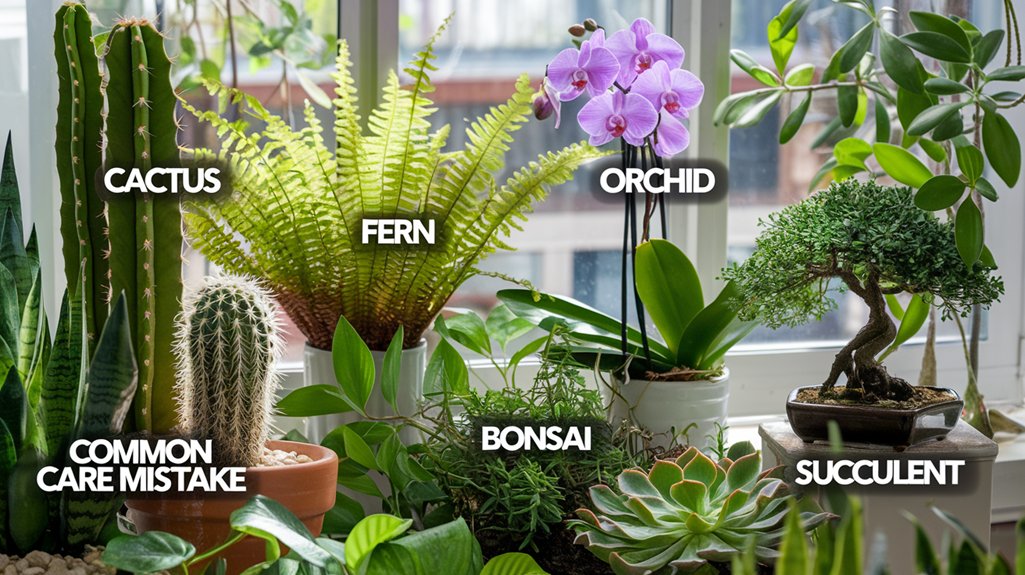
Tailor the potting mix to your plant’s needs; for example, cacti and succulents benefit from a fast-draining mix with pumice or crushed rock.
Securing proper soil selection supports healthy, thriving plants.
In summary, make certain you have essential tools like a trowel, pruners, and a soil scoop to make repotting efficient. Avoid tools that could damage roots, like oversized shovels. Prepare your workspace by clearing clutter and guaranteeing adequate light. Select a container with proper drainage to prevent root rot. Use soil specific to your plant’s needs for best growth. By following these guidelines, you’ll create an ideal environment for your plant’s development and health.