


Super Fresh
Harvested and shipped within days when you order.
Fair Prices
We eliminate extra steps so you get better value.
Rated for Real Life
Clearly labeled so you can choose the right plant fast.
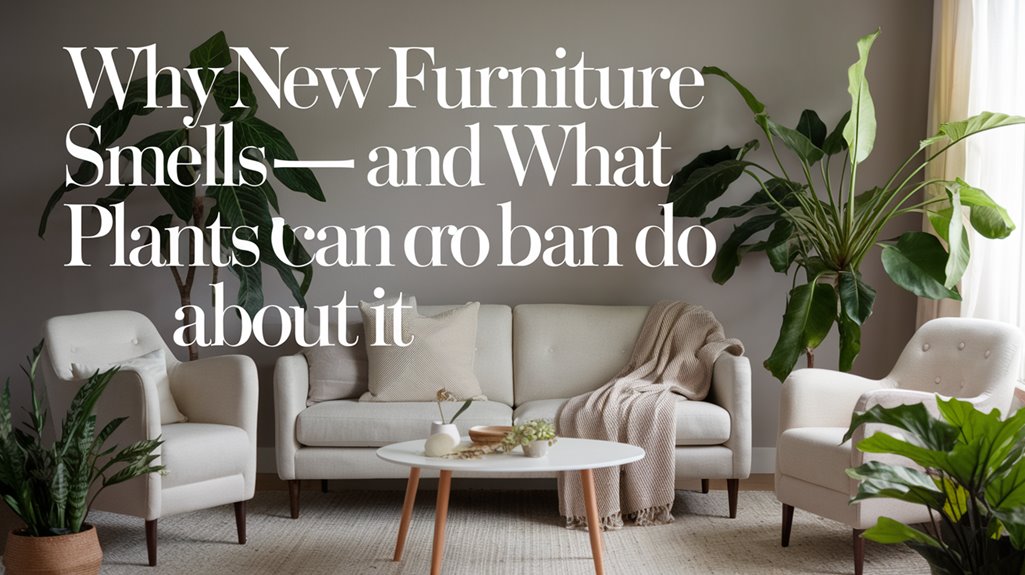
New furniture often emits volatile organic compounds (VOCs), causing the distinctive smell and impacting air quality. These chemicals can irritate your senses and pose health risks. Luckily, stylish houseplants like spider plants, peace lilies, and dracaenas can absorb these VOCs, purifying your space beautifully. To further combat odors, consider low-VOC furniture options. Enhance your home’s wellness aesthetic with these natural air purifiers and discover more ways to maintain a fresh and healthy environment.
New furniture brings both excitement and a distinct smell. This aroma often stems from volatile organic compounds (VOCs) released during the manufacturing process.
Adhesives and coatings off-gas VOCs like formaldehyde, a notorious contributor to the new furniture smell. Its presence in particleboard and synthetic fabrics isn’t just about odor but poses health risks. Formaldehyde can lead to respiratory issues and irritation, especially in poorly ventilated spaces.
The closed environments used for storage and transport can intensify this effect, trapping VOCs indoors. With indoor air quality already a concern—often hosting VOC concentrations up to ten times higher than outside—being mindful of these emissions is essential.
Awareness helps in mitigating long-term exposure and maintaining a healthier home environment.
While understanding the sources of that unmistakable new furniture smell, it’s imperative to focus on the pivotal role VOCs play in manufacturing.
VOCs, or volatile organic compounds, are released during furniture manufacturing processes. They stem from adhesives, finishes, and coatings, contributing to that fresh-off-the-showroom aroma.
Formaldehyde, a common VOC, can off-gas into your indoor air long after production, creating health problems like respiratory issues and irritation. The allure of new pieces can be overshadowed by these potential risks.
Trend-aware manufacturers are now prioritizing low-VOC materials to minimize these emissions.
Regulatory standards like CARB push for reduced formaldehyde emissions, encouraging safer practices.
When purchasing new furniture, consider these aspects to guarantee a stylish yet health-conscious living space.
As you breathe in that enticing new furniture aroma, it’s important to recognize the hidden health implications lurking beneath the surface.
Volatile organic compounds (VOCs) released from new furniture can considerably affect your well-being. Consider these details:
Understanding these factors can guide you toward a healthier, trend-aware indoor environment.
Breathing in the allure of new furniture often masks the reality of invisible threats, with formaldehyde being a major player in this hidden domain.
As a volatile organic compound (VOC), formaldehyde is woven into the very fabric of modern furniture through adhesives, coatings, and finishes. Its distinctive pickle-like aroma signals the off-gassing from particleboard, MDF, and plywood, releasing potential health risks into your living space.
Prolonged exposure may lead to respiratory issues, skin irritation, and even an increased risk of certain cancers. Thankfully, regulations like those from the California Air Resources Board aim to curb these emissions, advocating for cleaner air.
Opt for furniture crafted from solid wood to minimize exposure and embrace a trend towards a healthier home environment.
Imagine stepping into a room filled with elegant new furniture, only to find the air subtly tinged with hidden risks.
Off-gassing releases volatile organic compounds (VOCs), which can deteriorate your indoor air quality, sometimes making it ten times worse than outside.
Formaldehyde, a common VOC, poses health risks like eye, nose, and throat irritation, and even long-term concerns like respiratory issues and cancer.
Poor ventilation exacerbates these effects, trapping VOCs and increasing health risks, especially at night.
To minimize this:
When you step into a room adorned with new furniture, the ambiance should speak of style and comfort, not hidden health hazards.
To tackle off-gassing effectively, embrace ventilation techniques that lower indoor VOC concentrations. Open windows and doors to invite cross-ventilation, letting fresh air whisk away harmful gases. Exhaust fans in kitchens and bathrooms refine air exchange, boosting the removal of chemical residues.
Keep the indoor temperature between 60°F and 70°F to speed up off-gassing, as warmth boosts VOC evaporation. Air purifiers with activated carbon filters are trend-savvy solutions to capture VOCs, enhancing air quality and your health and well-being.
Regularly ventilate during 40%-60% humidity for several days to optimize the freshness and style of your space.
Elevate your home’s ambiance with the strategic use of air purifiers, a chic and effective solution for odor reduction.
These devices dramatically enhance indoor air quality by tackling volatile organic compounds (VOCs) emitted from new furniture.
Here’s how they work:
Air purifiers aren’t the only stylish solution for enhancing your home’s air quality; houseplants serve as living sculptures that naturally cleanse the atmosphere. Consider the spider plant, a chic addition that absorbs formaldehyde and VOCs, improving your indoor air quality. The peace lily, with its graceful blooms, absorbs harmful chemicals like benzene and formaldehyde while adding moisture to your space.
| Houseplant | Absorbs |
|---|---|
| Spider Plant | Formaldehyde, VOCs |
| Peace Lily | Benzene, Formaldehyde |
| Boston Fern | Formaldehyde |
Don’t overlook the Boston fern; it’s a master at absorbing formaldehyde, especially in well-lit areas. By incorporating houseplants into your decor, you’re not just following a trend; you’re investing in cleaner, fresher air and a healthier home environment.
As you curate your living space, choosing low-VOC furniture becomes a stylish and health-conscious decision that elevates your home’s aesthetic while safeguarding indoor air quality.
Embrace this trend by focusing on pieces that complement your eco-friendly lifestyle:
With these steps, you can create a serene, toxin-free sanctuary.
While creating a stylish and healthy living space, it’s essential to address the hidden challenge of VOC exposure in your home. New furniture often contributes to elevated volatile organic compounds (VOCs) through off-gassing.
To reduce exposure, consider investing in low-VOC certified products, like those with GREENGUARD certification. Enhance your interior with indoor plants such as dracaenas, spider plants, and peace lilies, which naturally absorb VOCs, promoting cleaner air.
Regular use of air purifiers equipped with activated carbon filters can effectively trap these compounds; remember to replace filters as needed. Don’t forget the power of fresh air—open windows and increase ventilation to disperse VOCs.
In your quest for a chic yet healthy home, embrace the beauty of low-VOC furniture and the natural elegance of houseplants. These green allies not only enhance your decor but also purify your air, tackling pesky VOCs emitted by new furniture. Add an air purifier for an extra layer of freshness and breathe easier. Stay trend-savvy by prioritizing indoor air quality—making your home a stylish and safe sanctuary. Enjoy the harmony of style and wellness.